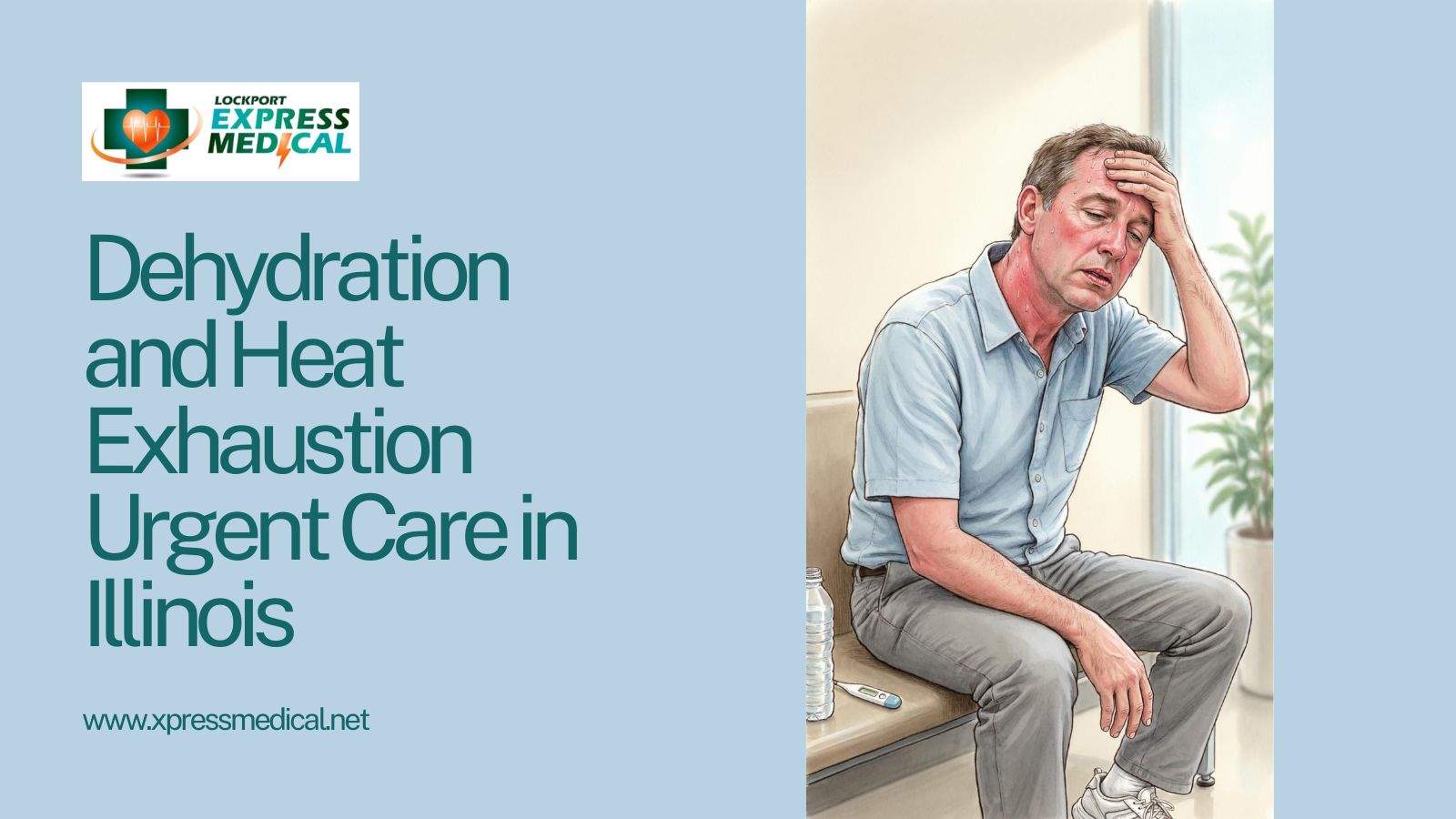
Heat exhaustion urgent care needs are vital during hot Illinois summers when high humidity and rising temperatures push bodies past their limits. When outdoor work or play causes severe fluid loss, dizziness, and heavy sweating, quick medical help stops minor overheating from turning into a life-threatening emergency. Knowing where to find fast, reliable treatment for dehydration and heat stress keeps local families safe and healthy all season long. Lockport Express Medical delivers urgent care for heat exhaustion, prompt treatment for dehydration and heat exhaustion, including expert evaluation, rapid IV therapy, and compassionate care when every minute counts.
What is heat exhaustion illness?
Heat exhaustion is a heat-related illness that occurs when the body overheats, heavy sweating causes a severe loss of water and salt, and the body cannot effectively cool itself down. Common signs include heavy sweating, cold and clammy skin, dizziness, headache, weakness, and nausea. It is a serious condition that can lead to life-threatening heatstroke if not treated quickly.
Signs and symptoms of heat exhaustion:
Heat exhaustion signs and symptoms include heavy sweating, dizziness, and nausea. Other common indicators are extreme weakness, headache, and a fast pulse.
- Heavy sweating: Profuse moisture on the skin.
- Cool, pale skin: Clammy texture or goose bumps in the heat.
- Fast, weak pulse: Rapid heartbeat accompanied by low blood pressure.
- Muscle cramps: Painful tightening in the arms, legs, or abdomen.
- Dizziness and fainting: Lightheadedness or brief loss of consciousness.
- Nausea or vomiting: Upset stomach or feeling sick.
- Headache: Throbbing pain in the head.
- Fatigue and thirst: Extreme tiredness and dry mouth.
Visit The Best Allergic Reaction Walk-In Clinic In Illinois
What requires heat exhaustion urgent care?
Moderate heat exhaustion requires heat exhaustion urgent care when self-treatment fails, specifically for persistent dizziness, continuous vomiting, and symptoms lasting over an hour. Mild cases often improve with rest and cool fluids within 30 minutes, but professional evaluation is necessary if the body cannot rehydrate or recover on its own.
- Persistent dizziness: Feeling lightheaded or unsteady even after resting in a cool place.
- Ongoing vomiting: Being unable to keep fluids down.
- No improvement: Symptoms do not improve after 1 hour of cooling and drinking water.
- Severe weakness: Inability to stand or perform basic tasks safely.
- Instead Confusion: Trouble thinking clearly, agitation, or altered mental state.
- Fainting or loss of consciousness: Passing out or unresponsiveness.
- Seizures: Involuntary shaking or muscle spasms.
- Very high temperature: A body temperature reaching 104°F (40°C) or higher, often with hot, dry skin instead of sweating.
Difference between heat exhaustion and heat stroke:
Heat exhaustion and heat stroke are both heat-related illnesses, but heat exhaustion involves heavy sweating and a struggling cooling system, whereas heat stroke involves a total failure of body temperature control.
| Feature | Heat Exhaustion | Heat Stroke |
| Core Body Temp | Normal or mild fever (up to 104°F / 40°C) | Dangerously high (above 104°F / 40°C) |
| Skin Condition | Pale, cool, and moist/clammy with heavy sweat | Hot, red, and often dry (no sweat) or flushed |
| Mental State | Dizzy, tired, or mild headache; coherent | Confusion, slurred speech, seizures, or coma |
| Medical Urgency | Serious, but usually resolves with rest and fluids | True life-threatening medical emergency |
What are heat exhaustion long term effects?
Heat exhaustion treatment promptly; simple heat exhaustion rarely causes permanent harm, but severe or repeated episodes can lead to chronic organ strain, increased heat sensitivity, and progression to dangerous heatstroke.
- Organ Vulnerability: Repeated severe heat stress places lasting strain on the World Health Organization (WHO) tracked systems of the heart and kidneys, raising the risk of chronic kidney or cardiovascular issues over time.
- Heat Intolerance: A prior heat illness can lower your body’s tolerance, making you more sensitive to high temperatures and more prone to future heat exhaustion.
- Progression to Heatstroke: If untreated, heat exhaustion can escalate into heatstroke, a severe emergency that causes permanent damage to the brain, heart, liver, and kidneys.
- Cardiovascular Strain: Elevated long-term risk of heart-related stress, particularly if acute episodes place significant strain on the circulatory system.
- Neurological Symptoms: Potential for lingering subtle cognitive fatigue, memory lapses, or headaches following severe, prolonged overheating.
- Liver Dysfunction: Cell injury and elevated liver enzymes resulting from sustained internal temperature spikes.
Avoid heat exhaustion by being hydrated:
Proper hydration regulates body temperature and recovering from heat exhaustion by enabling sweating, the body’s primary cooling mechanism. Drinking cool water regularly helps replace lost water and electrolytes, effectively preventing heat exhaustion during prolonged thermal exertion.
- Drink Water Consistently: Drink 1 cup of water every 15 to 20 minutes when active outdoors. Sip fluids before you feel thirsty to stay ahead of dehydration.
- Replenish Electrolytes: Drink electrolyte-rich beverages during intense activity or sweating to maintain essential sodium and potassium levels.
- Monitor Urine Color: Aim for pale, clear urine as a reliable visual indicator of adequate hydration.
- Pre-Hydrate Before Exertion: Drink plenty of water before entering hot environments or beginning strenuous physical work.
- Avoid Dehydrating Liquids: Limit caffeine and alcohol consumption, as both can accelerate fluid loss and elevate risk.
Get Trusted IV Hydration Urgent Care in Lockport IL
Heat exhaustion urgent care: What will a doctor do?
Heat exhaustion urgent care focuses on rapidly cooling your body, restoring critical fluids and electrolytes, and monitoring vitals to prevent dangerous progression toward life-threatening medical emergencies like heat stroke. A doctor will treat heat exhaustion by
- Assess Vital Signs: Measure blood pressure, heart rate, oxygen levels, and core body temperature to determine the severity of heat stress.
- Move to AC: Put you in a cool, air-conditioned room to stop further heat gain.
- Administer IV Fluids: Place an intravenous line to quickly replace fluids and essential electrolytes, especially if severe nausea prevents drinking.
- Apply Active Cooling: Use ice packs, cooling fans, spray mists, or cold compress wraps to safely lower body temperature.
- Conduct Diagnostic Tests: Run blood and urine tests to check electrolyte balance, kidney function, and potential muscle breakdown markers.
- Provide Observation: Monitor key symptoms for several hours to confirm recovery before discharging or determining if hospital admission is necessary.
Professional Heat Exhaustion Urgent Care at Express Medical:
When dehydration and heat exhaustion strike, timely care matters. Lockport Express Medical delivers professional heat exhaustion urgent care, same-day evaluation, and treating heat exhaustion to help Illinois patients recover safely and quickly.
- Fast, professional assessment by experienced clinicians to evaluate dehydration severity and heat-related symptoms.
- Targeted treatment for heat exhaustion, including fluids, monitoring, and supportive care.
- Care escalation when needed—referral or emergency guidance for red-flag symptoms.
- Patient-focused guidance on cure for heat exhaustion, hydration, and preventing heat-related illness.
- Convenient heat exhaustion urgent care access for prompt help when symptoms can worsen quickly.
- Evidence-informed approach designed to improve outcomes for heat exhaustion and faster return to normal activity.
FAQs
What can be mistaken for heat exhaustion?
Heat exhaustion can be mistaken for several conditions, primarily heat stroke, general dehydration, fatigue, or viral gastroenteritis due to overlapping symptoms like dizziness and nausea
What to do first when heat exhaustion hits?
When heat exhaustion strikes, you should immediately move to a cool, shaded area, loosen or remove excess clothing, and slowly sip cool water or sports drinks
Can heat exhaustion cause fever?
Yes, heat exhaustion can cause an elevated core body temperature, typically between 101°F and 104°F, which can feel like a fever but stems from environmental overheating
Does heat exhaustion cause vomiting?
Yes, heat exhaustion frequently causes gastrointestinal symptoms, including both nausea and vomiting, as the body struggles to regulate its internal temperature and blood flow.
How long can heat exhaustion last?
Heat exhaustion symptoms usually improve within one hour of prompt first aid like cooling and rehydration; if they last longer, seek immediate medical attention.