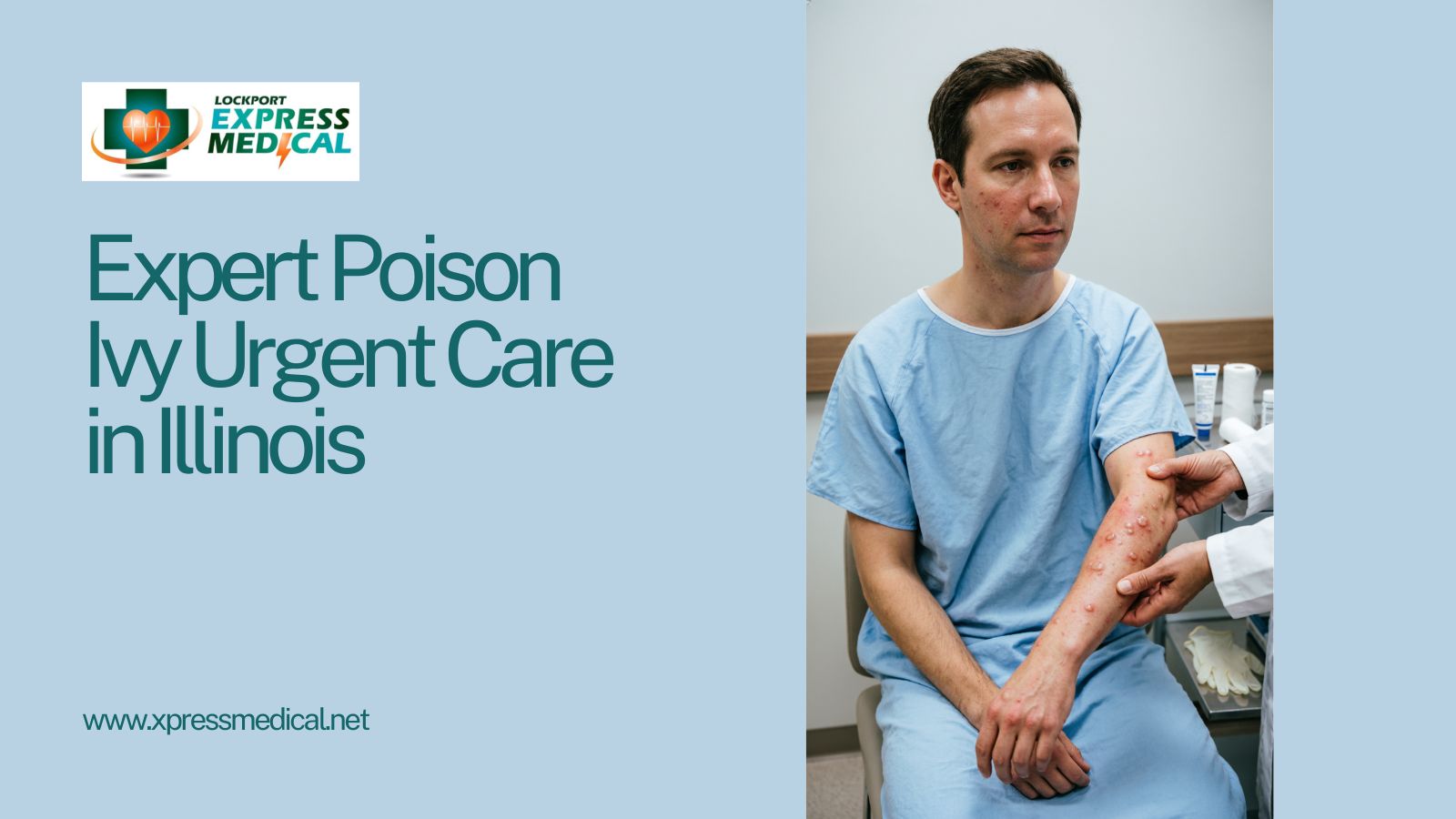
Poison ivy urgent care is right around the corner at Lockport Express Medical in Illinois. When a sudden, itchy rash or severe allergic reaction appears during the day, waiting days for a primary care appointment isn’t an option. Our dedicated team provides rapid urgent care for poison ivy relief and professional treatment to soothe your discomfort fast. Whether you suspect exposure or already have a spreading rash, we can evaluate your condition and recommend effective treatment options to help relieve discomfort and support healing. Don’t wait—get expert help from a trusted local urgent care provider.
What is the poison ivy infection?
A poison ivy infection is a form of allergic contact dermatitis caused by an oily resin called urushiol found in the roots, stems, and leaves of poison ivy, poison oak, and poison sumac. When it touches your skin, your immune system overreacts, producing an intensely itchy, red rash, bumps, and often blisters.
How does poison ivy cause a rash?
Poison ivy can lead to a rash because an oily plant resin sets off a delayed allergic reaction, involving skin penetration and immune system attack.
- Urushiol resin: Poison ivy contains urushiol, a sticky, oily substance in the plant’s leaves, stems, and roots. It’s potent enough that even tiny amounts can provoke a reaction in many people (around 85%).
- Direct and indirect spread: Urushiol transfers from the plant not only during direct contact, but also by clinging to clothing, gardening tools, pet fur, and dead plant material. Because it can remain on surfaces, skin exposure can happen again later—sometimes months or even years after contamination.
- Immune recognition: Once urushiol reaches the skin, it penetrates quickly and attaches to skin cell proteins. Your immune system then “flags” the altered skin as harmful, treating it like an invader and causing a poison ivy rash spreading.
- Inflammation and blistering: The body activates specialized T-cells that attack the urushiol–protein complex. This immune activity releases inflammatory signals (including substances such as interleukins), leading to classic symptoms like redness, swelling, intense itching, and fluid-filled blisters typical of allergic contact dermatitis.
Symptoms that require poison ivy urgent care:
Consult a poison ivy doctor for diagnosis and treatment. While poison ivy rash treatment, mild poison ivy can be treated at home; severe reactions require poison ivy urgent care to prevent dangerous complications.
- Severe Allergic Reactions (Anaphylaxis): Shortness of breath, wheezing, or difficulty swallowing require immediate emergency services, especially if you inhaled smoke from burning poison ivy.
- Facial, Eye, or Genital Involvement: Rashes on the face, especially swelling that causes an eyelid to swell shut, the mouth, or the genitals should be evaluated by a healthcare professional immediately.
- Signs of Infection: Be on the lookout for yellow or white pus leaking from the blisters, increasing warmth, extreme tenderness, or worsening pain.
- Systemic Illness: A fever exceeding 100° F is a clear warning sign of a potentially serious allergic response or infection.
- Extensive Spread: A rash that covers a large area of the body (e.g., more than 25%) or involves widespread, broken blisters.
- Intense, Unmanageable Discomfort: Severe itching that makes it impossible to sleep or perform daily tasks.
Explore: Allergic Reaction Walk-In Clinic In Illinois
What are the stages of ivy rashing?
A poison ivy rash typically develops within 12 to 48 hours of exposure to urushiol oil, but it can take up to 3 weeks for first-timers. The poison ivy rash progresses through four distinct stages as the body reacts to the plant resin:
- Stage 1: Itching and Early Rash (Days 1–3): The first sign is intense itching followed by red, inflamed, or light pink patches. Mild swelling and sensitivity may also occur.
- Stage 2: Blistering (Days 4–7): The rash progresses into swollen, raised bumps that turn into small, fluid-filled blisters. The rash may appear in streaks, matching where you brushed against the plant.
- Stage 3: Crusting and Leakage (Days 7–14): The blisters begin to break open, leak clear fluid, and eventually scab or crust over. Note: The fluid in the blisters does not contain urushiol and cannot spread the rash.
- Stage 4: Healing (Weeks 2–3): The crusts fall off, redness fades, and the skin gradually repairs itself. The entire healing process usually takes 2 to 3 weeks, though severe cases can last longer.
Explore: The Best Medical Center for Immediate Care Lockport IL
How does scratching an ivy rash can spread the infection?
Scratching does not cause the poison ivy rash itself to spread. However, it can spread an active bacterial infection. The allergic rash and the clear fluid in the blisters do not contain the plant oil, but scratching damages the skin and introduces germs, so must poison ivy urgent care. Scratching can spread or worsen the issue in the following ways:
- Breaking the skin barrier: Sharp fingernails tear the vulnerable, inflamed skin, creating open wounds.
- Introducing bacteria: Bacteria (such as Staphylococcus or Streptococcus) naturally present on the skin or under the fingernails can easily enter these open wounds.
- Causing secondary infections: The introduction of these bacteria leads to a secondary bacterial skin infection, which requires medical treatment such as antibiotics.
- Spreading lingering plant oil: If unwashed urushiol oil (the plant’s toxic resin) is still on your skin or under your fingernails, scratching will physically transfer this oil to untouched parts of your body or to other people.
Prevent poison ivy infections tips:
The safest way to avoid poison ivy is to block contact with urushiol and remove it quickly. Immediate cleaning and protective clothing prevent a rash from starting.
- Cover up: Wear long sleeves, long pants tucked into socks, and impermeable gloves. If available, use an over-the-counter “ivy block” barrier lotion to add extra protection against urushiol oil.
- Wash immediately: Urushiol can begin sticking to skin within minutes. As soon as you suspect contact, wash with soap and cool to lukewarm water, including underneath your fingernails.
- Decontaminate gear: Urushiol can remain active on surfaces for months. Clean gardening tools, equipment, and even shoes with rubbing alcohol or soap and water.
- Launder clothing: Put possibly contaminated clothes in the washing machine and use hot water with detergent to remove any remaining oil.
- Bathe your pets: Pets often don’t develop symptoms, but urushiol can cling to their fur. Bathe them with pet shampoo, using rubber gloves to protect your own skin.
Explore: Urgent Care that Takes Medicare Near Me in Lockport
Get poison ivy urgent care at Lockport Express Medical:
Need fast relief from itchy poison ivy? Get poison ivy urgent care at Lockport Express Medical prompt, in-person help designed to get you back to comfort. Find poison ivy shot near me today at Lockport Express Medical.
- Convenient, same-day assessment to confirm symptoms and determine the best course for poison ivy urgent care.
- Fast symptom treatment options to reduce itching, redness, and swelling when you need help quickly.
- urgent care poison ivy shot availability for eligible cases, helping you start treatment sooner.
- Medical guidance you can trust with a clinician-led plan tailored to your presentation.
- Doctor prescription for poison ivy when medication is appropriate, based on your medical needs.
- Clear next steps and follow-up advice so you know how to manage recovery at home.
FAQs
Does urgent care do poison ivy?
Yes, urgent care clinics treat poison ivy reactions. They can prescribe oral or topical steroids and evaluate severe, widespread rashes, intense swelling, or blisters on the face or genitals.
What clears up poison ivy quickly?
While you cannot eliminate it immediately, you can rapidly relieve symptoms with treatments: cool compresses, calamine lotion, hydrocortisone cream, antihistamines, and colloidal oatmeal baths.
Will poison ivy go away if left untreated?
Yes, a poison ivy rash is self-limiting and will resolve on its own, usually within one to three weeks without medical intervention.
Is poison ivy rash a medical crisis?
Usually, no. However, seek poison ivy urgent care immediately if you have trouble breathing, experience severe facial or throat swelling, or inhaled smoke from burning poison ivy.
Is a poison ivy rash contagious to others?
No, the FDA confirms the rash itself and blister fluids are not contagious. You can only get the rash by touching unwashed plant oil (urushiol).
Can the rash spread to other body parts?
The rash does not actually spread once the oil is washed off. “Spreading” typically happens because of delayed immune reactions or re-exposure to lingering oil on your clothes or skin.
What kind of infection does poison ivy cause?
Poison ivy is an allergic contact dermatitis. However, aggressive scratching can break your skin, potentially leading to a bacterial infection characterized by pus, worsening redness, and foul odors.