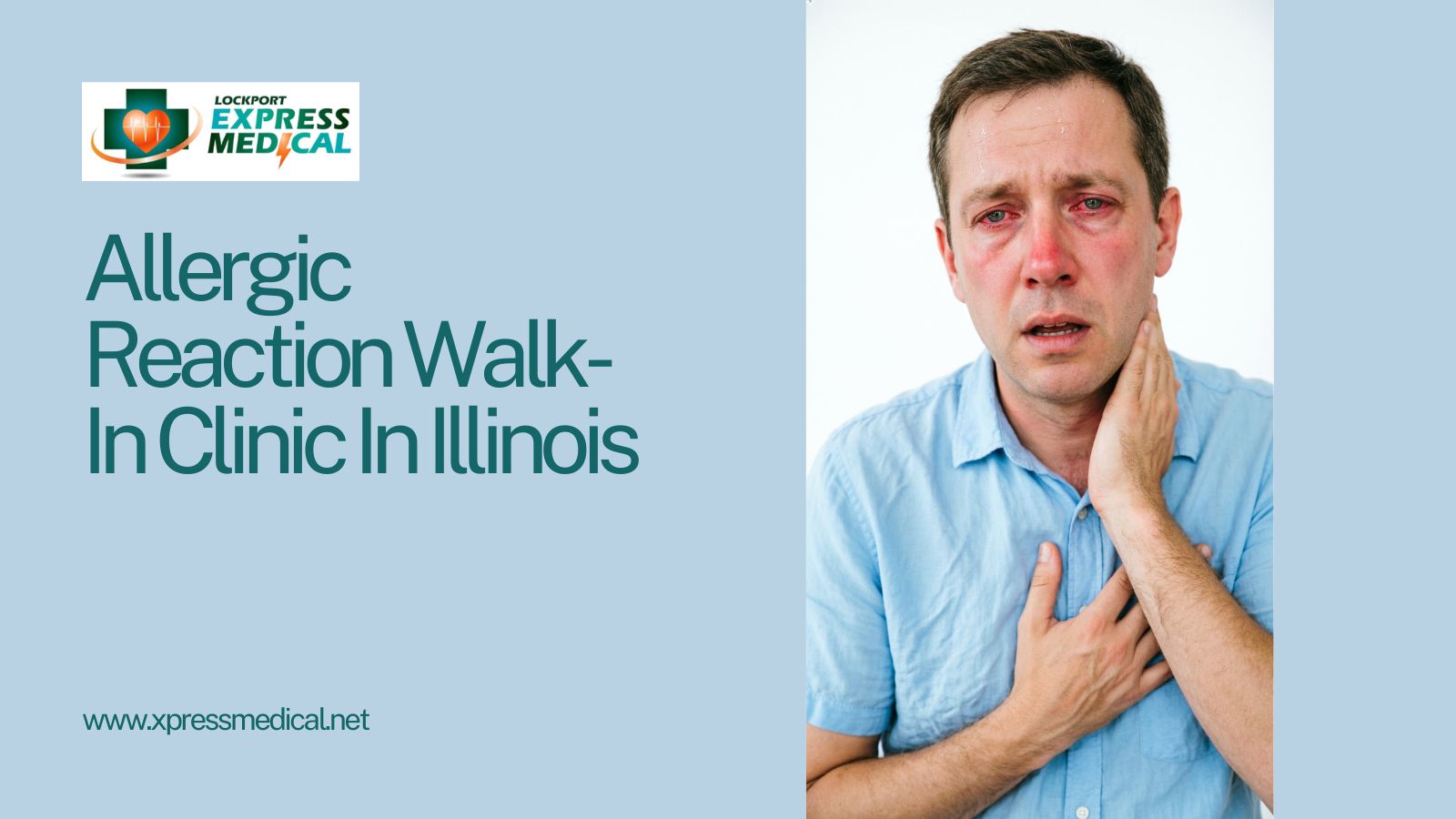
A rash after lunch, swollen eyelids in the morning, or itching that starts after a new medicine can leave a person unsure about what to do next. An allergic reaction walk-in clinic offers a place to have those changes examined rather than trying several remedies at home. At Lockport Express Medical, the visit starts with what happened before the symptoms appeared. The clinician then checks the affected area, reviews recent foods, medicines, bites, or skin products, and chooses allergy treatment according to what is actually found during the examination.
What is an allergic reaction in humans?
Most allergies do not begin with a dramatic reaction. The immune system first becomes sensitive to something harmless, such as pollen, food protein, or medicine. On a later exposure, it may release chemicals that irritate the skin, nose, lungs, or gut. That is why symptoms can look different between patients.
At an allergic reaction walk-in clinic, the useful clues are often simple: what was eaten, taken, touched, or inhaled, and how soon the problem followed. A clinician also checks whether the rash is allergic at all, since heat, infection, medication side effects, and skin irritation may look surprisingly similar initially.
Common causes of allergic reactions:
- Foods are frequent triggers, especially peanuts, tree nuts, shellfish, fish, milk, eggs, wheat, soy, and sesame. The reaction comes from immune recognition of specific proteins, not from food intolerance, which usually causes digestive symptoms without an allergic mechanism.
- Medicines can trigger reactions after the first dose or after years of previous use. Antibiotics, particularly penicillins, and pain relievers such as aspirin or other NSAIDs are common examples. A drug side effect is not automatically an allergy, so the timing and symptom pattern matter.
- Bee, wasp, hornet, and fire-ant stings can cause swelling far beyond the sting site, hives, or symptoms affecting more than one body system.
- Pollen, mold spores, dust mites, and animal dander often cause allergic symptoms affecting the nose, eyes, or airways.
- Latex, fragrances, preservatives, hair dye, nickel, and cleaning products may cause immediate allergy or delayed contact dermatitis. An allergic reaction walk-in clinic can review exposure details before choosing allergy treatment.
Explore: What Is The Cause of Asthma Disease and How to Avoid?
Allergic reaction walk-in clinic: How to tell if it’s serious?
| What you notice | Usually less worrying | Needs faster medical help |
| Small skin patch | One itchy area that stays in the same place and the person feels otherwise well. | The rash spreads, new hives keep appearing, or swelling starts around the lips, eyelids, mouth, or face. |
| Timing after exposure | Symptoms appear slowly and do not change much after a known mild trigger. | Reaction begins soon after food, medicine, or a sting, then keeps changing or spreading. |
| Skin does not tell the whole story | A mild-looking rash can still be watched closely if breathing and energy are normal. | Hoarse voice, repeated cough, wheezing, throat tightness, trouble swallowing, dizziness, or unusual weakness. |
| Stomach symptoms | Mild nausea alone may happen for many reasons and does not always mean a severe allergy. | Vomiting or strong stomach cramps together with hives, swelling, breathing symptoms, or faintness. |
| When walk-in care fits | Stable symptoms that need assessment, advice, or treatment but are not affecting breathing, alertness, or blood pressure. | Do not wait for walk-in care if the person seems faint, confused, very weak, short of breath, or rapidly worsening. |
| When emergency action comes first | For mild, local symptoms, an allergic reaction walk-in clinic can check the cause and guide next steps. | Urgent care for allergic reaction should not delay epinephrine or emergency help when breathing, circulation, or alertness is affected. |
Types of allergic reaction:
- Some reactions stay on the skin. Hives rise and fade within hours, while angioedema sits deeper and often shows around the eyelids or lips. They can occur together, but they are not the same process.
- Contact dermatitis behaves differently. The rash usually appears where nickel, fragrance, latex, or another trigger touched the skin, and it may take a day or two to become obvious.
- Food, medicine, and sting reactions can affect several organs at once. A person may have itching with vomiting, coughing, swelling, or dizziness rather than one single symptom.
- Nasal allergy is another form. Pollen, dust mites, mold, or pet dander may cause sneezing, watery eyes, congestion, and an itchy throat, often in a repeated seasonal or indoor pattern.
- At an allergic reaction walk-in clinic, the pattern of allergic reaction symptoms helps guide care. The clinician looks at timing, location, repeat exposure, and medicines before deciding on allergy treatment or whether specialist testing is needed for clearer answers.
Benefits medical-led care for allergic reactions:
- A clinician does more than look at a rash. The timing, first symptom, recent foods, medicines, bites, and products help show whether the problem fits allergy, irritation, infection, or a medication side effect.
- The examination checks the skin, mouth, breathing, pulse, and blood pressure. This matters because the visible rash may be mild even when other allergic reaction symptoms carry more weight clinically.
- Allergy treatment can then match the reaction. Antihistamines may help itching and hives, while swelling, wheezing, or repeated vomiting requires a different plan rather than simply taking another tablet at home.
- Good documentation is another benefit. Recording the suspected trigger, symptom sequence, medicines given, and response creates a useful account for future visits and reduces vague allergy labels in the medical record.
- An allergic reaction walk-in clinic can also identify who needs follow-up. Repeated or unclear episodes may justify allergy testing for adults, but testing works best when chosen from the history, not ordered as a broad panel.
Get Professional Urgent Care for Respiratory Illness in Illinois
Tips to prevent future allergic reactions:
- After each episode, write down what was eaten, taken, touched, or inhaled, when the first symptom appeared, and how long it lasted. That record is more useful than memory at a later appointment.
- For food allergy, read the full label every time, even on familiar products. Ingredients can change. In restaurants, ask about shared fryers, utensils, and preparation surfaces because cross-contact may happen without a visible allergen.
- Do not remove several foods based on suspicion alone. Allergy testing for adults should follow the medical history; broad panels may be positive without proving that exposure actually causes symptoms.
- Tell doctors, dentists, pharmacists, schools, and workplaces about confirmed triggers. Keep a current medication list and a written action plan where family members or coworkers can find it.
- After an allergic reaction walk-in clinic visit, complete any referral and learn your own signs of allergic reaction. When epinephrine is prescribed, keep it nearby, check the expiry date, and practice using the trainer device.
The best allergic reaction walk-in clinic in Lockport IL:
- A sudden rash rarely comes with a neat explanation. During a visit, the clinician can work backwards from the first symptom, recent meals, new medicines, insect exposure, and anything that touched the skin.
- The examination is useful because hives, eczema, contact irritation, bites, and some infections can look alike at first glance. The treatment choice changes once the likely cause is narrowed down.
- People typing walk in allergy clinic near me are often looking for same-day help, not long-term allergy management. Lockport Express Medical can assess a current, stable reaction and explain what to watch for after leaving.
- The visit should also leave a clear record: suspected trigger, timing, areas affected, medicines used, and whether the symptoms improved. That detail can save time if the problem returns.
- An allergic reaction walk-in clinic handles the immediate episode. Repeated reactions, uncertain food triggers, or questions about testing may need follow-up with an allergy specialist near me for a more focused, careful investigation.
Get fast allergy care at Lockport Express Medical:
- Lockport Express Medical accepts walk-in patients seven days a week, so a new rash, itching, or mild swelling can be examined without waiting for a primary-care appointment.
- Bring a list of recent medicines, foods, supplements, skin products, and insect exposure. Those details help the clinician connect the timing of symptoms with a likely trigger instead of treating the rash in isolation.
- During the visit, the clinician may check the skin, mouth, breathing, pulse, and blood pressure, then select allergy treatment according to the findings and the patient’s medical history.
- Choosing urgent care for allergic reaction also creates a written record of the episode, including the suspected cause, symptom sequence, and response to medication. That record can guide future care if the reaction returns.
- For same-day assessment, local families can visit Lockport Express Medical at 16221 W 159th Street. This allergic reaction walk-in clinic is open weekdays until 8 pm and weekends from 9 am to 4 pm.
Conclusion
A rash, itching, or swelling can be easy to dismiss, especially when it seems mild at first. Still, knowing what triggered it is not always simple, and guessing at home may only add confusion. A proper check can help connect the symptoms with a recent food, medicine, sting, or skin product. At Lockport Express Medical, patients can be seen without waiting for a regular appointment. The allergic reaction walk-in clinic offers same-day evaluation, practical advice, and allergy treatment based on what the clinician finds during the visit, not on assumptions.
FAQs
What defines an allergic reaction?
The timing often gives the first clue. Itching, hives, swelling, stomach upset, or coughing can start after you eat a certain food, take medicine, touch a product, or get stung. A clinician looks at that connection rather than deciding based on just one symptom.
Can a walk-in clinic do anything for allergies?
Yes. An allergic reaction walk-in clinic can assess a rash, hives, itching, or mild swelling while the symptoms are still present. The visit may include a skin and breathing check, a review of possible triggers, treatment for the current reaction, and advice about what to do afterward.
What can be mistaken for an allergic reaction?
Quite a few things. Heat rash, viral illness, insect bites, irritated skin, medicine side effects, and food intolerance may look or feel similar. Even hives can appear during an infection. Where the symptoms started, how they changed, and what happened beforehand help separate these conditions.
Can urgent care treat a severe allergic reaction?
Not usually as the final place for care. A severe reaction may need epinephrine, oxygen, close monitoring, and hospital support. When breathing becomes difficult, the throat feels tight, or the person becomes faint, calling 911 is safer than driving to urgent care and losing valuable time.
Will my insurance cover allergic reaction treatment?
It may, but plans handle urgent care differently. One insurer may charge a simple copay, while another applies the visit to your deductible. The quickest way to avoid surprises is to check that Lockport Express Medical is in-network and ask what your plan expects you to pay.