Treatment for incontinence in the elderly is not something families should ignore or explain away as age. A small leak may start during coughing, walking to the bathroom, or waking at night, then slowly affects sleep, skin comfort, and confidence. The causes of urinary incontinence in the elderly can be simple, such as constipation or infection, or linked to medicine, diabetes, prostate changes, or weak pelvic muscles. Express Medical looks at the whole picture first, so care feels practical, respectful, and based on the patient’s daily life.
What is urinary incontinence in the elderly?
Urinary incontinence in the elderly means more than an occasional accident. It is a repeated problem with storing urine, holding it under pressure, emptying the bladder fully, or reaching the bathroom in time. The episode may be small, but repeated leakage can affect sleep, clothes, skin, hygiene, and confidence deeply.
The medical value is in describing the pattern: urge, stress, overflow, functional, or mixed leakage. Each one suggests a different starting point, from bladder training to infection checks or medication review. That is why treatment for incontinence in the elderly should be matched to both cause and ability level safely.
What happens in the body to cause bladder control problems?
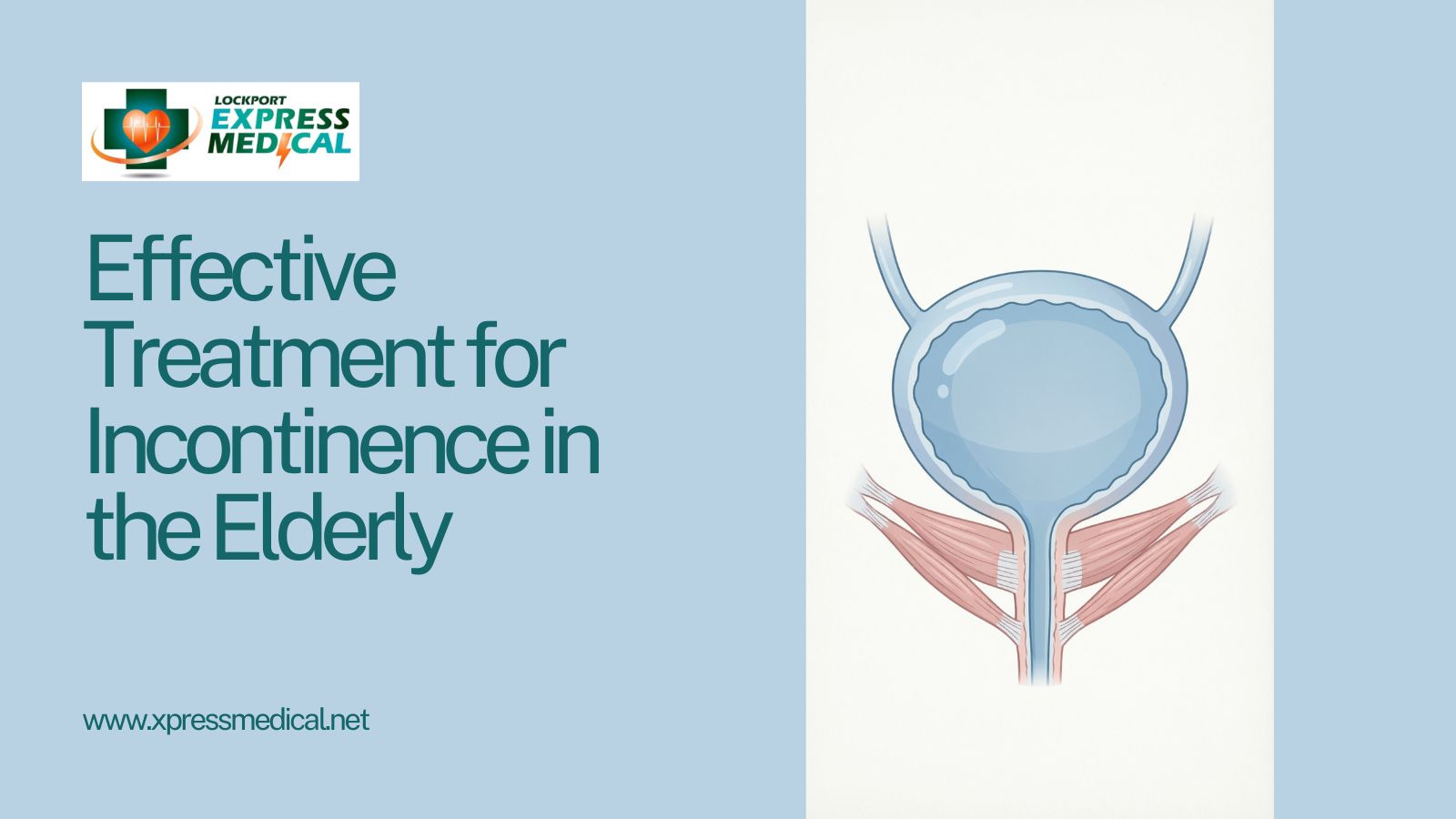
- Bladder control depends on a quiet agreement between three parts: the bladder wall, the outlet muscle, and the nerves that tell the brain when urine is building up. When the bladder squeezes too early, urine may leak before the person reaches the bathroom.
- The outlet can also become weaker. This means a small rise in pressure from coughing, standing, bending, or lifting may be enough to push urine out. In older adults, this is often worse when pelvic support has weakened over many years.
- Some patients do not empty the bladder well. Urine stays behind after urination, stretching the bladder and causing frequent trips, weak flow, night waking, or small leaks later. This pattern may be linked to prostate blockage, nerve damage, or weak bladder contraction.
- Treatment for incontinence in the elderly should look at the exact body process behind leakage. The causes of urinary incontinence in the elderly are not always the same, so treating incontinence in the elderly needs symptom timing, urine pattern, mobility, medicines, and bladder emptying to be reviewed together.
Explore: Adult and Pediatric Urinary Tract Infection Doctor Specialist
What is the treatment for incontinence in the elderly?
- In clinic, treatment for incontinence in the elderly is planned after a simple picture is built: when leakage started, how often pads are changed, whether urine burns or smells different, and whether the bladder still feels full after going.
- The first useful step is often removing triggers. A urine infection, hard stools pressing on the bladder, late water tablets, poor diabetes control, heavy caffeine, or sleeping medicine can turn mild leakage into a daily problem. These are practical causes of urinary incontinence in the elderly, not side notes.
- The care plan is usually gradual. Timed toilet visits work better when they follow the patient’s usual routine. Pelvic floor work helps only if the patient can learn the squeeze correctly. Evening fluids may be adjusted without making the person dehydrated.
- Treating incontinence in the elderly may also need bladder-relaxing medicine, prostate care, infection treatment, or a urology referral when there is blood, pain, repeated retention, sudden worsening, or kidney-risk symptoms.
Types of urinary incontinence in the elderly:
- Stress incontinence: leakage happens when abdominal pressure rises faster than the urethra can close. It is usually seen with coughing, laughing, standing, or lifting, and points toward weak outlet support rather than sudden bladder spasm.
- Urge incontinence: urine loss follows a strong need to pass urine. The bladder muscle contracts before permission is given, so patients may leak while unlocking the door, hearing water, or walking to the bathroom.
- Overflow incontinence: the bladder stays partly full after urination. Small dribbles, weak stream, hesitancy, and frequent night urination may suggest retention, often from prostate obstruction, nerve damage, or weak bladder contraction.
- Functional incontinence: bladder function may be reasonable, but arthritis, poor vision, dementia, slow walking, unsafe flooring, or distant toilets stop the patient reaching the bathroom in time.
- Mixed incontinence: two patterns appear together. Treatment for incontinence in the elderly should identify the dominant type first, because the treatment of urinary incontinence in the elderly changes when stress leakage, urgency, retention, and function overlap.
Why is incontinence common in the elderly?
- Incontinence is common in older adults because bladder control rarely depends on the bladder alone. A person may have a weaker urine outlet, slower walking, lighter sleep, reduced balance, or less time to react once the urge starts.
- Night leakage often has a separate reason. Fluid that collects in swollen legs during the day can return to the bloodstream when the person lies down, so the kidneys produce more urine at night and the bladder fills faster than expected.
- Some older patients understand the urge but cannot respond quickly. Arthritis, poor vision, dizziness, memory decline, fear of falling, or a low toilet seat may turn a normal bladder warning into leakage.
- Medicines can quietly add pressure to the problem. Water tablets, sleeping pills, constipation-causing drugs, and medicines that affect alertness may increase accidents.
- Treatment for incontinence in the elderly works better when the cause is mapped clearly, because treating urinary incontinence in the elderly may require bladder care, mobility support, sleep review, medicine adjustment, or safer bathroom access.
Explore: Good Family Doctor Walk In Clinic in Illinois
Tips to improve bladder control in the elderly:
- A bladder diary is useful when it is simple. The patient or caregiver can write the time of leakage, drinks, toilet visits, bowel movements, and night waking for three days. This helps the clinician see whether accidents happen after fluids, urgency, poor emptying, or delayed toilet access.
- Toilet timing should fit the patient’s routine. Some older adults need a planned bathroom visit after breakfast, before leaving home, before sleep, and after taking diuretics. Random frequent trips may increase anxiety without improving control.
- Fluids should be balanced, not removed. Too little water may irritate the bladder, worsen constipation, and increase infection risk. Caffeine, fizzy drinks, and large late-evening drinks are better reduced gradually.
- Treatment for incontinence in the elderly works better when practical barriers are fixed too. Loose rugs, dark hallways, low toilet seats, tight clothing, poor footwear, and constipation can all turn a controllable urge into leakage.
- The treatment of urinary incontinence in the elderly may also include supervised pelvic floor training, medicine review, skin protection, and follow-up when symptoms change.
Get Urgent Care X Ray at Express Medical
Personalized treatment for incontinence in the elderly at Express Medical:
- At Lockport Express Medical, the appointment looks at the problem as it happens at home. A patient may be dry most of the day but wake up wet, leak on the way to the toilet, or notice dribbling after urination.
- The reason is not guessed from one symptom. Constipation, urine infection, prostate trouble, diabetes, weak stream, new medicines, poor sleep, slow walking, or confusion can each push leakage in a different direction.
- When burning, fever, blood, strong odor, or sudden worsening appears, urine testing becomes important. When the stream is weak or the bladder still feels full, poor emptying needs attention too.
- Treatment for incontinence in the elderly may start with bathroom timing, fluid changes, bowel care, infection treatment, pelvic floor support, or medicine review. The choice depends on what is safest for the patient.
- At follow-up, the treatment of urinary incontinence in the elderly should be changed if night accidents, pain, retention, or daily leakage continue.
Conclusion
Urinary leakage in older adults should not be brushed aside or hidden with pads only. It can come from infection, constipation, prostate problems, weak pelvic support, medicine effects, poor emptying, or difficulty reaching the bathroom safely. The right care begins with the pattern: when leakage happens, what changed recently, and how much it affects sleep, skin, movement, and confidence. At Express Medical, treatment for incontinence in the elderly is handled with privacy and practical planning, so the patient gets care that fits daily life, not a general plan copied for everyone.
FAQs
Is urinary incontinence a normal part of aging?
It happens more with age, but it should not be accepted as “just old age.” A new leak, heavier pads, night accidents, burning, or trouble passing urine needs a proper check. Sometimes the cause is treatable, like infection, constipation, medicine effects, prostate trouble, or poor bladder emptying.
Can dehydration help reduce urinary incontinence?
Cutting water is a bad shortcut. It may make urine stronger, irritate the bladder, and make constipation worse. Older adults also become dizzy or confused more easily when fluids are too low. A safer plan is to drink steadily earlier in the day and reduce large late-night drinks.