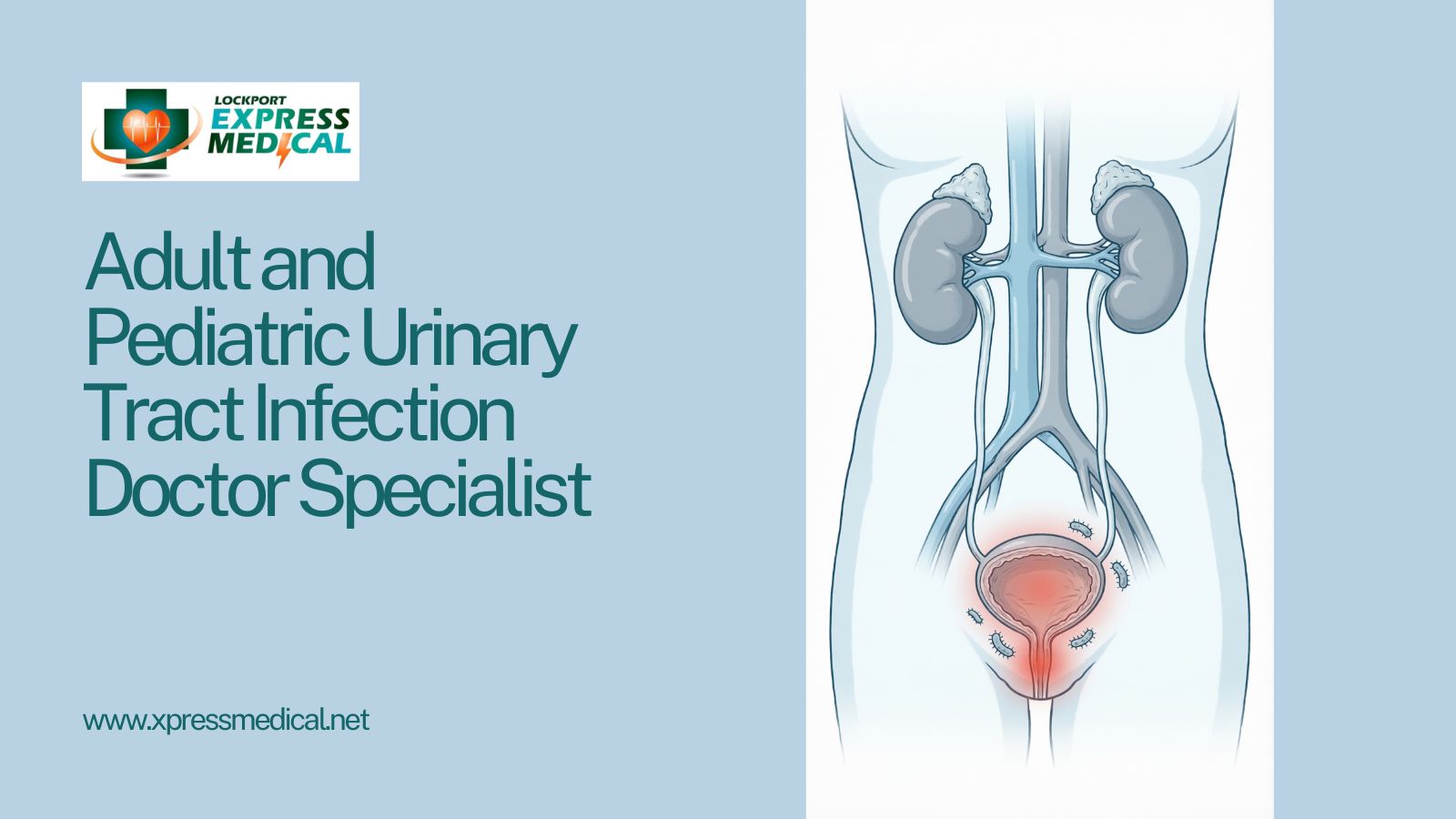
A UTI often makes itself known through small, irritating changes first. Another trip to the bathroom. Burning that was not there yesterday. Pressure low in the abdomen. A urinary tract infection doctor specialist can check whether infection is really the reason and what should happen next. Express Medical can test a urine sample and treat many uncomplicated cases during the visit. Fever, vomiting, or pain in the side or back is different; those symptoms need faster attention because the kidneys may be involved.
What’s a urinary tract infection?
A urinary tract infection begins when germs, usually bacteria from the bowel, enter the urinary system and multiply. Most infections stay in the bladder, but some travel upward to the kidneys if treatment is delayed. That matters because kidney infections can cause fever, back pain, vomiting, and more serious illness.
Symptoms alone do not prove that infection is present. Stones, vaginal irritation, prostatitis, or some sexually transmitted infections can feel similar. A urinary tract infection doctor specialist can use the history, examination, and urine testing to find the likely cause, safely begin suitable care, and avoid unnecessary or unsuitable antibiotics.
What are the symptoms of a UTI?
- Burning is common, but the first change may be simply needing the bathroom more often. Some people pass only a little urine each time. Others notice pressure low in the pelvis, cloudy urine, a stronger smell, or a pink tinge from blood.
- Pain higher in the back or side is different. When it comes with fever, chills, nausea, or vomiting, the infection may have reached a kidney. That needs prompt assessment, especially during pregnancy or in someone with diabetes or kidney disease.
- Symptoms are not always textbook. Older adults may become weaker, eat less, or seem confused, but confusion alone does not confirm infection. Dehydration and medication effects can look similar.
- A urinary tract infection doctor specialist looks at the full pattern, not one symptom. People searching for a specialist for urinary tract infection or urinary tract infection specialists near me should seek care when symptoms return, worsen, or fail to improve after treatment or begin alongside fever and pain.
Get Urgent Care X Ray at Express Medical
When should you see urinary tract infection doctor specialist?
- A urinary tract infection doctor specialist should assess symptoms that are more than irritation. Burning that continues through the day, repeated urges with only a little urine, or pressure low in the abdomen all deserve medical review.
- Fever changes the picture. When it comes with chills, nausea, or pain in the back or side, the infection may no longer be limited to the bladder. That needs treatment.
- Blood in the urine, difficulty passing urine, or sharp pain on one side can point to another urinary problem, including a stone or blockage. These symptoms should not be treated at home as a routine UTI.
- Early care is especially important during pregnancy and for men, children, older adults, or patients with diabetes, kidney disease, weak immunity, or a catheter.
- See a urinary tract infection doctor again when symptoms return soon after treatment or remain unchanged after antibiotics. Recurrent episodes may need a urine culture and a closer look at the underlying cause.
How do specialists diagnose urinary tract infections?
- The visit usually begins with details that change the meaning of urinary symptoms: when they appeared, whether there is vaginal discharge, recent sexual activity, previous UTIs, pregnancy, diabetes, catheter use, and antibiotics taken recently.
- A urinary tract infection doctor specialist then examines the abdomen and back. Tenderness over the bladder may fit cystitis, while pain near the kidneys raises concern for an upper urinary infection.
- Urine is tested for white blood cells, nitrites, blood, and bacteria. The result is not read in isolation; it is compared with the signs of urinary tract infection because bacteria can appear in urine without causing infection.
- Culture is useful when episodes keep returning, symptoms persist after treatment, pregnancy is present, or resistance is likely. It names the organism and shows which antibiotics are likely to work.
- Imaging is not required for every UTI. Ultrasound or CT is considered during the initial assessment when stones, blockage, abscess, or an unusual urinary tract structure is suspected.
Risks of delaying UTIs treatment:
- Symptoms may still look ordinary while an infection is moving beyond the bladder. Once bacteria reach kidney tissue, simple cystitis becomes pyelonephritis, and treatment is no longer as straightforward.
- Vomiting and poor fluid intake can complicate a kidney infection. Some patients need intravenous fluids or antibiotics; a renal abscess may need drainage rather than tablets alone.
- Another risk is bacteria passing into the blood. It does not happen in every case, but a urinary infection can lead to sepsis and rapid problems with circulation or organ function.
- Pregnancy leaves less room for delay. Pyelonephritis during pregnancy is associated with serious maternal illness, preterm delivery, and lower birth weight.
- Infection is harder to clear when urine sits behind a stone, enlarged prostate, or narrowed passage. Until that blockage is dealt with, symptoms may keep returning.
- Leftover medicines for urinary tract infections can blur the picture without curing it. A urinary tract infection doctor specialist can intervene before treatment becomes more complicated.
Preventing future urinary tract infections
- Two infections within six months, or three within a year, usually counts as recurrent UTI. Before prevention is planned, urine cultures should confirm that the episodes were genuine infections rather than irritation with another cause.
- Drinking more may help when fluid intake is low. Holding urine for long stretches and leaving the bladder partly full can also make recurrence more likely, so poor emptying should be addressed.
- Some infections repeatedly follow sex. In that situation, avoiding spermicides may help, and a post-coital prevention plan can be considered instead of taking treatment every day.
- After menopause, vaginal estrogen may restore local tissue protection and reduce recurrence in suitable patients. It differs from systemic hormone therapy and still needs an individual safety review.
- A urinary tract infection doctor specialist may discuss methenamine hippurate or preventive medicines for urinary tract infections when simpler measures are not enough. Antibiotics are chosen carefully, then reviewed later, because long courses can cause side effects and resistance.
Visit urinary tract infection doctor specialist at Express Medical:
- A visit at Lockport Express Medical is not simply a request for antibiotics. The clinician needs the actual sequence: when symptoms began, whether they followed sex, what was already taken, and whether earlier treatment changed anything.
- A urinary tract infection doctor specialist also checks the things that can make a routine prescription unsafe, including pregnancy, reduced kidney function, allergy history, drug interactions, and a recent resistant infection.
- Not every urinary complaint needs the same medicine. A drug that works for a bladder infection may be the wrong choice when the kidneys or prostate could be involved, so the location of infection matters.
- Before leaving, the patient needs three clear answers: what to take, when it should start helping, and what change means it is time to return.
- A urinary tract infection doctor at Express Medical can also arrange referral when symptoms point to a problem that urgent care cannot fully manage or when another diagnosis becomes more likely during the assessment.
Conclusion
UTIs are common, but they are not always straightforward. The discomfort may come from the bladder, kidneys, prostate, or even another condition, and that changes the treatment. Seeing a urinary tract infection doctor specialist helps uncover what is really going on instead of relying on guesswork or leftover antibiotics. At Express Medical , we focus the visit on the patient’s symptoms, health history, and only the tests that are actually needed. The goal is to treat the current problem properly and make the next step clear if symptoms return.
FAQs
Who Is the Best Doctor to See for a UTI?
A primary care clinician or urgent care doctor can treat most straightforward UTIs. A urologist, who specialises in urinary tract infections, becomes more useful when infections return often, treatment keeps failing, blood remains in the urine, or a stone, blockage, or prostate problem is suspected.
What Causes 80% of UTIs?
Around 80% of uncomplicated UTIs are caused by Escherichia coli, better known as E. coli. This bacterium normally lives in the bowel. Infection can begin when it reaches the urethra and then moves into the bladder.
Can a UTI Go Away Without Antibiotics?
Yes, sometimes. A mild bladder infection may settle over a day or two, so a clinician may occasionally suggest waiting before antibiotics are started. That does not suit every case. Pregnancy, fever, vomiting, pain in the back or side, or symptoms that are clearly getting worse are all reasons to be checked rather than wait longer.
When Is a UTI Considered Serious?
It becomes serious once the illness is affecting more than urination. A high temperature, shivering, vomiting, pain in the back or side, or suddenly feeling very weak can suggest that the kidneys are involved. Confusion, fainting, breathing faster than usual, or barely passing urine calls for emergency care.