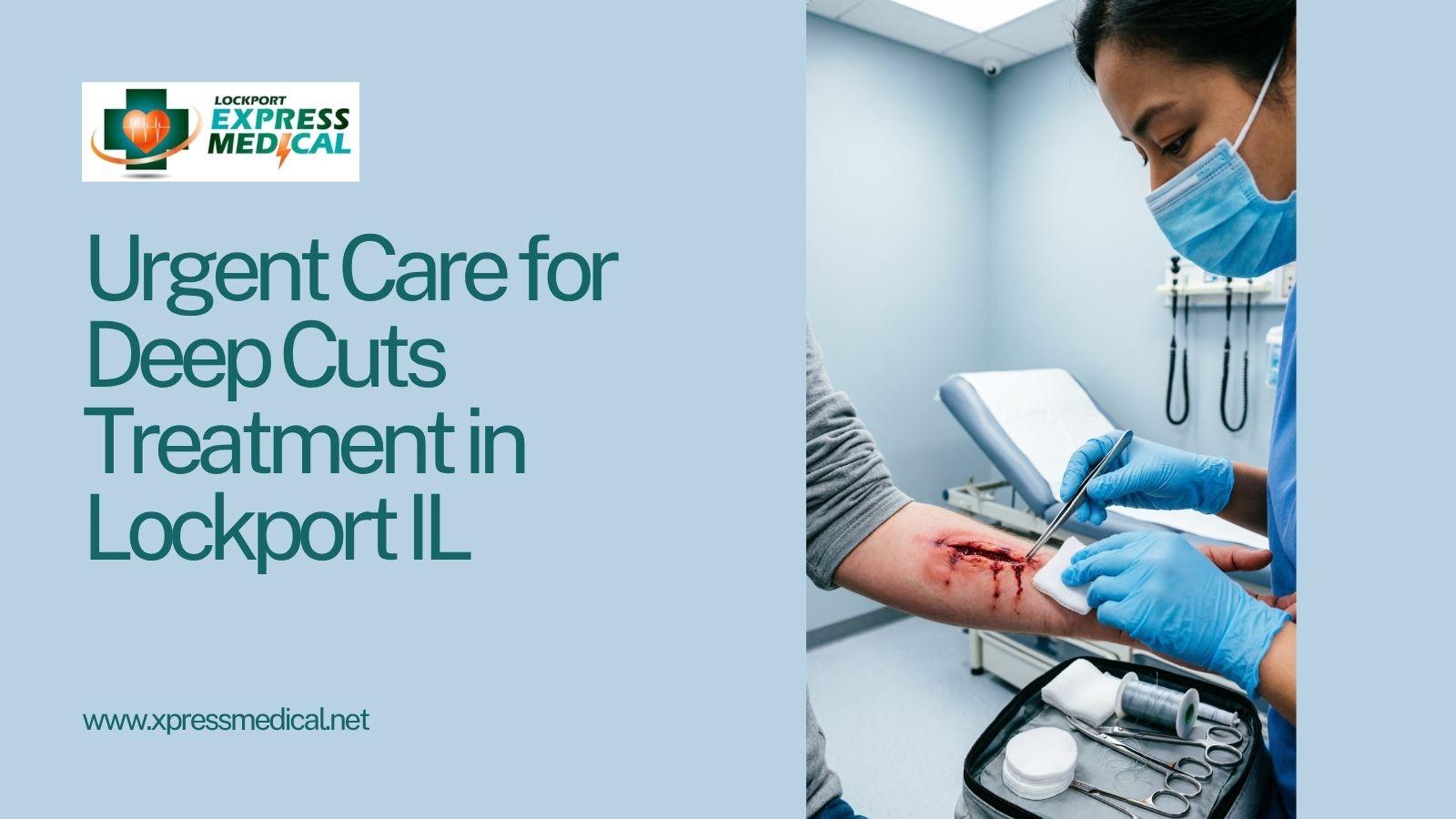
A cut can look fairly small and still reach deeper tissue. Its length is not the only concern. Bleeding that continues after several minutes of steady pressure, edges that pull apart, numbness, or trouble moving a nearby finger or joint all deserve attention. Urgent care for deep cuts allows a clinician to see how far the wound goes and whether it can be safely treated at the clinic. Express Medical offers urgent care for cuts, including wound assessment and cleaning. Bleeding that is heavy, spurting, or impossible to control belongs in the emergency room.
What are deep cuts?
There is no single measurement that defines every deep cut. The location of the injury matters as much as its size. A cut across a finger, for example, may reach a tendon even when the opening looks small. Depth becomes more likely when fatty tissue can be seen, the edges remain separated, or normal feeling and movement change. Continued bleeding is another concern, but it is not present in every case. Urgent care for deep cuts includes examining what lies beneath the wound, not simply measuring its length.
Why isn’t urgent care for deep cuts an option?
- Urgent care may be suitable when bleeding is controlled and the injury does not involve extensive tissue loss, an amputation, or another medical emergency.
- How the cut happened matters. Animal bites, puncture wounds, and injuries contaminated with soil, saliva, or dirty water carry different infection risks.
- Numbing medicine is often used before the wound is rinsed. This allows dirt to be removed without adding unnecessary pain.
- Movement and feeling around the cut are checked. A change in either one can point to tendon or nerve damage.
- Some wounds need stitches; others close better with skin glue, staples, or medical strips. Dirty wounds are not always closed immediately.
- Urgent care for cuts may also cover tetanus protection. Antibiotics depend on the wound, not simply its depth.
- Heavy bleeding, missing tissue, exposed bone, or a partly severed finger requires emergency care.
Get The Best Minor Injury Treatment Services in Lockport
What should I do before reaching urgent care?
- Clean the hands before touching the injury. Use disposable gloves when available.
- Press a clean cloth or gauze firmly over the cut. Keep pressure continuous; repeatedly lifting the cloth can disturb the forming clot.
- If blood passes through, place more gauze on top. Removing the first layer may restart bleeding.
- Leave embedded glass, metal, or other objects in place. Padding around the object can prevent movement during transport.
- Before leaving for urgent care for deep cuts, remove rings, watches, or bracelets from the injured limb because swelling can develop quickly.
- Once minor bleeding is controlled, loose surface dirt may be rinsed away with clean running water. Do not probe, scrub, or attempt to clean a severely bleeding wound.
- Avoid hydrogen peroxide, rubbing alcohol, powders, and household glue. Cover the area with a clean dressing and keep the injured part still during travel.
Potential risks of deep cuts:
- A wound may look dry on top while bacteria remain trapped farther down. Pain that returns or grows after improvement can be an early clue.
- Infection spreading through the skin often creates an uneven patch of warmth and redness. Fever or chills suggest that the problem is no longer limited to the cut.
- Fluid under the skin can turn into an abscess. This usually feels swollen and tender, and it may leak thick material.
- Germs carried into a joint can cause septic arthritis and damage cartilage. A wound that reaches bone may cause osteomyelitis, which often requires prolonged treatment.
- Slow healing is common when an area receives too little blood, particularly in diabetes or vascular disease.
- Scars do not always remain soft. Over a knuckle, tightening can reduce movement.
- Urgent care for deep cuts allows these risks to be considered before routine healing is assumed.
Explore: Soft Tissue Injuries Specialist Near Me in Illinois
What happens during deep cut treatment?
- Bleeding is dealt with first. Pulse and blood pressure may also be checked when blood loss has been significant.
- The cut is then numbed so its full length and depth can be seen without causing avoidable pain.
- At urgent care for deep cuts, rinsing is usually more thorough than cleaning performed at home. Saline or clean water carries out small particles hidden inside.
- Suspected glass or metal changes the plan. An X-ray or ultrasound may be arranged rather than searching blindly.
- Ragged skin with no healthy blood supply is sometimes trimmed away. Leaving it behind can interfere with repair.
- The closing method depends on the wound itself; stitches are not the default for every injury.
- A fresh dressing is applied, followed by specific instructions covering bathing, activity, and the date for suture removal.
Explore: Sprained Ankle Urgent Care in Illinois for Fast Treatment
Tips to prevent infection after a deep cut:
- Follow the dressing schedule provided by the clinician. Changing it too often can disturb new tissue, while leaving a wet or dirty covering in place encourages bacterial growth.
- Hands should be washed before and after every dressing change, even when the wound itself is never touched directly.
- Keep the area dry for the period advised. Afterward, brief gentle washing is usually safer than soaking in a bath, pool, or hot tub.
- A thin layer of plain petroleum jelly can prevent the surface from drying and cracking. Antibiotic ointment should only be used when recommended.
- Avoid picking scabs, pulling loose skin, or testing the repair by stretching it.
- After urgent care for deep cuts, any prescribed antibiotic should be used according to the clinician’s directions, and new drainage, fever, or worsening pain should be reported.
- Good glucose control is especially important in diabetes because high blood sugar can weaken infection defenses and delay tissue repair.
Get urgent care for deep cuts at Express Medical:
- Cuts rarely happen at a convenient time. Lockport Express Medical accepts walk-in patients, removing the need to wait for a regular office visit.
- Children and adults can be seen at the clinic. Daily opening includes evening and weekend hours.
- On-site digital X-rays may help identify an associated fracture and some retained materials, including metal and most glass fragments.
- The clinician assesses whether the wound can be managed safely at the clinic or requires transfer to an emergency department or referral to a specialist.
- Instructions given before leaving depend on the wound and its location. They may change work, exercise, bathing, or hand-use plans for several days.
- Returning for review is sometimes necessary, particularly when healing stops progressing.
- Express Medical handles stable injuries. Severe blood loss, extensive crushing, or a partly detached limb requires an emergency department instead.
FAQs
What Makes a Cut Considered Deep?
Depth refers to the tissue reached, not the length visible on the skin. Exposed yellow fat is a clear sign. A small opening may also hide damage below, particularly when feeling or movement has changed.
Can a Small Deep Cut Heal Without Stitches?
Sometimes. A short wound may heal open or close with adhesive strips or skin glue. The choice depends on its position, age, cleanliness, and the amount of pulling on its edges.
When Is It Too Late to Close a Laceration?
No fixed hour applies to every cut. Facial wounds and clean injuries may allow later closure. Bites, dirty wounds, and early infection are handled more cautiously, so assessment should not be delayed.