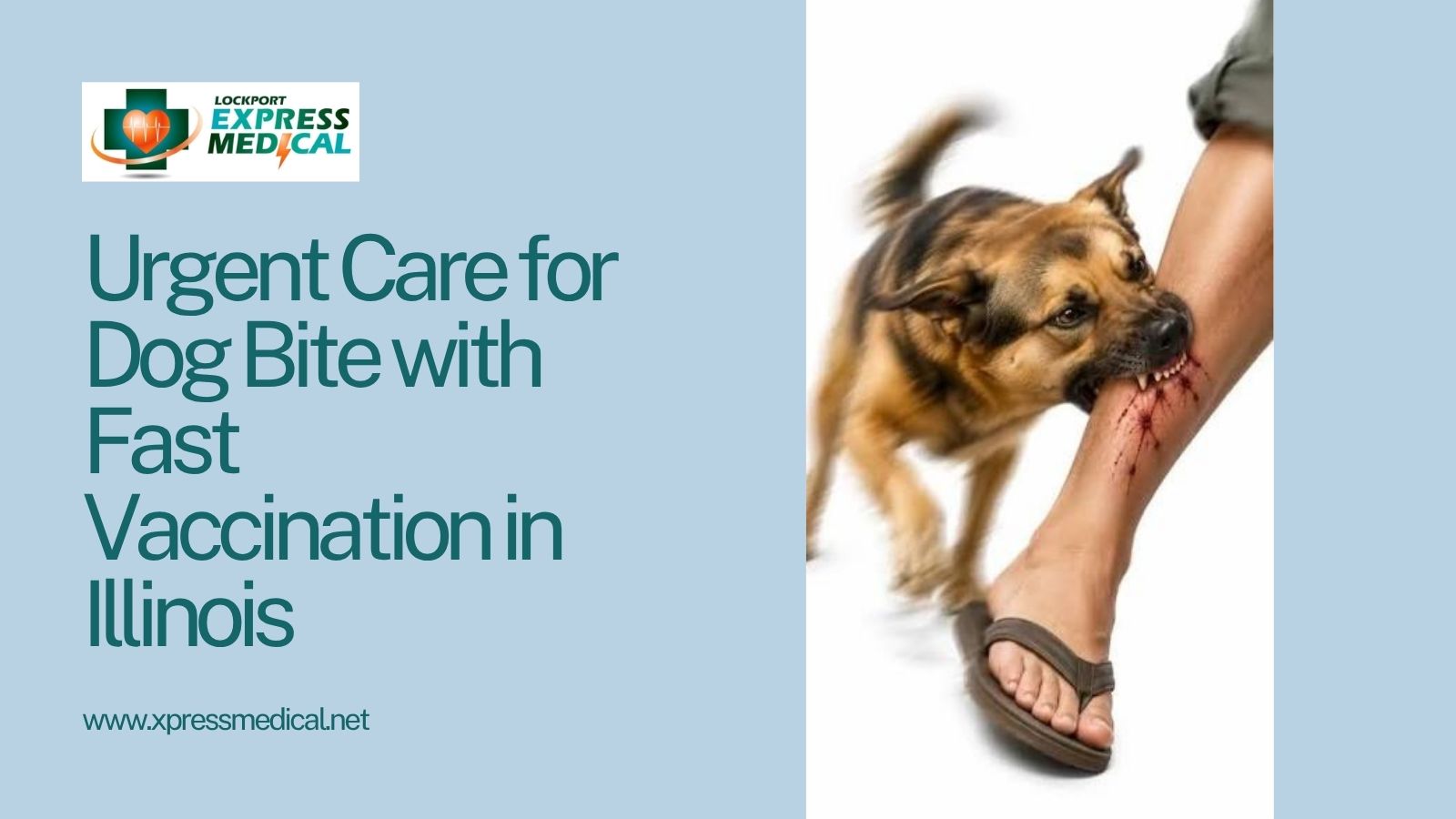
Urgent care for dog bite treatment requires fast action to prevent dangerous bacterial infections and secure timely vaccinations across Illinois. Puncture wounds carry hidden pathogens that multiply rapidly beneath the skin within hours of an attack. Patients need professional wound flushing, tetanus evaluations, and rabies risk assessments immediately following any aggressive animal contact. Navigating these critical healthcare steps quickly ensures a safe recovery without long-term complications. For residents needing dog bite immediate treatment, Lockport Express Medical proudly stands ready to help you get urgent care for dog bite safely right here today.
Why can a dog bite become infected?
A dog bite can become infected because a dog’s mouth contains hundreds of types of bacteria that are pushed deep into your tissue when the skin is broken, so you need medical treatment for dog bite.
- Bacterial Transfer: Dogs carry numerous aerobic and anaerobic bacteria such as Pasteurella, Staphylococcus, and Streptococcus in their saliva and mouths.
- Puncture Mechanism: Dog teeth act like blunt needles that pierce the skin, pushing bacteria deep beneath the surface where standard surface washing cannot always reach.
- Trapped Environment: Puncture holes often seal over quickly at the surface. This closes off oxygen and creates an ideal, hidden space for bacteria to multiply.
- External Contamination: Bacteria from the surrounding skin or environment can also enter the open wound during or after the bite.
When isn’t urgent care for dog bite a choice?
An emergency room (ER) is required instead of urgent care for dog bites when a dog bite involves severe, life-threatening, or complex injuries that exceed an urgent care clinic’s capabilities.
- Sensitive or Complex Areas: Any bite to the face, neck, or genitals requires an ER evaluation due to complex anatomy and a very high risk of severe infection or the need for plastic surgery.
- Deep Tissue Damage: Wounds deep enough to expose muscle, bone, or tendons, or gaping edges that require specialized surgical repair.
- Loss of Function or Nerve Damage: Inability to move fingers after a hand bite, inability to bear weight on a leg, spreading numbness, or signs of compromised nerves and tendons.
- Uncontrolled Bleeding: Bleeding that does not slow or stop after 10 minutes of direct, constant pressure, suggesting a major blood vessel injury.
- Systemic Symptoms of Shock or Allergy: Extreme paleness, fainting, widespread hives, or difficulty breathing.
- High-Risk Medical Conditions: Individuals who are immunocompromised or asplenic face a rapidly escalating risk of severe sepsis from animal bacteria.
Get The Best Minor Injury Treatment Services in Lockport
What are bad signs after a dog bite?
Bad signs after a dog bite that require urgent care include spreading redness, pus draining from the wound, worsening pain, and systemic symptoms like a fever or chills.
- Spreading redness or swelling around the wound.
- Skin warmth or heat radiating from the bite area.
- Pus or cloudy, foul-smelling fluid draining from the punctures.
- Worsening pain that increases after the first 24 hours.
- Red streaks extend outward from the bite.
- Swollen lymph nodes near the injury site, such as in the armpit or neck.
- Fever, chills, or intense night sweats.
- Extreme fatigue, dizziness, or confusion.
- Numbness or a tingling feeling near the bite.
- Trouble moving the nearby finger, hand, or limb.
- Uncontrollable bleeding that does not slow down with direct pressure.
Get Urgent Care for Deep Cuts Treatment in Lockport IL
Who is at higher risk for infection?
People with weakened immune systems, asplenia, chronic liver disease, or deep puncture wounds on the hands and feet face the highest risk for severe infection after a dog bite and need dog bite medical management.
- Immunocompromised individuals: People with conditions like diabetes, cancer, HIV, or those undergoing chemotherapy.
- Asplenic patients: Individuals without a functioning spleen have a significantly higher risk of severe, rapid bacterial complications (such as from Capnocytophaga).
- Liver disease and alcohol use disorders: Individuals with cirrhosis or heavy alcohol use are much more vulnerable to severe systemic infections.
- Older adults: Aging immune systems increase susceptibility to severe outcomes from oral canine bacteria.
How do infection risks vary for different bite locations?
Yes, infection risks and urgent care for dog bite vary by dog bite location because of differences in blood supply, tissue depth, and distance to joints or bones.
High-Risk Areas
- Hands and Fingers: Thin skin, tight spaces, tendons, and joints trap bacteria easily and spread infection fast.
- Feet and Ankles: Poor circulation compared to the head can slow healing and increase infection rates.
- Puncture-Prone Areas: Deep punctures push bacteria far beneath the skin where cleaning is difficult.
Lower-Risk Areas
- Face and Scalp: High blood flow helps the body fight bacteria quickly, though scarring risks remain high.
- Thick Muscle Areas (Thighs/Back): Better blood supply and easier surface cleaning lower the overall chance of deep infection.
What happens if a dog bite is left untreated?
The patient leaves care for dog bite that leads to severe bacterial infections, permanent tissue or nerve damage, and life-threatening illnesses like rabies or tetanus.
- Bacterial Infections: Dog mouths carry bacteria like Pasteurella, Staphylococcus, and Streptococcus. Without treatment, these bacteria cause painful localized swelling, redness, pus, and cellulitis.
- Deep Tissue and Bone Damage: Puncture wounds can drive bacteria deep into joints, tendons, and bones, causing septic arthritis or osteomyelitis (bone infection).
- Sepsis: A localized infection can spread into the bloodstream, triggering sepsis, a medical emergency that causes organ failure and can be fatal.
- Rabies: If the biting dog has rabies and the virus is left untreated before symptoms appear, it is nearly 100% fatal.
- Tetanus: Bacteria from dirt or the dog’s mouth can cause tetanus, leading to painful muscle cramping and spasms.
Explore: Allergic Reaction Walk-In Clinic In Illinois
What does urgent care do for a dog bite?
Urgent care dog bite cleans, treats, and assesses dog bite wounds that break the skin but are not life-threatening.
- Wound Cleaning: Providers at urgent care for dog bite by irrigating and flush the bite with sterile saline or water to remove bacteria and debris.
- Medication: They prescribe oral or topical antibiotics (like Augmentin) to prevent or treat bacterial infections.
- Tetanus Booster: The dog bite doctor checks your vaccination records and gives a tetanus shot if your last one was over 5 to 10 years ago.
- Rabies Assessment: They evaluate your risk of rabies based on the dog’s history and advise if you need a rabies vaccine series.
- Wound Closure Decision: They decide whether to leave the wound open (common for punctures to prevent trapping bacteria) or use stitches.
- Aftercare Instructions: They provide guidance on changing bandages, watching for signs of infection, and getting follow-up care.
Get The Best Urgent Care That Accepts Cigna Insurance in Lockport
Get urgent care for dog bite at Express Medical:
When an unexpected dog bite breaks your skin, fast professional urgent care for dog bite prevents dangerous infections. Lockport Express Medical delivers rapid, expert urgent treatment, ensuring thorough wound cleaning, essential vaccinations, and complete recovery.
- Immediate Access: Walk right in without booking an appointment. You receive prompt attention for dog bite urgent care before bacteria can spread in the tissue.
- Expert Wound Care: Trained staff provides urgent care dog bite, irrigating and flushing the wound thoroughly using sterile saline or water to clear out trapped germs and debris.
- Infection Prevention: Doctors assess your specific injury risks and quickly prescribe targeted oral antibiotics to stop common bite bacteria like Pasteurella.
- Crucial Vaccinations: Clinicians evaluate your immunization history on-site and provide immediate tetanus boosters or rabies evaluations when needed.
- Cost and Time Savings: Avoid the long lines and high bills of a traditional hospital emergency room while receiving the exact same level of minor trauma care.
FAQs
Do I need to go to a doctor after a dog bite?
Yes, you should see a doctor after a dog bite that breaks the skin. Medical professionals properly clean deep wounds, prescribe antibiotics, and evaluate your need for tetanus or rabies shots.
How long after a dog bite does the infection set in?
Bacterial infections from a dog bite usually set in within 24 to 48 hours. However, early signs like redness, swelling, and throbbing pain can sometimes appear in less than 12 hours.
What percentage of dog bites become infected?
Roughly 15 to 20 percent of all dog bites become infected. Deep puncture wounds carry a much higher risk of bacterial complications compared to shallow scratches or minor surface tears.
Do you need a rabies shot after a bite?
You need a rabies shot if the biting dog is unknown, wild, or unvaccinated. Post-exposure treatment is critical because rabies is a fatal viral disease once clinical symptoms start appearing.
Can a vaccinated dog give me rabies?
A properly vaccinated dog cannot give you rabies. The vaccine prevents the animal from carrying and transmitting the virus, making human infection from a current-vax dog virtually unheard of.