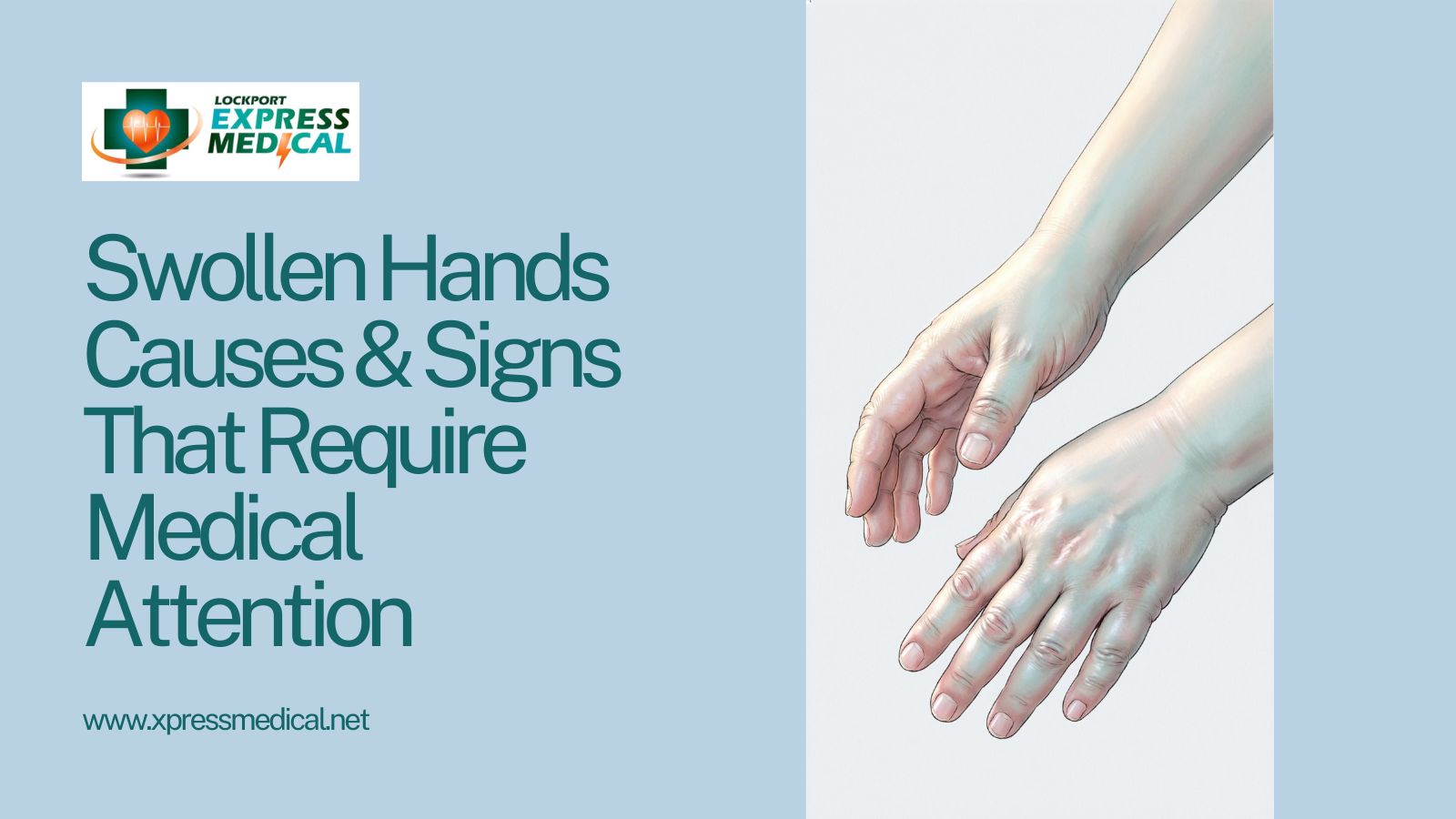
Swollen hands causes can range from a harmless, salty meal to an underlying health condition that needs an expert eye, to conditions that need prompt care. If you notice swelling with redness, severe pain, warmth, fever, numbness, or difficulty moving fingers, it may signal infection, injury, inflammation, or a circulation problem. Sudden swelling in one hand, or swelling that worsens quickly, is also a red flag. Keep reading to learn practical ways to treat swollen hands, manage pain, and understand what causes edema and when to talk to a doctor.
What are swollen hands or Edema?
Swollen hands, often called hand swelling or edema, mean that the tissues in your hands collect extra fluid and become puffy, tight, or larger than usual; edema happens when fluid from small blood vessels leaks into surrounding tissues, commonly due to irritation, inflammation, injury, infection, changes in blood flow, or problems with how the body balances fluid and salt/electrolytes.
When edema affects the hands, swollen hands causes often from inflammation, poor circulation, or water/electrolyte retention, and it can cause tightness, stiffness, and reduced dexterity in the fingers; if swelling comes with pain, warmth, redness, numbness, fever, or sudden one-sided swelling, it may require medical attention.
Common swollen hands causes and triggers:
Swollen hands causes usually occur when extra fluid collects in body tissues or when localized inflammation develops; triggers can be everyday (heat, salt, exercise) or linked to medical conditions.
- Hot weather / sudden heat exposure (heat edema): the body may struggle to cool itself down; swelling may improve after a few days.
- High-sodium diet / too much salt: salt-water balance shifts, making kidneys harder to clear excess fluid.
- Exercise: can cause temporary swelling via changes in blood flow/vasodilation; sometimes a sign of low sodium during endurance exercise.
- Pregnancy: swelling is common (hands/feet), but can also signal preeclampsia (especially after ~20 weeks).
- Lymphedema: lymph fluid buildup; can occur from lymphatic system injury (e.g., lymph node removal or cancer treatment).
- Injury or irritation to the hand: localized swelling in hands and pain after sprain/strain/trauma.
- Arthritis—especially psoriatic arthritis: finger/hand joint inflammation causing swelling, stiffness, pain, warmth (often “sausage-like” fingers).
- Angioedema (allergic swelling): swelling under the skin from an allergic reaction; often affects the lips/eyes and can include the hands.
- Medications (certain blood pressure medicines, contraceptive pills, antidepressants, steroids) and other health problems (kidney, liver, or heart issues; blood clot/circulation problems; cancer treatment).
- Staying in one position too long or sudden temperature changes can contribute to fluid pooling.
Benefits of hand therapy for hand edema:
Swollen hand treatment by Hand therapy helps reduce swelling and improve how your hand moves and functions by using specialized techniques that encourage fluid drainage, lower inflammation, and protect healing tissues.
- Restores function and mobility: Helps regain range of motion, improve dexterity, and rebuild strength after injury, surgery, or overuse.
- Pain & Inflammation Reduction: Uses manual therapy, edema control, and modalities (like ultrasound or electrical stimulation) to reduce inflammation and manage pain.
- Customized orthotics/splints: Provides custom-made splints/braces to protect healing tissue, support weak joints, and improve comfort.
- Faster recovery after injury or surgery: Can address early causes of issues such as tendonitis, carpal tunnel syndrome, or arthritis to reduce symptoms without invasive procedures.
- Speeds up post-surgical recovery: Helps the repair heal correctly while controlling swelling and pain, and preventing scar tissue from limiting movement.
- Improves quality of life: Offers education, adaptive techniques, and exercises to help restore independence, confidence, and everyday self-care.
- Accelerated fluid drainage: Therapists use techniques such as manual lymphatic drainage (MLD) and retrograde massage to move excess fluid back into circulation.
- Prevents permanent stiffness: Early, targeted movement and edema control help avoid scarring and “frozen” hand function over time.
Explore: Swollen Lymph Nodes Urgent Care and When to Seek Medical Attention?
Excess salt intake harms as one of swollen hands causes:
Excess salt intake can directly contribute to hand swelling causes by disrupting how your body balances sodium and water, causing extra fluid to move into tissues and create uncomfortable puffiness.
- Osmosis (water-pulling effect): Sodium strongly attracts water molecules; too much sodium pulls water into spaces between cells, leading to swelling or bloating.
- Kidney overload: Your kidneys work to remove excess sodium and unwanted fluid, but high sodium makes it harder to eliminate the extra water effectively.
- Fluid overload/dilution: When sodium levels rise, the body retains extra water to dilute the salt in the bloodstream, increasing fluid volume circulating in tissues.
- Increased capillary pressure: swollen hands causes by more circulating fluid raises pressure in tiny blood vessels (capillaries), which can push water out into the interstitial spaces of the hands and fingers.
- Visible puffiness (edema): Trapped fluid makes surrounding tissues swell “like a sponge,” causing tight skin and rings that become difficult to remove.
- Circulatory strain (long-term risk): If fluid retention becomes chronic, it can strain blood vessels and the heart, making the circulatory system work harder.
What is the treatment for swollen hands (Edema)?
Swollen hands (edema) are treated based on swollen hands causes, from simple at-home steps for heat or minor injury to professional care when the swelling is persistent or related to conditions like arthritis. How to treat swollen hands:
Immediate Relief Strategies (At-Home):
- Elevation: Prop your arm up on pillows so it sits above heart level to help drain excess fluid away.
- Cold therapy (when appropriate): Apply an ice pack wrapped in cloth for 15–20 minutes at a time to reduce inflammation.
- Gentle movement: Lightly stretch and flex your fingers (and move your wrist/hand gently) to encourage circulation—stop if it causes pain.
- Compression: Wear a light, properly fitted compression sleeve or edema glove; avoid wrapping too tightly.
- Hydration & diet: Drink plenty of water and limit salty/processed foods to reduce fluid retention.
If symptoms persist or a Swollen Hands Causes is suspected, a medical professional may recommend the following treatments:
- Anti-inflammatory medications (OTC NSAIDs) like ibuprofen to reduce pain and swelling (especially with injury or arthritis).
- Prescription diuretics (“water pills”) only under medical supervision.
- Splinting/bracing to rest the joint and reduce pressure (sometimes for conditions like carpal tunnel or De Quervain’s).
- Targeted therapy, such as manual edema mobilization/manual lymphatic drainage and a customized exercise plan (often guided by a certified hand therapist).
Explore: Elderly Edema Treatment and Reducing Fluid Retention
Swollen hands causes: When to seek medical care?
Swollen hands causes can be harmless, but sometimes they signal an emergency infection, allergic reaction, trauma, or circulation problem. Know the red flags that require urgent evaluation.
Go to emergency care immediately if:
- Swelling comes with difficulty breathing, chest pain, or sudden swelling of the lips, tongue, or face.
- Swelling is sudden, highly painful, bright red, or hot to the touch.
- Anaphylaxis signs: trouble breathing/wheezing or swelling of the face, lips, or throat.
- Cardiac/organ distress signs: sudden swelling plus shortness of breath, chest pain, or coughing up blood.
- Severe infection: the hand is bright red, hot, and leaking pus, or you have a high fever and chills.
- Severe trauma: visible deformity, open wound, or inability to move fingers after an injury.
- Neurological signs: sudden numbness/tingling or severe loss of sensation in the hand or arm.
- Circulation emergency: sudden, painful swelling in one hand/arm with no obvious injury (possible blood clot).
- Persists or worsens for more than a few days despite resting and elevating.
- You are pregnant and notice sudden or new hand puffiness (needs assessment for preeclampsia).
- You have diabetes, kidney disease, a history of lymph node problems, or heart problems.
- Morning puffiness occurs repeatedly and comes with joint pain or stiffness (possible rheumatoid arthritis or gout).
- The swelling started shortly after beginning a new medication (possible side effect).
Why choose Lockport Express Medical for hand swelling evaluation?
Lockport Express Medical was chosen for hand swelling evaluation because they focus on fast, thorough care and clear next steps—helping ensure timely assessment while supporting patient comfort and peace of mind.
- Quick access to evaluation for timely relief and reduced wait times.
- Experienced clinical team trained to assess swelling, pain, and possible underlying causes.
- Thorough exam approach to distinguish minor issues from conditions needing urgent treatment.
- Clear communication about findings, likely causes, and treatment options.
- Care plans tailored to symptoms to support recovery and prevent worsening.
- Guidance on follow-up and red flags so you know what to do next and when to escalate care.
FAQs
What is puffy hand syndrome?
It is a rare condition caused by chronic intravenous drug use. Sclerosis of blood vessels leads to progressive, permanent lymphedema and swelling on the backs of the hands.
Should I be worried if my hands are swollen?
Usually, no. Mild swelling is common from heat or salty food. However, consult a doctor if it is sudden, unexplained, persistent, or if your rings suddenly feel tight.
What deficiency causes swollen hands?
Deficiencies in B vitamins, particularly Vitamin B2 (Riboflavin) and Vitamin B6 (Pyridoxine), are known to cause inflammation, swelling, and neuropathy in the extremities.
Does swollen hands mean heart failure?
Not necessarily, but they can be a sign. Heart failure causes systemic fluid retention (edema), typically presenting in both hands and legs, accompanied by fatigue or shortness of breath.
Should I go to the ER for swollen hands?
Go to the ER or call emergency services if the swelling is severe and unexplained, or if it is accompanied by chest pain, breathing trouble, sudden limb numbness, fever, or red, hot skin.
What to drink to reduce swelling in hands?
Drink plenty of pure water to stay hydrated and flush excess sodium. If swelling occurs after intense exercise, electrolyte-rich beverages help balance your body’s sodium levels.