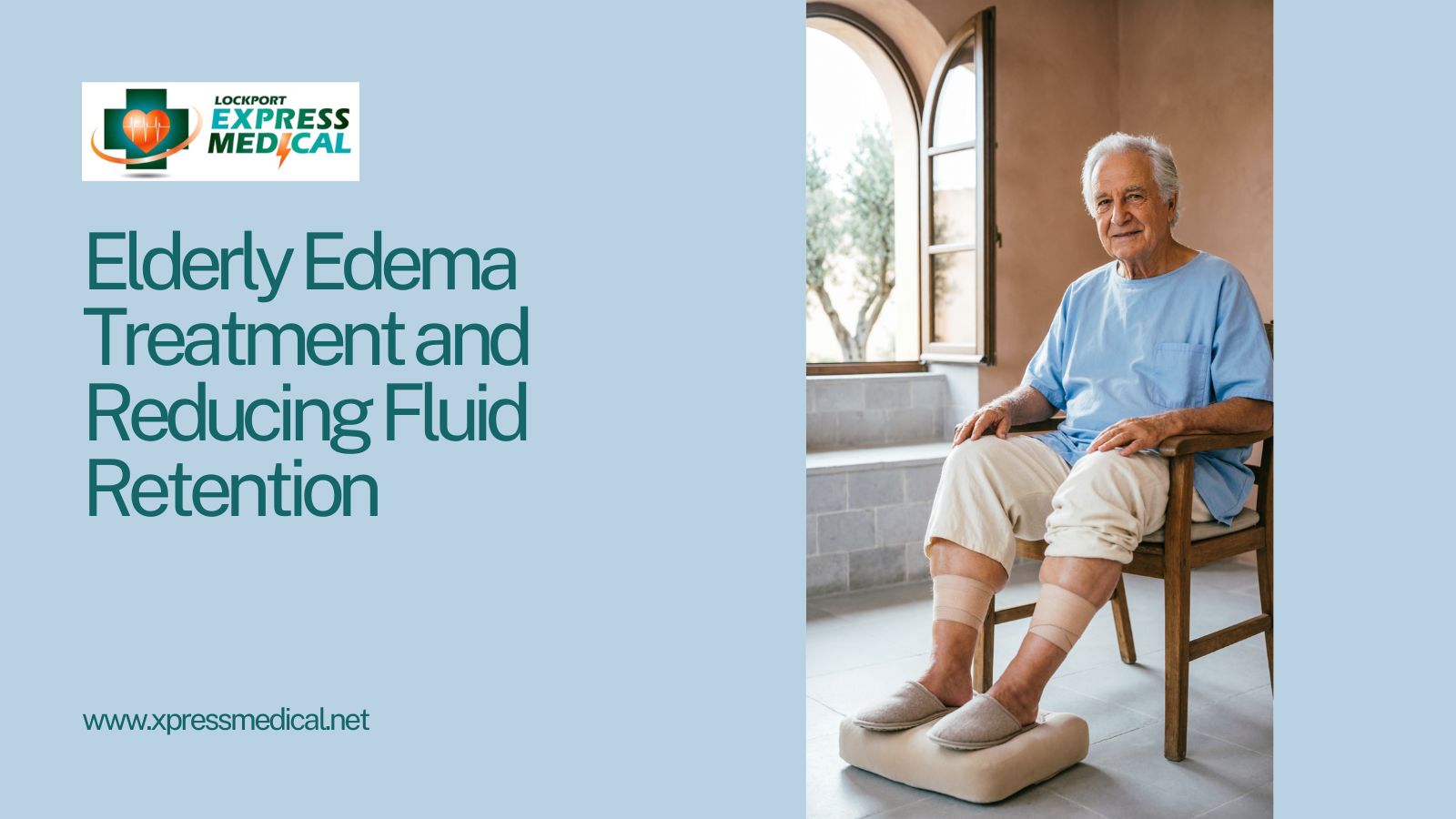
A new sock mark around the ankle may not seem important at first. Still, elderly edema treatment should begin when the swelling keeps returning, becomes more noticeable, or starts to affect walking. The cause is not always the same. An older adult may have spent most of the day sitting, started a different medicine, or developed a problem with the leg veins. Heart, kidney, and liver conditions can also lead to fluid buildup. Express Medical checks when the swelling began, whether it affects one leg or both, and whether pain, redness, breathing trouble, or other symptoms appeared with it.
What is elderly Edema and how dangerous it is?
- Edema is not simply “extra water.” It develops when fluid entering tissues is greater than the amount removed through veins and lymphatic channels.
- In elderly edema treatment, the pattern matters. Soft swelling that dents under pressure differs from firm, non-pitting swelling, and each pattern directs examination toward different mechanisms.
- Mild edema may cause little more than tight footwear. As fluid increases, skin can become tense, glossy, tender, or difficult to lift between the fingers.
- It becomes more harmful when swelling persists. Reduced tissue circulation can delay wound repair, while fragile skin may split or begin to leak clear fluid.
- Stiff ankles and limb weight may shorten walking distance and increase dependence during transfers. For an older person with poor balance, that loss of movement can add to fall risk.
- Treatment for edema in elderly patients should follow medical assessment rather than automatic use of water tablets. Rapid progression, widespread swelling, or unexplained weight gain requires prompt review and possible escalation.
Same day podiatry appointment for urgent foot problems
Elderly edema treatment: Causes and symptoms:
| Possible cause | How the swelling may appear | Other symptoms or clues |
| Venous insufficiency | The ankles may look almost normal after sleep, then become more swollen as the day goes on, especially after standing or sitting for long periods. | Aching, itching, visible varicose veins, skin tightness, or brown staining around the lower legs may appear. |
| Heart failure | Fluid often affects both legs and may build over several days rather than appearing in one small area. | Reduced walking tolerance, breathlessness when lying flat, waking at night short of breath, or several pounds of weight gain can occur. |
| Kidney disease | Swelling may be more noticeable around the eyes in the morning and may later extend above the ankles. | Foamy urine, less urine than usual, tiredness, or a clear change in urination can be important clues. |
| Liver disease | Leg swelling may occur together with fluid collecting in the abdomen. | Abdominal enlargement, easy bruising, jaundice, poor appetite, unusual sleepiness, or confusion may be present. |
| Medication-related swelling | The swelling may begin after a new medicine is started or after a dose is increased. | Amlodipine and similar blood-pressure medicines, anti-inflammatory pain relievers, corticosteroids, and hormone treatments can contribute. |
Types of Edema in the elderly:
- Dependent edema collects in the lowest body areas. It is usually seen around the ankles in mobile seniors, but may appear over the lower back or sacrum in someone who spends most of the day in bed.
- Pitting edema leaves an indentation after finger pressure. This finding helps describe the swelling, yet it does not identify the diagnosis on its own.
- Lymphedema develops when lymph drainage is impaired. Early swelling may pit; long-standing disease often becomes firmer as the tissues thicken, making compression planning more specialised.
- Localized edema affects a limited area. Infection, injury, joint inflammation, or a blocked vessel may be responsible, so examination focuses on heat, tenderness, colour, and circulation.
- Generalized edema involves several body regions rather than one limb. Pulmonary edema is different: fluid enters the lungs and can interfere with oxygen exchange.
- Elderly edema treatment must therefore match the type found during assessment. Edema in elderly treatment avoids treating every swollen limb as the same condition.
Get urgent care x ray at Express Medical
What makes elderly more vulnerable to Edema?
- Age does not cause edema by itself, but it removes some of the body’s safety margin. Leg veins become less efficient, while weaker calf muscles move blood upward with less force.
- A painful knee, neuropathy, a recent fall, or several quiet days in bed can reduce ankle movement enough for swelling to appear. The change may be gradual, so families notice tighter shoes before the patient reports discomfort.
- Older adults also react more strongly to small shifts in salt, fluid intake, and medicine doses. This matters when kidney reserve is already reduced.
- Another issue is overlap. Diabetes, venous disease, heart disease, poor appetite, and limited mobility may all be present in the same patient, rather than one clear cause.
- For that reason, elderly edema treatment should not rely on appearance alone. Expressmedical reviews mobility, nutrition, chronic illness, prescription changes, and baseline kidney function before planning treatment for edema in elderly patients or arranging further evaluation safely.
Potential complications of delayed elderly Edema treatment:
- Delay matters because swelling may be the first sign of a condition already worsening. Fluid overload from heart or kidney disease can move into the lungs, causing breathlessness and low oxygen before respiratory distress becomes severe.
- One-sided swelling deserves caution. If a deep-vein clot is missed, part of it can travel to the lungs and cause a pulmonary embolism.
- Long-standing lymphatic swelling gradually changes the tissue itself. Protein-rich fluid triggers inflammation and fibrosis, so the limb becomes firmer and less responsive to treatment.
- Uncontrolled venous pressure can progress to lipodermatosclerosis, a hardening of the lower-leg tissue, and later to a venous ulcer that may require prolonged wound care.
- Repeated swelling can distort footwear and pressure distribution, increasing the risk of unnoticed foot injury in patients with diabetes or reduced sensation.
- Elderly edema treatment should not be postponed when swelling is new, persistent, or changing. Urgent care for edema can identify who needs same-day testing and who requires immediate hospital transfer.
Explore: Podiatrist That Accepts Blue Cross Blue Shield in Illinois
Comprehensive elderly Edema treatment at Express Medical:
- Care starts by looking at the whole picture. The clinician checks when the swelling began, whether it changes during the day, and what has happened to weight, breathing, urine output, mobility, and appetite.
- Both legs are examined for pitting, warmth, tenderness, skin damage, pulse strength, and any marked difference in size. Heart and lung findings, oxygen level, and blood pressure help show whether the problem can be managed safely in urgent care.
- Testing is not identical for every patient. Depending on the findings, it may include urine analysis, kidney and liver tests, electrolytes, albumin, or imaging for a suspected clot.
- Elderly edema treatment is then matched to the cause. Elevation, movement, wound care, compression, or medication review may be appropriate. Compression is avoided until arterial circulation has been considered.
- At Express Medical, treatment for edema in elderly patients also includes clear follow-up instructions and prompt hospital referral when the examination suggests heart failure, severe infection, thrombosis, or acute kidney injury.
Why choose Express Medical for senior healthcare needs?
- Older adults often need care before a routine appointment is available, but not every problem belongs in an emergency department. Lockport Express Medical accepts walk-ins seven days a week, including weekends, for urgent conditions that are not life-threatening.
- The clinic treats adults and seniors, so the visit can address the immediate complaint without overlooking diabetes, anticoagulant use, impaired mobility, or other factors that may alter risk.
- On-site laboratory testing and X-ray access can shorten the path from examination to a practical decision when either service is clinically appropriate.
- Families receive an explanation of what was found, what can be managed at home, and which changes mean the patient should go directly to the hospital.
- For elderly edema treatment, that judgment is especially valuable because mild-looking swelling can sit beside serious illness.
- Express Medical also offers extended weekday hours, making same-day review easier when a primary care office is closed or fully booked. This reduces unnecessary delay without blurring urgent-care clinical limits.
Conclusion
Swelling in an older adult may begin with something as simple as a tighter shoe or a sock mark that stays longer than usual. When that change keeps coming back, it is worth finding out why. At Express Medical, the aim is to assess the patient as a whole, not just the swollen leg, and to decide whether care can begin in the clinic or needs further referral. Seek elderly edema treatment when swelling persists, worsens, or starts affecting walking. Early attention often makes the next step clearer and safer.
FAQs
What does edema look like?
It may be less obvious than people expect. One ankle can look slightly rounder, a slipper may feel snug, or a sock line may still be there long after the sock comes off. The skin sometimes looks smooth because it is being stretched. In some cases, a fingertip leaves a dent when pressed into the swollen area; in others, the tissue feels firm.
Is there a cure for leg edema?
Occasionally the swelling goes away completely. This outcome is more likely when it began after a new medicine, an injury, or a brief period of very little movement. Long-term vein or lymphatic problems are different and may need regular management. Elderly edema treatment is chosen around the cause, so using compression or water pills without an assessment is not always safe.
What is a red flag for edema?
A sudden change matters more than mild swelling that has stayed the same for months. One leg becoming larger, hot, red, or painful needs medical review that day. Breathing trouble, chest pain, fainting, or coughing blood is an emergency and should not be managed at an urgent care clinic.