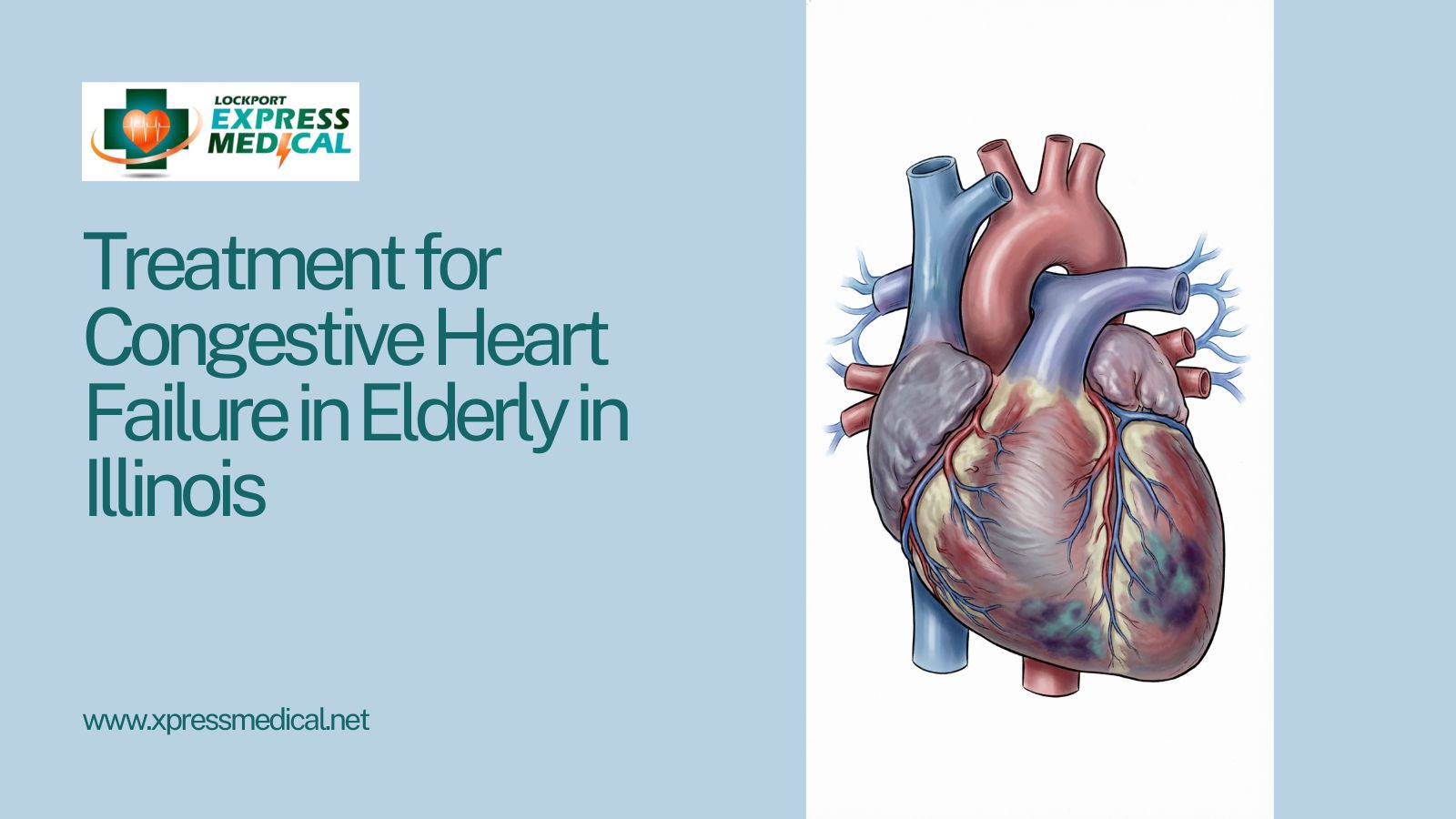
Treatment for congestive heart failure in elderly patients needs to reflect the person’s overall health, not just the condition of the heart. An older patient may also have kidney problems, diabetes, limited mobility, or several daily medicines that affect the treatment plan. Breathlessness, swollen legs, poor appetite, and ongoing tiredness can make ordinary activities much harder. With careful medical review, many of these symptoms can be controlled and sudden deterioration may be avoided. This article explains the available treatments, day-to-day management, and how Lockport Express Medical can assess seniors who need prompt medical attention and appropriate follow-up.
What is congestive heart failure?
Congestive heart failure does not mean that the heart has stopped. It means that it cannot pump blood well enough, or relax properly between beats. As pressure rises, fluid can move into the lungs and tissues. This is why many patients develop breathlessness, ankle swelling, tiredness, or rapid weight gain.
In later life, damaged arteries, years of high blood pressure, faulty heart valves, or an earlier heart attack are common causes. Doctors first identify what is placing strain on the heart because treatment for congestive heart failure in elderly patients must address both the fluid buildup and its underlying cause.
Signs of congestive heart failure in elderly patients:
- Breathing changes are often the first clue. An older person may pause halfway up the stairs, sleep on extra pillows, or wake at night feeling unable to catch a full breath. These changes can point to fluid collecting in the lungs.
- Swelling does not always begin dramatically. Socks may leave deeper marks, shoes may feel tight by evening, or the abdomen may look fuller. A sudden increase on the scale can reflect water retention rather than true weight gain.
- Daily function may decline before obvious chest symptoms appear. Someone may eat less, move more slowly, feel unusually sleepy, or become confused. In elderly patients, these subtle changes can be more important than a single complaint.
- A fast or irregular pulse, ongoing cough, dizziness, or reduced urination should be checked. Treatment for congestive heart failure in elderly patients is safer when these changes are reported early. Severe breathlessness, fainting, blue lips, or chest pressure needs emergency care, not a routine appointment.
Explore: Reliable Walk in Clinics Near Me that Take Medicare
Options of treatment for congestive heart failure in elderly:
- Diuretics are used first when fluid is causing swollen legs or breathlessness. They help the kidneys remove salt and water, but the dose has to be watched because dehydration, low sodium, low potassium, or worsening kidney function can occur.
- For a weak pumping heart, treatment may include an ARNI, ACE inhibitor, or ARB, together with a beta blocker, an MRA, and an SGLT2 inhibitor. These medicines do different jobs, from easing pressure on the heart to slowing disease progression and reducing hospital admissions.
- Treatment for congestive heart failure in elderly patients cannot be copied from one person to another. Blood pressure, kidney results, potassium, dizziness, falls, frailty, and the medicine list all affect what can be started and how quickly doses are increased.
- When the heart pumps normally but fills poorly, care focuses on congestion and related problems. Treatment for heart failure in elderly adults may also involve controlling atrial fibrillation, diabetes, high blood pressure, valve disease, or coronary disease.
Some ways to manage heart failure over time:
| What to manage | Practical approach |
| Morning weight | Start with the scale. Weigh once each morning, after using the bathroom and before eating. Write the number down beside any ankle swelling, tighter shoes, or new trouble breathing. A quick increase may mean fluid is returning. |
| Medicines | Keep medicines simple and visible. A pill box, printed list, or help from a family member can prevent missed or doubled doses. After a medicine change, blood pressure, pulse, kidney function, and potassium may need checking. |
| Salt and fluids | Salt often hides in ordinary food. Soup, deli meat, frozen meals, sauces, and takeaway food can all raise sodium intake. Fluid restriction is not automatic for everyone, so the amount should come from the treating clinician. |
| Movement | Movement still matters. Short walks, rest breaks, and supervised cardiac rehabilitation may help preserve strength without pushing the patient too hard. |
| When to report changes | Treatment for congestive heart failure in elderly patients also depends on reporting weight gain, extra swelling, or worsening breathlessness early instead of waiting for symptoms to become severe. |
| Caregiver support | Treatment for heart failure in the elderly works better when caregivers know the warning signs, understand the medicine plan, and know who to call when something changes. |
Get urgent care x ray at Express Medical
Treatment for congestive heart failure in elderly at Express Medical:
- A senior may come in because shoes feel tight, breathing feels harder, or a walk now takes several stops. At Express Medical, the first job is to hear what changed, then check oxygen level, pulse, blood pressure, lung sounds, and swelling.
- Medicines often explain part of the picture. A missed diuretic, an extra dose, poor fluid intake, or a new pain medicine can change symptoms quickly. Staff can review the list and flag problems that need the prescribing doctor’s attention.
- Treatment for congestive heart failure in elderly patients cannot be safely adjusted based on symptoms alone. Kidney function, potassium, blood pressure, and the type of heart failure all matter. Express Medical can assess the situation and direct the patient to primary care, cardiology, or emergency care.
- Treatment for heart failure in the elderly needs continuity. Lockport Express Medical can help when a stable patient worsens between appointments, while treatment for congestive heart failure in the elderly remains coordinated with the medical team.
Benefits of senior Healthcare at Lockport Express Medical:
- A clinic visit is useful when an older person is “not quite right” but not clearly in an emergency. Maybe their ankles are fuller, they are eating less, or they are sleeping in a chair because lying flat feels uncomfortable. Being seen that day can stop guesswork at home.
- At Lockport Express Medical, the value is in sorting out what needs attention now. A clinician can compare blood pressure, oxygen level, pulse, breathing, swelling, and recent weight change with the patient’s usual baseline.
- Seniors often bring a long medicine list, and small mistakes matter. A forgotten water pill, an anti-inflammatory pain reliever, or poor fluid intake can change symptoms. Reviewing these details supports safer treatment for congestive heart failure in elderly patients.
- The clinic is also a bridge between appointments. It can identify when primary care follow-up is enough and when hospital evaluation is safer. Treatment for congestive heart failure in the elderly still belongs with the regular medical team.
Conclusion
Heart failure can change quickly in an older adult. A little more swelling, a poor night’s sleep, or breathlessness during a familiar task may be the first sign that something is wrong. Do not wait for symptoms to become severe before asking for help. Express Medical can assess new, non-emergency concerns, review recent changes, and guide the family toward the right level of care. For practical support with treatment for congestive heart failure in elderly patients, contact Express Medical and arrange an assessment. Call emergency services instead if there is chest pain, fainting, blue lips, confusion, or serious difficulty breathing.
FAQs
What lifestyle triggers heart failure?
Heart failure is rarely caused by one habit overnight. Problems are more likely when a vulnerable heart is repeatedly strained by smoking, heavy alcohol use, very salty meals, inactivity, or poorly controlled blood pressure. In someone already diagnosed, missed medicines, sudden diet changes, or ignoring early swelling can also bring on a flare-up.
What foods should elderly heart failure patients avoid?
The biggest concern is usually sodium. Canned soup, processed meat, instant noodles, salty snacks, ready-made sauces, frozen dinners, and takeaway meals can hold far more salt than expected. Labels are more useful than taste alone. Potassium-rich foods should not be removed automatically, since the right amount depends on kidney function and current medicines.
How often should elderly patients with CHF see a doctor?
There is no fixed timetable. Some older patients do well with a check-up every few months. Others may need another visit within days, especially after leaving hospital or starting a new medicine. Do not wait for the booked appointment if swelling gets worse, breathing changes, weight rises suddenly, or the patient becomes dizzy, very tired, or confused.