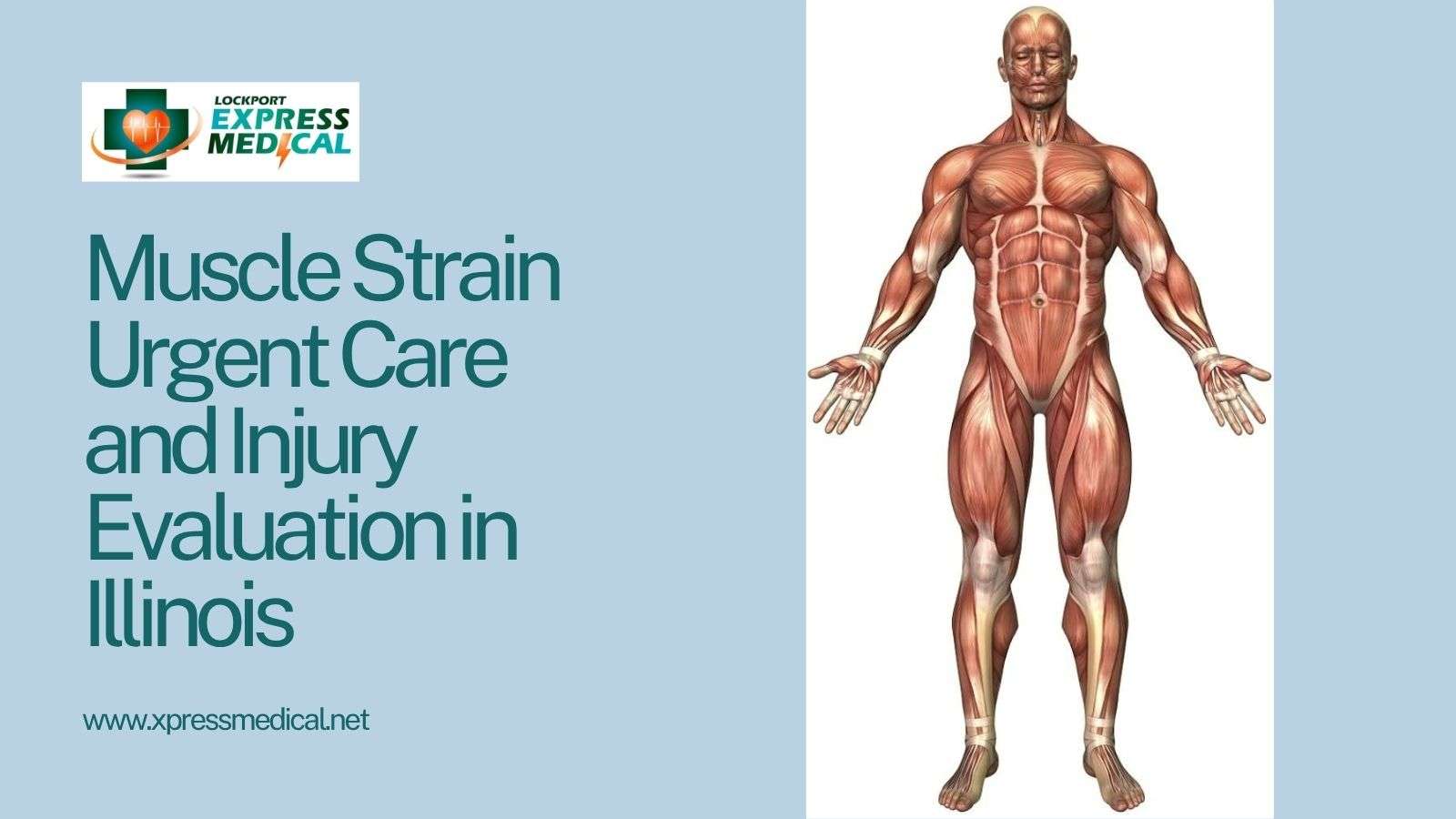
A muscle strain can happen during a workout, while lifting something heavy or simply after one awkward step. At first, the pain may seem manageable. A few hours later, swelling or stiffness can make the injury harder to ignore. Minor strains often settle with sensible care, but marked bruising, sudden weakness or difficulty using the affected limb needs a proper examination. Muscle strain urgent care can help clarify what was injured and what recovery may involve. Express Medical gives Illinois patients a convenient place to receive an assessment, practical advice and suitable care when the injury needs a timely assessment.
What is a muscle strain?
A muscle strain is what happens when a muscle, or the tendon attached to it, is pulled beyond its limit. The damage may involve a few irritated fibers, a partial tear or, less commonly, a complete rupture. That difference matters because two injuries can hurt just as much but need different recovery plans. Doctors look at bruising, swelling, movement and loss of strength rather than judging the injury by pain alone. A muscle strain urgent care visit can help establish the grade and whether imaging or specialist follow-up is needed.
Common causes of muscle strain:
- Sudden force can overload fibers before they adjust. Sprinting, jumping, changing direction or catching yourself during a fall are examples.
- Strains occur during eccentric contraction, when a muscle produces force while lengthening. The hamstrings face this load during running.
- Lifting becomes risky when the weight is excessive, the movement is rushed or the body twists while the muscle is working.
- Fatigue reduces control. This helps explain why injuries often happen near the end of a workout, game or shift.
- Repeated pulling, bending or throwing may cause a gradual strain without warning.
- Increasing distance, speed or resistance can exceed what the tissue has adapted to tolerate, even when someone warms up.
- A previous strain raises the chance of reinjury if strength, flexibility or coordination has not fully returned. Muscle imbalance and poor technique add stress.
- Choose muscle strain urgent care when the cause is unclear or movement is limited. Urgent care for muscle strain can uncover tendon, bone or joint injuries.
Explore: Soft Tissue Injuries Specialist Near Me In Illinois With Expert Care
When do you need a muscle strain urgent care?
- A small strain can hurt, yet you can use the muscle. If walking, lifting or gripping feels impossible, get it checked.
- Maybe you heard a pop. That proves little, but a pop followed by weakness or lost movement is harder to dismiss.
- Watch the bruising. A patch that keeps spreading quickly, a new lump or a dip in the muscle may signal torn muscle fibers.
- Pain should ease. If it is sharper by morning, returns with movement or barely changes after a few days, see a doctor for muscle strain.
- Tenderness over bone or a joint may mean the injury is not muscular.
- Do not wait with numbness, pins and needles, pale skin or a limb that feels colder than the other.
- Blood thinners can make bruising troublesome, so seek advice sooner.
- Express Medical offers urgent care muscle strain assessment for injuries and can arrange imaging or referral.
- A deformed limb, uncontrolled bleeding or lost circulation belongs in emergency care.
What should you do immediately after a muscle injury?
- Stop the activity. Trying another lift, sprint or stretch can turn a small fiber injury into a tear.
- Settle into a position that relaxes the sore muscle. If walking changes your gait, limit weight-bearing rather than limping all day.
- Use a cold pack wrapped in a towel for 10 to 15 minutes. Check the skin between applications, and never place ice directly on it.
- If swelling develops, apply a compression wrap with gentle pressure. Loosen it if you notice throbbing, tingling, numbness or color change below the wrap.
- Raise an injured arm or leg when practical. Elevation works best when the painful area rests above heart level.
- Skip heat, deep massage and aggressive stretching at first. They can aggravate bleeding inside torn tissue.
- Note how the injury happened, where bruising appears and which movements fail. That detail helps guide muscle strain treatment.
- Choose muscle strain urgent care if swelling keeps increasing, normal movement is lost or pain feels unexpectedly severe.
Get Expert Urgent Care for Pulled Muscle in Illinois
Recommended treatments for a strained muscle:
- Not every pulled muscle needs the same plan. A sore calf after walking differs from a hamstring that gives way during a sprint.
- For a day or two, avoid movements that reproduce the pain. Complete bed rest is rarely helpful.
- Use a wrapped cold pack for 10 to 15 minutes. If you add compression, keep the bandage snug, never tight.
- Muscle strain treatment changes with the injury. As sharp pain eases, movement can keep the area from becoming stiff.
- A muscle strain urgent care provider can advise whether acetaminophen or an anti-inflammatory is suitable, particularly if you have kidney disease, ulcers or take blood thinners.
- Do not rush stretching because the muscle “feels tight.” Forceful stretching can reopen healing fibers.
- Large tears may need physical therapy, imaging or an orthopedic opinion. Surgery is uncommon, but complete ruptures sometimes require repair.
How do doctors diagnose muscle strain?
- Diagnosis starts with the story. The doctor asks what you were doing, whether pain came suddenly and if you felt a pop or weakness.
- Next comes an examination. The area is checked for swelling, bruising, tenderness, a lump or a gap where fibers may have torn.
- You may move the nearby joint, then contract the muscle against resistance. This reveals lost motion and strength.
- During muscle strain urgent care, the uninjured side may be tested for comparison. Circulation and sensation are checked when numbness or limb weakness is present.
- A doctor for muscle strain does not order a scan. Many strains can be diagnosed from the history and examination.
- An X-ray may rule out a fracture or tendon pulling bone away. Ultrasound can show some tears, while MRI gives a clearer view when a deep or severe injury is suspected.
Get Sprained Ankle Urgent Care in Illinois for Fast Treatment
How can you prevent future muscle strains?
- Warm up with a few minutes of easy movement before hard activity. Save deeper stretches for later, when the tissue is warm.
- Increase speed, weight or distance gradually. A sharp training increase gives the muscle less time to adapt.
- Strength matters, but balance matters too. Weak glutes may leave the hamstrings doing more than their share.
- After muscle strain urgent care, finish the recovery plan even when pain has gone. Comfortable movement does not always mean full strength has returned.
- A provider offering urgent care for muscle strain can help set limits for returning to work, sport or lifting.
- Pay attention to technique. Repeated twisting, reaching or lifting with poor control can overload the fibres.
Get convenient muscle strain urgent care at Express Medical:
- A pulled muscle can seem minor at first. Then bruising appears, the area stiffens or a step becomes painful.
- Express Medical helps Illinois patients understand the injury instead of testing it through trial and error.
- At a muscle strain urgent care visit, explain what happened and what you could do before the pain began. Details matter.
- The examination checks tenderness, swelling, strength and movement. It may reveal that pain is coming from a joint, tendon or bone rather than muscle.
- An urgent care muscle strain assessment does not mean scans or prescriptions. Care may involve safer activity limits, pain relief and guidance for returning to work or exercise.
- If imaging or specialist care is needed, the team will explain why. Visit Lockport Express Medical for a plan based on your injury.
Skip the wait & get your appointment at Express Medical
FAQs
Can Urgent Care Treat a Muscle Strain?
Yes. Muscle strain urgent care treats injuries and arranges follow-up when necessary.
How Can You Tell If It Is Just a Pulled Muscle?
Pain returns when the muscle contracts, but an examination should confirm the cause.
How Long Will a Muscle Strain Take to Heal?
Mild strains may settle within two weeks. Larger tears can take weeks or months.
What Can Be Mistaken for a Muscle Strain?
Sprains, tendon injuries, fractures, trapped nerves, hernias and blood clots can feel similar.
Is It Better to Stretch or Relax a Pulled Muscle?
Rest early. Stretch gently after movement becomes comfortable, stopping if pain returns.
Is It Okay to Massage a Muscle Strain?
Avoid massage while bruising is fresh. Pressure may feel comfortable later.
How Can You Tell If a Muscle Strain Is Serious?
Get assessed if strength declines, pain disturbs sleep or function remains limited.