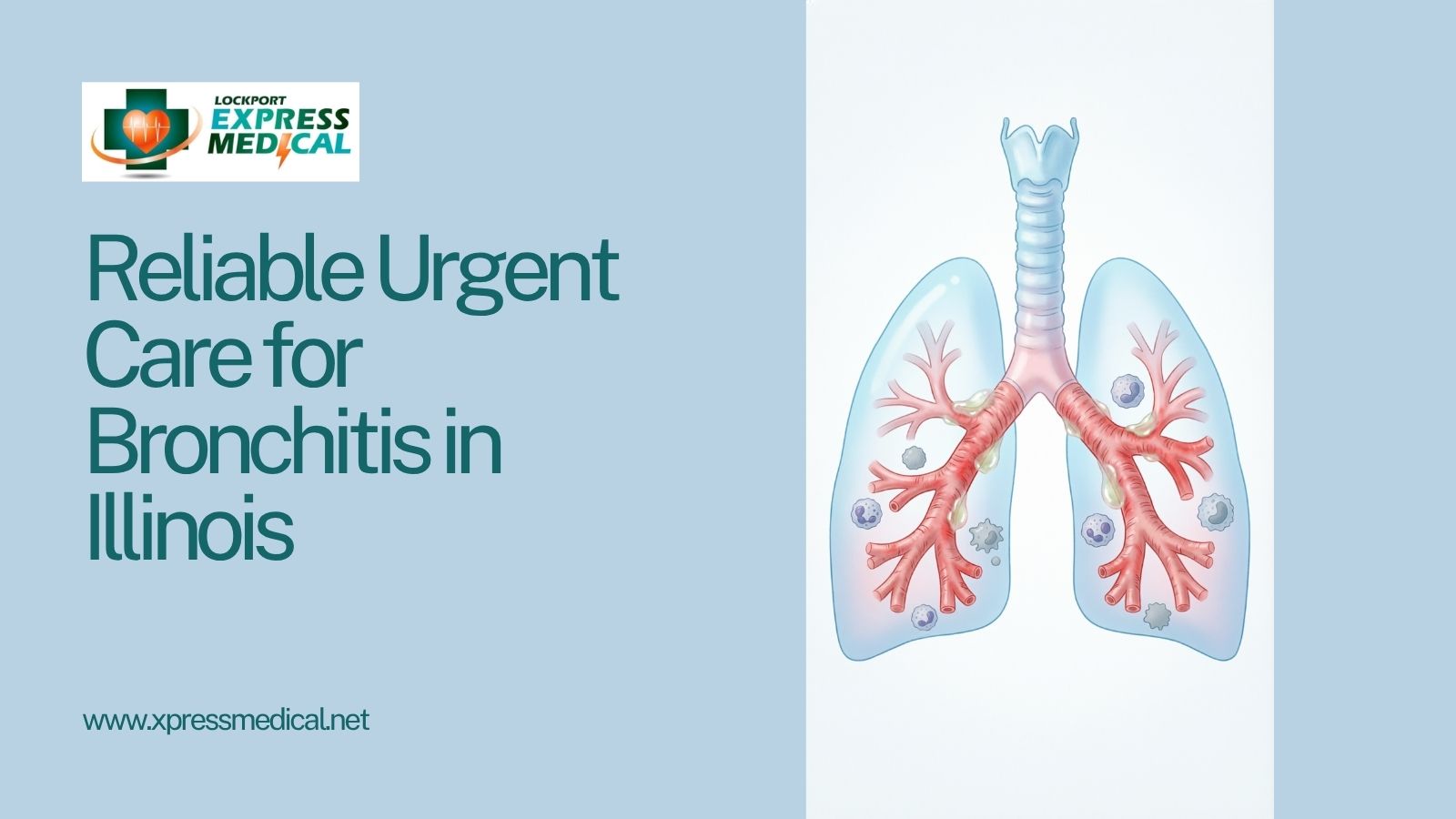
A cold may seem to be clearing, yet the cough hangs on and starts to feel deeper. This can happen when the bronchial tubes remain irritated and continue making mucus. Some people wheeze; others notice soreness behind the breastbone or become breathless with ordinary movement. At urgent care for bronchitis, the clinician can listen to the chest, measure oxygen, and check whether pneumonia is a concern. Express Medical can then recommend care based on what the examination actually shows.
What is Bronchitis?
Bronchitis affects the larger air passages leading into the lungs. Their inner surface becomes sore and swollen, and mucus may start collecting there. Coughing is the body’s way of trying to move that mucus out. The cough may sound dry at first or become chesty later, sometimes with a slight wheeze. Most short-term cases appear during or after a viral illness. At urgent care for bronchitis, the chest examination helps show whether this is likely bronchitis or something else affecting the lungs.
How Is Bronchitis Diagnosed?
- Bronchitis is usually diagnosed from the clinical history and chest examination rather than a single confirmatory test. The clinician asks when the cough began, how it has changed, and whether it followed a respiratory infection.
- Next comes the chest examination. Listening may pick up a wheeze, but crackling sounds, rapid breathing, fever, or low oxygen can make pneumonia more concerning.
- At urgent care for bronchitis, an oxygen reading and vital signs help show whether home care is reasonable or more assessment is needed.
- A chest X-ray is not routinely needed for uncomplicated acute bronchitis. It may be recommended when fever, rapid breathing, low oxygen, or abnormal lung sounds raise concern about pneumonia.
- Testing for bronchitis sometimes means taking a flu or COVID-19 swab, but only when the result would change the care given. Yellow or green mucus does not prove that bacteria are responsible.
- If the cough keeps returning, a bronchitis doctor may need to look beyond infection. Asthma, COPD, reflux, smoke exposure, or even a regularly used medicine can keep a cough going.
Explore: Professional Urgent Care for Respiratory Illness in Illinois
Should you go to urgent care for Bronchitis?
- Yes, go to urgent care when the illness is clearly getting worse instead of gradually settling. A cough alone may linger after a cold and does not always need a clinic visit.
- Use urgent care for bronchitis if wheezing is new, sleep is repeatedly broken, or everyday movement suddenly leaves you short of breath.
- Pay attention to a change in the illness. Fever returning after several better days can be more concerning than a low fever at the beginning.
- Blood-streaked mucus, difficulty drinking, or a cough that has passed the three-week mark also deserves a medical review.
- Asthma, COPD, pregnancy, heart disease, and weak immunity can make it sensible to seek care sooner.
- A bronchitis urgent care visit may reveal flu, pneumonia, or an asthma flare instead.
- Blue lips, fainting, confusion, crushing chest pain, or difficulty speaking because of breathlessness requires emergency help.
Get Urgent Care For Flu at Express Medical
Types of Bronchitis:
Bronchitis is grouped into acute and chronic forms, but the two differ in cause, duration, and long-term effect on the lungs.
Acute Bronchitis
- Acute bronchitis often follows a viral respiratory illness. Airway inflammation develops quickly, and antibiotics generally do not shorten an uncomplicated viral infection.
- Symptoms may settle before the cough, which can remain for weeks. Green or yellow mucus does not prove bacteria are responsible.
- At urgent care for bronchitis, the priority is checking for pneumonia, flu, or an asthma flare.
Chronic Bronchitis
- Chronic bronchitis is traditionally defined as a mucus-producing cough occurring on most days for at least three months in each of two consecutive years, after other causes have been excluded.
- It is part of COPD and is strongly associated with smoking, although long-term dust, fumes, and air pollution may also contribute.
- A sudden increase in breathlessness or mucus can signal a flare requiring prompt bronchitis treatment urgent care.
Bronchitis vs Pneumonia: What’s the difference?
| Feature | Bronchitis | Pneumonia |
| Location | Irritates the larger airways that carry air in and out of the lungs. | Reaches deeper into the lungs and affects the air sacs. |
| Overlap | Can cause cough, mucus, tiredness, mild fever, and chest soreness. | Can start with similar symptoms, which is why it may be hard to tell early on. |
| Severity | Often feels like a chest cold with a lingering cough, though symptoms can still be uncomfortable. | More likely when the person feels very unwell, breathes faster, or has shaking chills. |
| Chest pain | Chest discomfort is usually linked to coughing or airway irritation. | Sharp pain with a deep breath can be a stronger clue that pneumonia is possible. |
| Phlegm | Yellow or green mucus can happen with viral bronchitis and does not prove antibiotics are needed. | Mucus may also change colour, but colour alone still cannot confirm pneumonia. |
| Urgent care | At urgent care for bronchitis, the clinician may listen for abnormal lung sounds and measure oxygen saturation. | A chest X-ray may be needed if pneumonia is still suspected after the exam. |
| Emergency | Blue lips, confusion, fainting, severe breathing difficulty, or heavy chest pressure should not be managed as simple bronchitis. | These signs may suggest a more serious lung or oxygen problem and need emergency care. |
Explore: The Best Walk in Clinic for Pneumonia in Lockport IL
Effective Bronchitis treatment options:
- Acute bronchitis usually improves as the airway inflammation settles. Rest, adequate fluids, warm drinks, and avoiding smoke may ease discomfort, although these measures do not directly shorten the illness.
- Honey can soothe a cough in adults and children over one year old. It must never be given to an infant younger than twelve months.
- At urgent care for bronchitis, treatment is matched to the examination. An inhaler may help genuine wheezing, but it is not useful for every cough.
- Antibiotics do not treat uncomplicated viral bronchitis. They may be prescribed when the examination or testing suggests a separate bacterial infection, such as pertussis or bacterial pneumonia.
- Steroid tablets are not routine either; they may be considered when bronchitis has triggered an asthma or COPD flare.
- Long-term chronic bronchitis care may include stopping smoking, inhalers, pulmonary rehabilitation, and vaccination. Bronchitis treatment urgent care is for sudden worsening, not ongoing COPD management.
Preventing the Flu and Bronchitis:
- An annual flu vaccine lowers the chance of influenza and can reduce the respiratory complications that sometimes follow it. It does not prevent every case of bronchitis.
- Wash hands after coughing, traveling, or touching shared surfaces. During respiratory-virus season, better indoor ventilation and avoiding close contact with someone who is ill also help.
- Smoking is a major preventable cause of airway irritation. Avoiding cigarettes, vaping aerosols, secondhand smoke, dust, and chemical fumes gives the bronchial lining less to recover from.
- Asthma and COPD medicines should be used as prescribed. Better control may reduce severe flare-ups when a viral infection arrives.
- At urgent care for bronchitis, early flu testing may matter because antiviral treatment works best when started promptly, especially for higher-risk patients.
- Cover coughs and do not share drinking cups.
Explore: Urgent Care For Common Cold in Lockport IL
Get urgent care for Bronchitis at Express Medical:
- A visit at Lockport Express Medical follows the way the illness has unfolded. Did it begin as a cold? Has fever returned? Is breathing harder on stairs?
- The chest examination comes next. Listening may reveal wheezing or crackles, while a fingertip pulse oximeter estimates the blood’s oxygen saturation.
- During urgent care for bronchitis, the clinician may recommend viral testing or chest imaging when the result could change the diagnosis or treatment plan.
- An inhaler may help when wheezing reflects narrowed airways. It will not help every lingering cough, and uncomplicated viral bronchitis does not need antibiotics.
- Coughing sometimes needs a bronchitis doctor to look for asthma, COPD, reflux, smoke exposure, or a medicine side effect.
FAQs
How Do I Tell if My Bronchitis Is Viral or Bacterial?
Symptoms alone cannot reliably separate viral from bacterial bronchitis. Mucus color is not enough. A clinician may use the examination, illness pattern, and targeted tests when another infection is suspected.
What Are Five Symptoms of Bronchitis?
Five common symptoms are coughing, mucus, chest soreness, wheezing, and tiredness. Some people also notice mild fever or breathlessness.
What Is Commonly Mistaken for Bronchitis?
Asthma, pneumonia, postnasal drip, acid reflux, flu, COVID-19, and certain medicines can all produce a cough that resembles bronchitis.
What’s the Worst Day for Bronchitis?
There is no universal worst day. Cold and fever symptoms may feel strongest early, while the cough often becomes more noticeable later and can continue after the rest of the illness has improved.