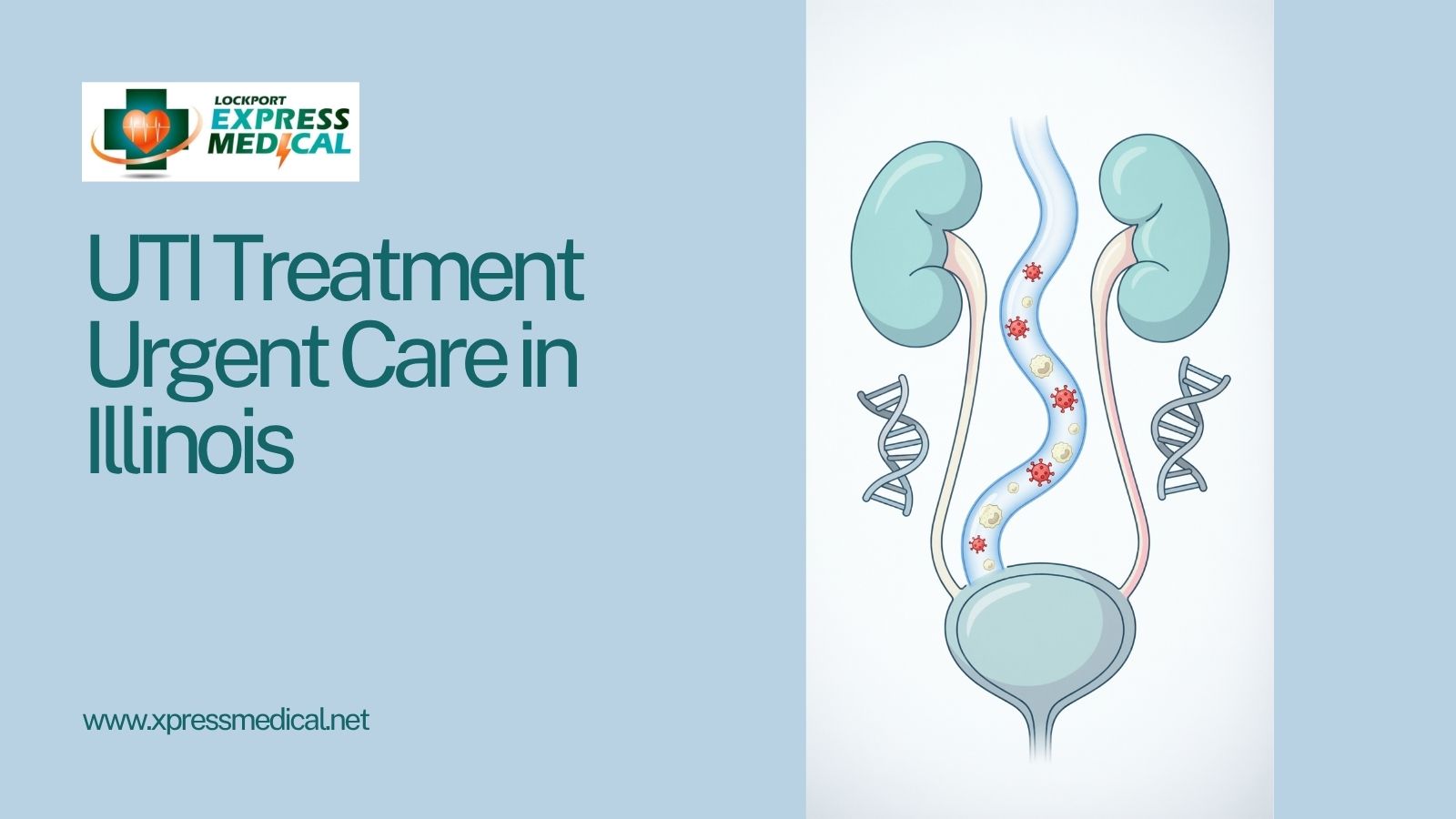
A UTI does not always begin with severe pain. Sometimes the first change is simply needing the bathroom again minutes after leaving it, followed by burning, cloudy urine, or an uncomfortable heaviness over the bladder. UTI treatment urgent care offers a practical way to check those symptoms before the infection has more time to travel upward. At Express Medical, the visit can include a clinical assessment and urine testing when needed, helping the provider choose treatment around the findings rather than symptoms alone.
What Is a urinary tract infection?
A urinary tract infection develops when bacteria—most often from the digestive tract—enter part of the urinary system and multiply. The infection may affect the urethra, bladder, or kidneys, with bladder infections being the most common. That is why people often use UTI and bladder infection to mean the same thing.
The location matters because a bladder infection usually causes burning, urgency, and frequent urination, while kidney involvement can bring fever, chills, nausea, or pain in the side. UTI treatment urgent care helps identify how far the infection may have progressed before treatment is selected.
Common causes and symptoms of a UTI:
- Most UTIs develop when bowel bacteria, particularly E. coli, enter the urethra and multiply inside the bladder. Infection is not necessarily a sign of poor hygiene.
- Risk rises with sexual activity, pregnancy, menopause, spermicide use, urinary catheters, kidney stones, or incomplete bladder emptying.
- Burning during urination is a typical early symptom. It often appears alongside urgency, frequent bathroom visits, and passing only small amounts of urine.
- Lower abdominal pressure, pelvic discomfort, or blood in the urine may also occur. Cloudiness or a strong odor alone cannot confirm infection.
- Fever, chills, nausea, vomiting, or pain in the side or upper back may indicate that infection has reached a kidney.
- At UTI treatment urgent care, symptoms are assessed alongside urine findings because stones, vaginal inflammation, and some sexually transmitted infections can produce similar discomfort.
Explore: Adult and Pediatric Urinary Tract Infection Doctor Specialist
UTI treatment urgent care warning signs:
- Mild burning can quickly become harder to ignore. Assessment is appropriate once urgency becomes constant, sleep is disturbed, or each bathroom visit grows more painful.
- Blood in the urine, bladder pain, or difficulty getting urine to flow should lead to UTI treatment urgent care without further waiting.
- A sudden change from bladder discomfort to feeling generally unwell may signal that the infection is no longer confined to the lower urinary tract.
- Earlier assessment is advisable during pregnancy and for children, men, catheter users, or patients with diabetes, kidney disease, or reduced immunity.
- Burning that comes back after antibiotics is not always a fresh infection. The bacteria may be resistant, or another urinary condition may be present; culture results help separate the possibilities.
- UTI urgent care is suitable for stable cases. Fainting, confusion, breathing difficulty, or severe weakness belongs in emergency care.
What UTI treatment is commonly used?
- Most bacterial bladder infections are treated with oral antibiotics, often for a short course. The exact medicine is not the same for every patient.
- Before prescribing, the clinician checks pregnancy, medication allergies, kidney problems, recent antibiotics, and any history of resistant infection.
- A urine dip can provide early clues. Culture takes longer, but it is valuable when UTIs keep returning or the first treatment has not worked.
- At UTI treatment urgent care, pain relief may be discussed as well. Urinary pain medicine can calm burning for a short time and may turn the urine orange; it does not kill bacteria.
- Water may ease discomfort and prevent dehydration, but it cannot clear an established bacterial infection or replace UTI infection treatment. Fever, vomiting, or pain under the ribs may mean the infection has reached a kidney, which can require longer antibiotic therapy, intravenous fluids, or hospital assessment.
Explore: Good Family Doctor Walk In Clinic in Illinois
UTIs and kidney infection:
- A kidney infection usually begins lower in the urinary tract. Bacteria move from the bladder, travel through one or both ureters, and reach kidney tissue.
- Most bladder infections do not progress to this point. The risk rises when treatment is delayed or when a stone, enlarged prostate, or structural urinary problem blocks urine flow.
- Kidney involvement tends to cause fever, chills, nausea, vomiting, and pain below the ribs or along one side of the back. Bladder burning may still be present.
- Urine culture helps identify the organism. Blood tests or imaging may be added when illness is severe, infections recur, or an obstruction is suspected.
- A kidney infection can occasionally lead to a kidney abscess or allow bacteria to enter the bloodstream, potentially causing sepsis. Confusion, faintness, rapid breathing, or inability to drink requires emergency care.
Who is most at risk of getting UTI?
- Women are diagnosed with UTIs more often. Their urethra is shorter, and its opening is close to the area where bowel bacteria live.
- Pregnancy brings another concern. Hormonal and physical changes can slow urinary drainage, so suspected infection needs early UTI treatment urgent care.
- After menopause, lower estrogen can reduce the vagina’s natural protection against harmful bacteria.
- For men, risk rises when an enlarged prostate leaves urine behind in the bladder.
- Other vulnerable groups include catheter users and people with stones, diabetes, nerve-related bladder problems, urinary abnormalities, or weak immunity.
Explore: The Best Urgent Care That Accepts Cigna Insurance in Lockport
Tips on how to prevent UTIs:
- Drink enough fluid to urinate regularly, unless a clinician has advised fluid restriction because of a heart or kidney condition. Regular urination helps wash bacteria from the bladder before they multiply.
- Avoid holding urine for long periods, and take time to empty the bladder fully.
- After using the toilet, wiping from front to back limits movement of bowel bacteria toward the urethra.
- Urinating after sex is a low-risk habit, although evidence that it prevents recurrent UTIs is limited.
- If UTIs recur, spermicide-coated condoms or diaphragms may be worth discussing with a clinician.
- Catheters should be used only when necessary and removed promptly.
- Cranberry products may reduce recurrent UTIs in some people, but results vary and these products cannot treat an active infection.
Get reliable UTI treatment urgent care with Express Medical:
- Not every painful trip to the bathroom is a UTI. Vaginal irritation, stones, and sexually transmitted infections can produce similar symptoms.
- That is why Express Medical begins with the history, then checks a urine sample when the findings call for it.
- A dip test can support the diagnosis. It cannot show which germ is responsible; a culture can.
- During UTI treatment urgent care, allergies, pregnancy, kidney health, and antibiotic use matter before any prescription is written.
- Lockport Express Medical also explains the dose, treatment length, possible side effects, and what improvement should look like.
- A urine pain reliever may settle burning for a short while, but it does not kill bacteria.
- Fever, vomiting, or flank pain may indicate kidney involvement and require hospital assessment, intravenous fluids, or a different antibiotic plan.
FAQs
How Urgent Is Treatment for a UTI?
Do not leave symptoms for several days hoping they will pass. Burning and repeated trips to the bathroom should be checked early. If fever, chills, vomiting, or pain in the side develops, seek same-day care because the infection may have reached a kidney. Confusion or fainting needs emergency care.
How Long Can a UTI Go Left Untreated?
There is no fixed safe period. Some infections remain limited to the bladder, while others spread upward within days. Persistent symptoms should be assessed rather than watched indefinitely.
Why Do Women Get UTIs More Than Men?
The main reason is anatomy. Bacteria have a much shorter route into a woman’s bladder. Men have a longer urethra, and prostate secretions may provide additional protection against bacterial growth.