Urgent care for tonsillitis offers a swift, reliable solution when severe throat pain, difficulty swallowing, and fever strike unexpectedly. Instead of enduring long wait times at an emergency room or waiting days for a primary care appointment, seeking specialized immediate medical attention ensures accurate diagnosis and rapid relief from painful symptoms. Early intervention is vital to prevent potential complications like abscesses or middle ear infections. For residents seeking dependable, professional tonsillitis care near home, Lockport Express Medical provides exceptional urgent care for tonsillitis with experienced providers ready to help you recover.
Understanding Tonsillitis and its impacts:
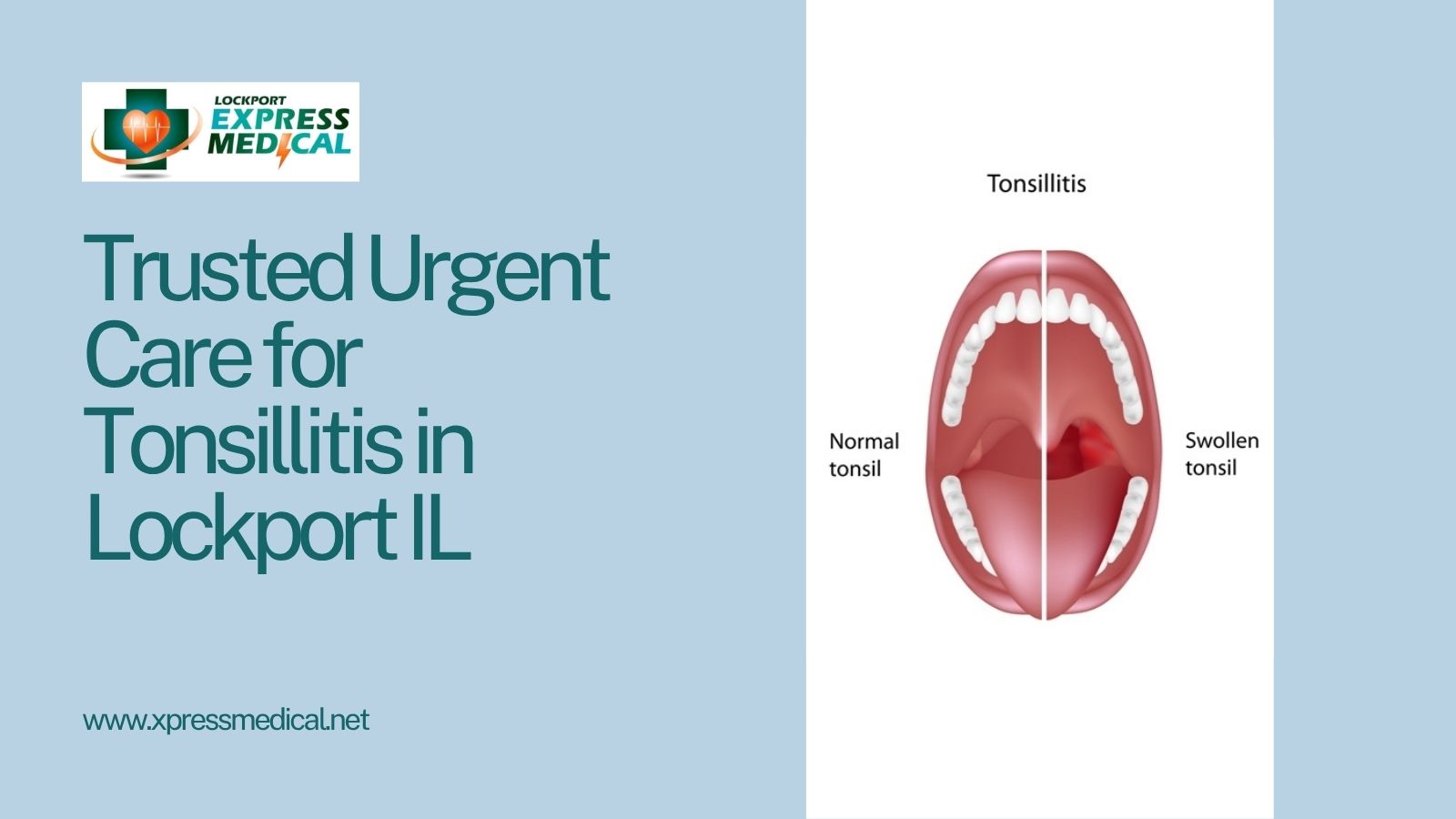
Tonsillitis is the swelling and irritation of the tonsils, two tissue pads at the back of the throat. Common signs include a sore throat, pain when swallowing, swollen neck glands, and fever. It is usually caused by viruses, but bacteria like strep can also cause it.
Tonsillitis impacts
Tonsillitis disrupts daily life by causing fatigue, missed work or school, and sleep issues.
Physical Impacts
- Pain: Sharp sore throat that hurts during swallowing.
- Swelling: Red, large tonsils with white or yellow spots.
- Fever: High body temperature and chills.
- Nodes: Tender, swollen glands in the neck.
- Voice Changes: Scratchy, muffled, or hoarse voice.
Daily Life Impacts
- Eating: Trouble swallowing food or liquids.
- Sleep: Snoring or breathing trouble from blocked airways.
- Energy: Tiredness, body aches, and weakness.
- Routine: Missing school or work for a few days.
Explore: Advanced Peritonsillar Abscess Urgent Care in Illinois
Signs to visit urgent care for Tonsillitis:
Visit urgent care for tonsillitis if your sore throat lasts more than 3 to 5 days, you develop a high fever, or you see white pus patches on your tonsils. You should also seek prompt evaluation and treatments for tonsillitis if severe pain makes it hard to swallow liquids or open your mouth.
- Prolonged duration: Symptoms last longer than 3–4 days without improvement.
- High fever: Temperature spikes above 102°F (39°C).
- Visible pus: White or yellow patches appear on the tonsils.
- Swallowing trouble: Severe pain or swollen glands make it hard to eat or drink.
- One-sided pain: Intense pain or severe swelling is worse on only one side of the throat.
- Stiff jaw or mouth: Difficulty opening your mouth fully.
Explore: Difficulty Breathing and Sore Throat Treatment
Common causes: viral vs. bacterial infections
Tonsillitis is most often caused by viral infections (70% to 95% of cases), but it can also stem from bacterial pathogens. Viral cases resolve with supportive care, whereas bacterial cases often need urgent care for tonsillitis with antibiotics.
Viral Causes
Viral tonsillitis spreads easily via respiratory droplets and typically accompanies common upper respiratory illnesses:
- Common Cold Viruses: Rhinovirus and coronavirus.
- Influenza Virus: The flu.
- Adenovirus: Frequently triggers cold symptoms and sore throats.
- Epstein-Barr Virus (EBV): Causes infectious mononucleosis (“mono”), leading to severe tonsil swelling.
- Other Viruses: Respiratory Syncytial Virus (RSV) and enteroviruses.
Bacterial Causes
Bacterial tonsillitis is less common affecting roughly 5% to 30% of cases depending on age but tends to cause more intense pain and distinct physical signs:
- Group A Streptococcus (Streptococcus pyogenes): The primary bacterial culprit, known as strep throat. It is most common in children aged 5 to 15.
- Other Bacteria: Staphylococcus aureus, Streptococcus pneumoniae, Haemophilus influenzae, and Fusobacterium necrophorum.
How is Tonsillitis diagnosed?
Tonsillitis is diagnosed primarily through a physical exam where a doctor checks the throat for redness, swelling, and white spots, alongside feeling the neck for swollen lymph nodes. Doctors may also use a throat swab to test for bacterial strep throat.
Physical Exam
- Look at the throat, ears, and nose with a light tool.
- Check for red or swollen tonsils.
- Look for white or yellow spots or coatings.
- Feel the sides of the neck for swollen glands.
Diagnostic Tests
- Rapid strep test: A cotton swab takes fluid from the throat to give results in minutes.
- Throat culture: A lab checks a swab sample if the rapid test is unclear.
- Blood test (CBC): Measures white blood cells to see if an infection is viral or bacterial.
Explore: Fast Urgent Care for Sore Throat for Medical Attention
How does Tonsillitis spread?
Tonsillitis itself does not spread, but the contagious viruses and bacteria that cause it pass from person to person through infected respiratory droplets, saliva, close personal contact, or contaminated surfaces.
- Airborne droplets: Inhaling tiny drops released when a sick person coughs or sneezes.
- Direct contact: Kissing or touching an infected person.
- Shared items: Using the same cups, eating utensils, or food with someone who is sick.
- Contaminated surfaces: Touching an object with germs on it and then touching your nose, mouth, or eyes.
- Bacterial (Strep) tonsillitis: Contagious until about 24 hours after you start taking the right antibiotics.
- Viral tonsillitis: Contagious while symptoms are active and you still feel sick.
- Non-infectious tonsillitis: Caused by allergies or smoke, meaning it cannot spread to others.
What happens if Tonsillitis goes untreated?
If tonsillitis goes untreated, especially when caused by a bacterial infection like strep throat, the infection can worsen, spread to surrounding tissues, or trigger severe inflammatory conditions affecting the heart, joints, and kidneys.
- Peritonsillar abscess: A painful pocket of pus forms near the tonsil, which can block your airway or make it hard to swallow or open your mouth.
- Spread of infection: Bacteria can move deeper into the neck and surrounding tissue, leading to severe swelling or generalized systemic infection.
- Chronic tonsillitis: The infection can persist over a long time or keep coming back repeatedly, causing ongoing throat pain and enlarged tonsils that disrupt sleep.
- Rheumatic fever: An inflammatory condition that can permanently damage the heart valves and joints.
- Post-streptococcal glomerulonephritis: A serious inflammation of the kidneys that affects how they filter waste.
- Scarlet fever: A distinctive rash accompanied by a high fever and a red, sore throat.
Get urgent care for Tonsillitis at Express Medical:
Get fast urgent care for Tonsillitis , expert relief for painful tonsillitis at Lockport Express Medical. Our skilled care team offers quick diagnosis, advanced infection in tonsils treatment, and same-day relief so you can heal comfortably without long emergency room waits
- Fast Treatment: Get seen quickly for tonsillitis treatment by medical experts to start feeling better sooner.
- Accurate Testing: On-site strep and throat tests pinpoint the exact cause of your pain.
- Expert Care Plans: Receive precise prescriptions like antibiotics or pain relief tailored to you.
- Shorter Wait Times: Skip crowded emergency rooms and enjoy a smooth, quick clinic visit.
- Affordable Options: Quality medical attention is provided at a lower cost than a hospital.
- Experienced clinicians you can trust: Get clear guidance from medical professionals experienced in evaluating common throat infections.
- Cost-conscious care approach: Transparent, reasonable urgent care services help you get help without unnecessary complexity.
FAQs
What is commonly mistaken for tonsillitis?
Tonsillitis is commonly mistaken for a standard viral sore throat, pharyngitis, the common cold, or infectious mononucleosis because these conditions share overlapping symptoms like throat discomfort and swallowing difficulties.
How to tell if tonsillitis is bacterial or viral?
Bacterial tonsillitis typically features high fever, pus spots, and absent coughing. Viral cases feature colds, coughs, and low fever. Doctors confirm the exact cause using a throat swab or rapid test.
Can tonsillitis turn into sepsis?
Yes, severe or untreated bacterial tonsillitis can progress into sepsis if the infection enters the bloodstream and triggers a dangerous, systemic immune response.