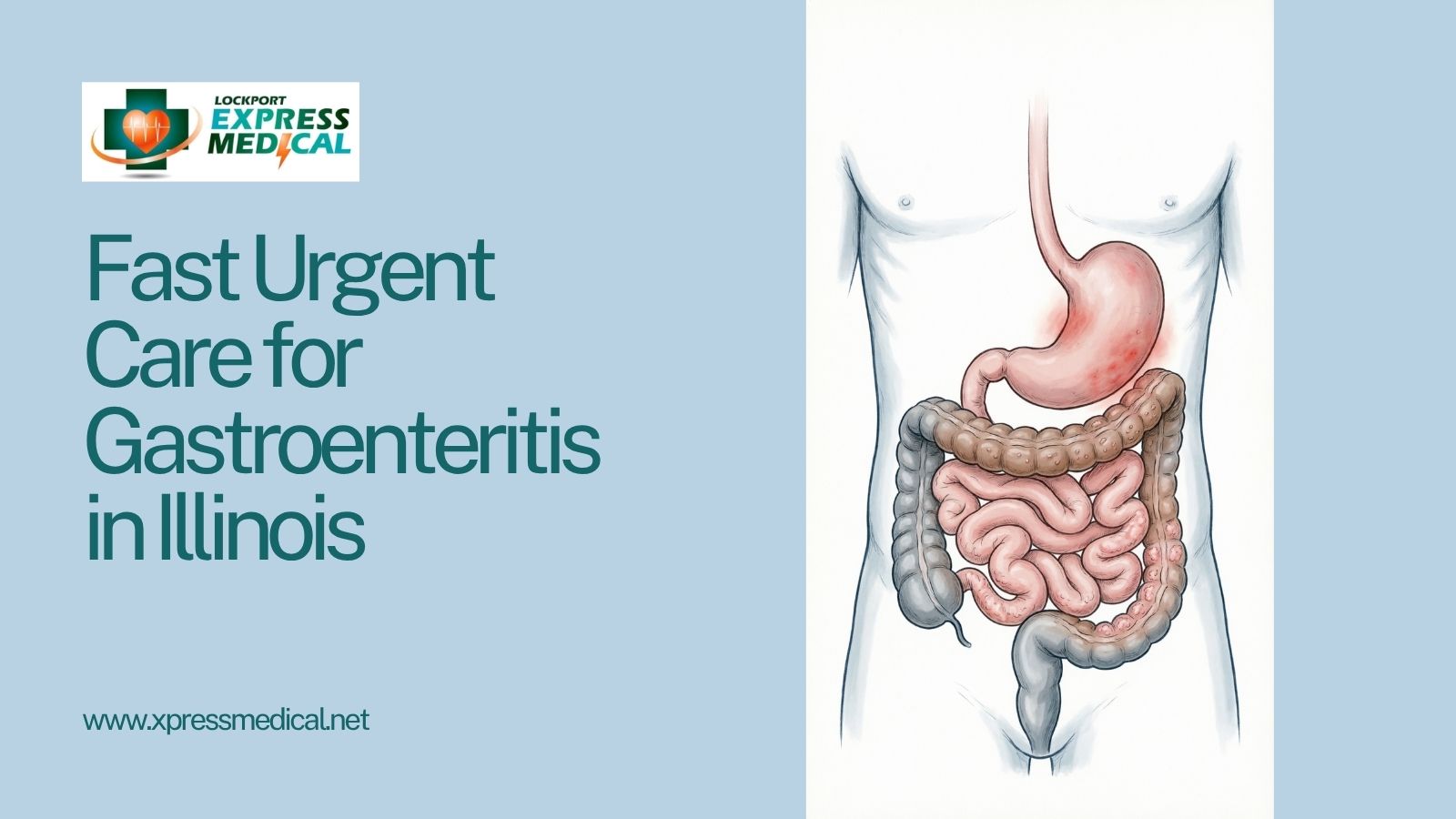
Urgent care for gastroenteritis provides fast, effective relief when severe stomach cramps, nausea, and dehydration strike unexpectedly across Illinois. Patients suffering from acute digestive distress require immediate medical evaluation, rapid on-site diagnostics, and targeted rehydration therapy to avoid prolonged discomfort or a costly emergency room visit. Skip the long hospital wait times and get back to feeling your absolute best by visiting Lockport Express Medical, the premier local clinic that treating gastroenteritis with prompt, compassionate urgent care for gastroenteritis with convenient walk-in availability 7 days a week.
What Is Gastroenteritis?
Gastroenteritis is an inflammation of the stomach and intestines—often called the “stomach flu”. It causes watery diarrhea, stomach cramps, nausea, and vomiting, so urgent care for gastroenteritis. It is usually spread through contact with an infected person or by eating contaminated food or water.
Common symptoms of Gastroenteritis:
Common symptoms of gastroenteritis include watery diarrhea, nausea, vomiting, and stomach cramps. You may also experience a low-grade fever, headache, muscle aches, and a general loss of appetite.
- Watery diarrhea: Usually non-bloody; bloody stools can point to a more severe infection.
- Nausea and vomiting: You may feel sick or vomit frequently.
- Abdominal cramps and pain: Sharp or dull aches in your stomach area.
- Low-grade fever: A mild rise in body temperature.
- Headaches and muscle aches: General body fatigue and joint pain.
- Loss of appetite: Not wanting to eat or drink.
- Extreme thirst: Dry mouth and lips.
- Reduced urination: Passing very dark urine or not peeing much.
- Dizziness: Light-headedness when standing up.
Explore: Urgent Care For Food Poisoning in Illinois
When to seek urgent care for Gastroenteritis?
Seek urgent care for Gastroenteritis treatment if you cannot keep liquids down for 24 hours, show signs of severe dehydration (like dizziness or no urination), have blood in your stool or vomit, suffer from severe abdominal pain, or run a high fever over 102°F (39°C).
- Inability to hydrate: Vomiting continuously and failing to keep small sips of fluid down.
- Dehydration symptoms: Extreme thirst, dry mouth, little to no urination, dizziness, or confusion.
- Bloody discharge: Blood in your vomit or bloody, black, or tarry stools.
- Intense pain: Sharp, worsening, or localized belly pain that does not go away.
- High fever: A temperature climbing over 102°F that does not respond to fever reducers.
- Duration: Diarrhea or vomiting lasting longer than 2 to 3 days without improvement.
Viral causes of Gastroenteritis:
Viral gastroenteritis (stomach flu) is commonly caused by norovirus, rotavirus, adenovirus, and astrovirus. These highly contagious pathogens spread via contaminated food, water, or close contact, causing watery diarrhea, cramps, nausea, and vomiting, so must treatment for viral gastroenteritis.
- Norovirus: The leading cause of illness in adults; spreads fast in tight spaces like schools and ships.
- Rotavirus: The main cause of severe diarrhea in young children globally; vaccines are available.
- Adenovirus (Enteric): Often affects infants and young children, causing year-round mild to moderate symptoms.
- Astrovirus: Mostly infects babies, children, and older adults in group settings.
- Sapovirus: Part of the calicivirus family, increasingly recognized in both children and adults.
Difference between food poisoning or Gastroenteritis:
Food poisoning is an illness caused by eating food or water contaminated with harmful bacteria, toxins, parasites, or chemicals. Gastroenteritis (often called the stomach flu) is a general term for inflammation of the stomach and intestines, usually caused by contagious viruses passed from person to person.
| Feature | Food Poisoning | Gastroenteritis |
| Main Cause | Contaminated food or drink carrying bacteria, toxins, or parasites. | Contagious viruses (like norovirus) or bacteria spread person-to-person. |
| Onset Speed | Very fast (30 minutes to a few hours after eating bad food). | Slower (24 to 72 hours after exposure to an infected person). |
| How it Spreads | Eating contaminated or improperly stored meals. | Close contact with sick people, shared surfaces, or unwashed hands. |
| Shared Meal Clue | Multiple people get sick together after sharing the same food. | People in a household or group get sick sequentially over several days. |
| Common Signs | Nausea, severe vomiting, watery or bloody diarrhea, cramps. | Watery diarrhea, vomiting, stomach cramps, low fever, body aches. |
| Typical Duration | Often resolves quickly in 24 to 48 hours, depending on the toxin. | Usually lasts 1 to 3 days (sometimes up to 5 days). |
How can Gastroenteritis cause dehydration?
Gastroenteritis causes dehydration because inflammation in the stomach and intestines leads to rapid, high-volume fluid loss through vomiting and watery diarrhea, so treatments for gastroenteritis is urgent. When the body loses more water and vital minerals than a person can drink back, dehydration occurs.
- Vomiting: Empties stomach contents and prevents a person from keeping fluids down.
- Diarrhea: Damages the intestinal lining, stopping the gut from absorbing water and causing high-volume fluid output.
- Reduced Intake: Nausea makes people less willing or able to drink enough replacement fluids.
Explore: Trusted Urgent Care Dehydration IV in Lockport IL
Gastroenteritis risks in adults and children:
The primary risk for both children and adults is severe dehydration, which can become life-threatening for infants, young children, older adults, and people with weak immune systems.
Risks in Children
- Fast Dehydration: Small bodies lose fluids and electrolytes quickly through vomiting and diarrhea.
- High Vulnerability: Infants and children under 5 face higher rates of severe illness and hospital visits.
- Rotavirus Threat: This common child virus causes intense diarrhea, though a Rotavirus Vaccine can prevent it.
- Quiet Distress: Young kids may show fatigue, dry mouth, fewer wet diapers, or unusual fussiness instead of explaining how they feel.
Risks in Adults
- Electrolyte Imbalance: Severe fluid loss drops sodium and potassium to dangerous levels.
- Older Adult Vulnerability: Adults over 65 have weaker immune defenses and higher risks of complications.
- Norovirus Spread: Highly contagious outbreaks spread fast in close spaces like offices, cruise ships, or nursing homes.
- Bacterial Toxins: Contaminated food can cause high fever and bloody stools in robust adults.
Explore: When to Seek Abdominal Pain Urgent Care Medical Attention
Get urgent care for Gastroenteritis at Express Medical:
Lockport Express Medical offers fast, expert urgent care for gastroenteritis. Our skilled team provides quick gastrointestinal infection treatment and relief from severe stomach pain, dehydration, and nausea, ensuring you recover safely and comfortably without a long wait.
- Rapid Diagnosis: Quick testing identifies the exact cause of your illness right away, and treatment for viral gastroenteritis.
- Immediate Rehydration: IV fluids restore your energy and stop dehydration fast.
- Targeted Relief: Prescription medications ease nausea, vomiting, and stomach cramps.
- No Long Waits: Walk in and see a doctor for urgent care for gastroenteritis at a busy hospital.
- Expert Guidance: Clear care plans help you safely reintroduce food and drinks at home.
FAQs:
What is the best cure for gastroenteritis?
There is no single magic cure for gastroenteritis because most cases are viral and must run their course. The best approach is supportive care focused on preventing dehydration, resting the digestive system, and managing individual symptoms until your body heals naturally.
What gets mistaken for gastroenteritis?
Conditions like acute appendicitis, food poisoning, inflammatory bowel disease, and urinary tract infections often get mistaken for gastroenteritis because they share early overlapping symptoms such as severe abdominal cramps, nausea, vomiting, and painful digestive distress.
What are the red flags for gastroenteritis?
Red flags requiring immediate medical care include bloody stools, high fever, severe or worsening abdominal pain, persistent inability to keep fluids down, and distinct signs of severe dehydration like extreme dizziness or confusion.