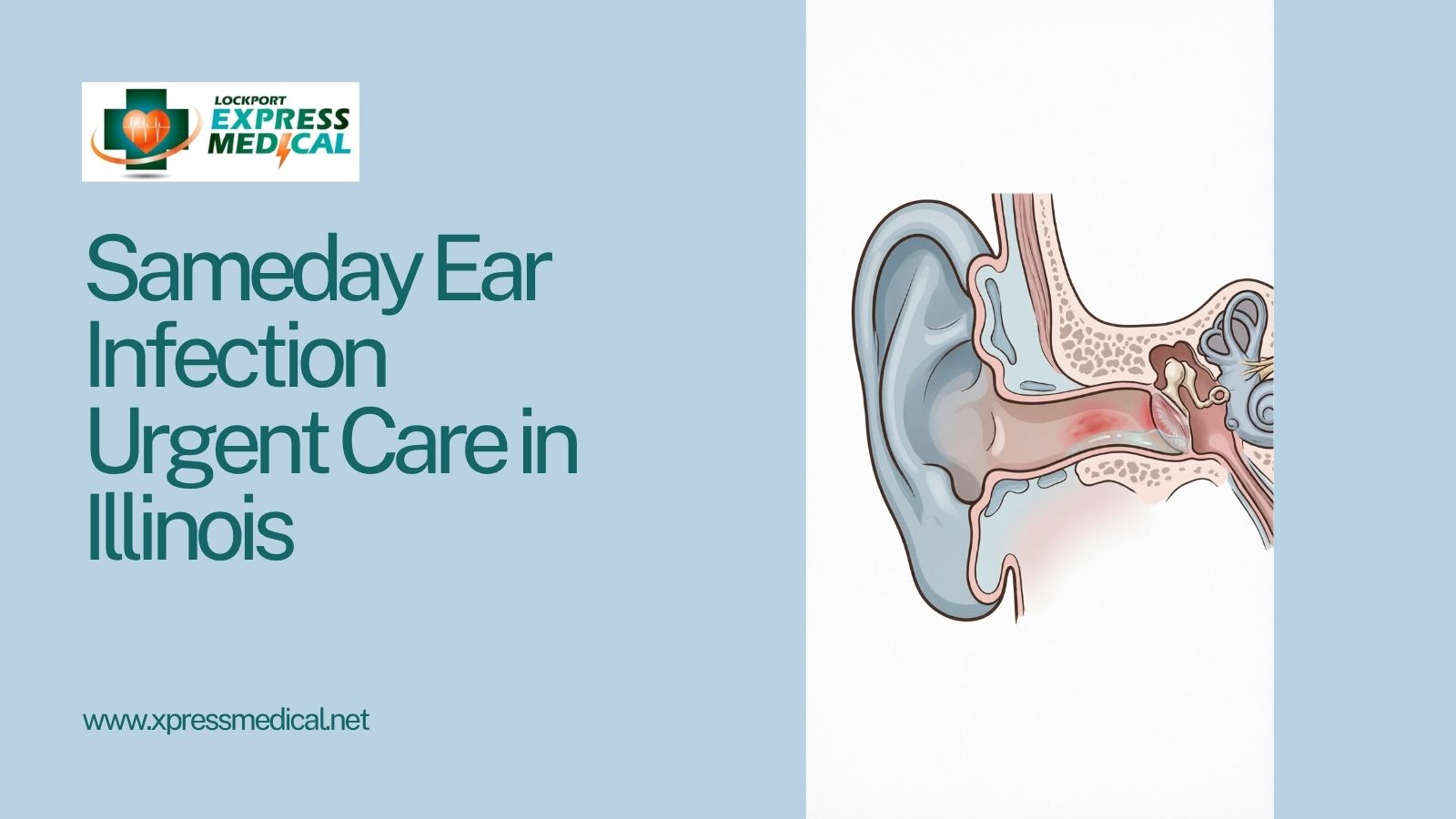
An earache may start as a dull pressure, then become painful enough to interrupt sleep or make everyday sounds seem distant. That is often when people begin searching for ear infection urgent care, especially if fever, drainage, or dizziness appears too. The cause cannot always be guessed from the symptoms: it may be an infection behind the eardrum, irritation in the ear canal, or even tightly packed wax. At Express Medical, the ear can be examined closely, the likely cause explained, and the next step chosen according to what the clinician actually sees.
What is an ear infection?
An ear infection means that germs have caused swelling in the outer canal or in the space behind the eardrum. Middle-ear infections often turn up after a cold, when a swollen Eustachian tube traps fluid that would normally drain away.
The tricky part is that pain alone tells only half the story. Wax and noninfected fluid can feel much the same. At ear infection urgent care, looking at the canal and eardrum helps reveal what is happening before treatment begins.
Common causes and symptoms of ear infection:
- Many middle-ear infections arrive with a cold. The nose improves, yet the ear starts aching because fluid has become trapped behind the eardrum.
- Swimming can lead to a different problem. Water left in the canal softens its protective skin, making an outer infection more likely.
- Ear pressure, dulled hearing, fever, and pain are common. In babies, the clues may be missed feeds, broken sleep, unusual crying, or poor response to quiet sounds.
- An outer infection often hurts when the ear is moved. This detail helps the clinician choose suitable outer ear infection treatment.
- Drainage is worth checking. It may come from an inflamed canal or through a small opening in the eardrum.
- At ear infection urgent care, the appearance of the canal and eardrum matters more than pain alone. That examination guides earache treatment and shows whether antibiotics are likely to help.
Explore: The Best Walk in Clinic for Sinus Infection in Lockport IL
Signs that require ear infection urgent care:
- Some earaches settle within a day or two. If the pain is getting worse, stopping sleep, or still hanging around after three days, the ear needs checking.
- Fluid on the pillow deserves attention too. Clear liquid, pus, or blood may come from an irritated canal or a torn eardrum.
- Book ear infection urgent care for a fever near 102.2°F (39°C), a sudden drop in hearing, or symptoms that return after seeming to improve.
- With young babies, waiting is less appropriate. A child under three months who reaches 100.4°F (38°C) should be assessed promptly.
- Take a look behind the ear. Red, sore swelling—especially when the ear starts pushing outward—can point to mastoiditis.
- Spinning dizziness, repeated vomiting, or unsteady walking needs further evaluation, sometimes through inner ear infection urgent care.
- Confusion, facial weakness, marked drowsiness, or a stiff neck calls for emergency care.
Explore: Professional Urgent Care for Respiratory Illness in Illinois
Different types of ear infection and the most common:
- The one doctors see most often is a middle-ear infection. It sits behind the eardrum and commonly follows a cold, particularly in young children whose ears do not drain as easily.
- Swimmer’s ear is different. Here, the sore area is the ear canal itself. The ear may itch, leak fluid, or hurt when touched. Suitable outer ear infection treatment is usually based on medicated drops, not the same approach used for middle-ear disease.
- Problems described as inner-ear infections are much less common. They tend to upset balance, bringing vertigo, nausea, or unsteady walking rather than a straightforward earache. Those symptoms may warrant inner ear infection urgent care.
- Sometimes there is fluid behind the eardrum but no active infection at all.
Why are ear infections common in infants?
- A baby’s Eustachian tubes are shorter, narrower, and more level than an adult’s. Fluid does not drain as freely, so a cold can leave moisture sitting behind the eardrum.
- Their immune systems are still learning how to handle common viruses and bacteria. Daycare and contact with older siblings can mean one respiratory infection follows another.
- The adenoids sit close to the openings of these tubes. When they swell during a cold, drainage becomes even more difficult.
- Feeding while lying completely flat may allow milk to reach the area near the tube openings. Holding the baby at a slight angle is a safer routine.
- Babies cannot explain that an ear hurts. Broken sleep, poor feeding, crying during feeds, or less response to sound may be the first clues.
- At ear infection urgent care, age, fever, and the eardrum’s appearance guide infant ear infection treatment, since not every case needs antibiotics.
Explore: Trusted Walk in Clinic with Pediatrician in Lockport IL
What treatments may help an ear infection?
- There is no single remedy for every ear infection. What helps depends on whether the trouble is in the canal or behind the eardrum.
- For pain or fever, acetaminophen or ibuprofen may help when the dose fits the patient’s age and weight. Children should never receive aspirin.
- A mild middle-ear infection may settle without antibiotics. At ear infection urgent care, the eardrum, age, fever, and length of illness all shape that decision.
- Swimmer’s ear is usually treated with prescription drops. Using random drops is risky if the eardrum has a hole.
- If antibiotics are prescribed, take them exactly as directed; saving part of the course for later earache treatment can lead to poor care.
- Pain that worsens, returning fever, new drainage, or reduced hearing means the ear needs another look promptly.
How to prevent future ear infections?
- Prevention differs for middle- and outer-ear infections. Useful habits need to match how each problem usually starts and spreads.
- Keep routine flu and pneumococcal vaccines current. Fewer respiratory infections mean fewer chances for fluid to become trapped behind a child’s eardrum.
- Handwashing helps too, especially in homes with school-age children, where one cold can move quickly through the family.
- Keep babies away from cigarette smoke, and avoid bottle-feeding while they lie flat. Breastfeeding, when possible, also offers some protection.
- After swimming, dry only the outside of the ear. Cotton swabs can scratch the canal and push wax deeper.
Get ear infection urgent care with Medical Express:
- Ear pain is easier to manage when someone actually looks inside the ear. Express Medical checks the canal, eardrum, symptoms, and recent illnesses.
- During ear infection urgent care, the clinician can tell whether the problem looks like swimmer’s ear, a middle-ear infection, trapped fluid, or wax.
- That distinction matters. Drops may suit an infected canal, while some middle-ear cases need observation, pain relief, or antibiotics.
- Parents also get practical dosing advice based on a child’s age and weight, rather than guessing from an old bottle.
- Choose urgent care for ear infection when pain is worsening, fever persists, hearing changes, or drainage appears.
- If the examination raises concern about complications, Express Medical can direct patients to emergency or specialist care promptly.
FAQs
What Is Mistaken for an Ear Infection?
Ear pain can come from a damaged tooth, jaw-joint irritation, sinus pressure, tightly packed wax, or pressure changes during a flight. An ear examination separates these problems from infection.
What Should You Not Do During an Ear Infection?
Do not insert cotton swabs, oils, or unprescribed drops. Avoid swimming when drainage is present, and never restart leftover antibiotics from an earlier illness.
How Long Does an Ear Infection Last?
Pain and fever often begin easing within two or three days, although fullness may linger while fluid clears. Swimmer’s ear usually improves after several days of suitable drops.
How Can an Ear Infection Affect Your Body?
An infection can disturb sleep, appetite, concentration, and balance. Ongoing muffled hearing may affect a young child’s speech development.