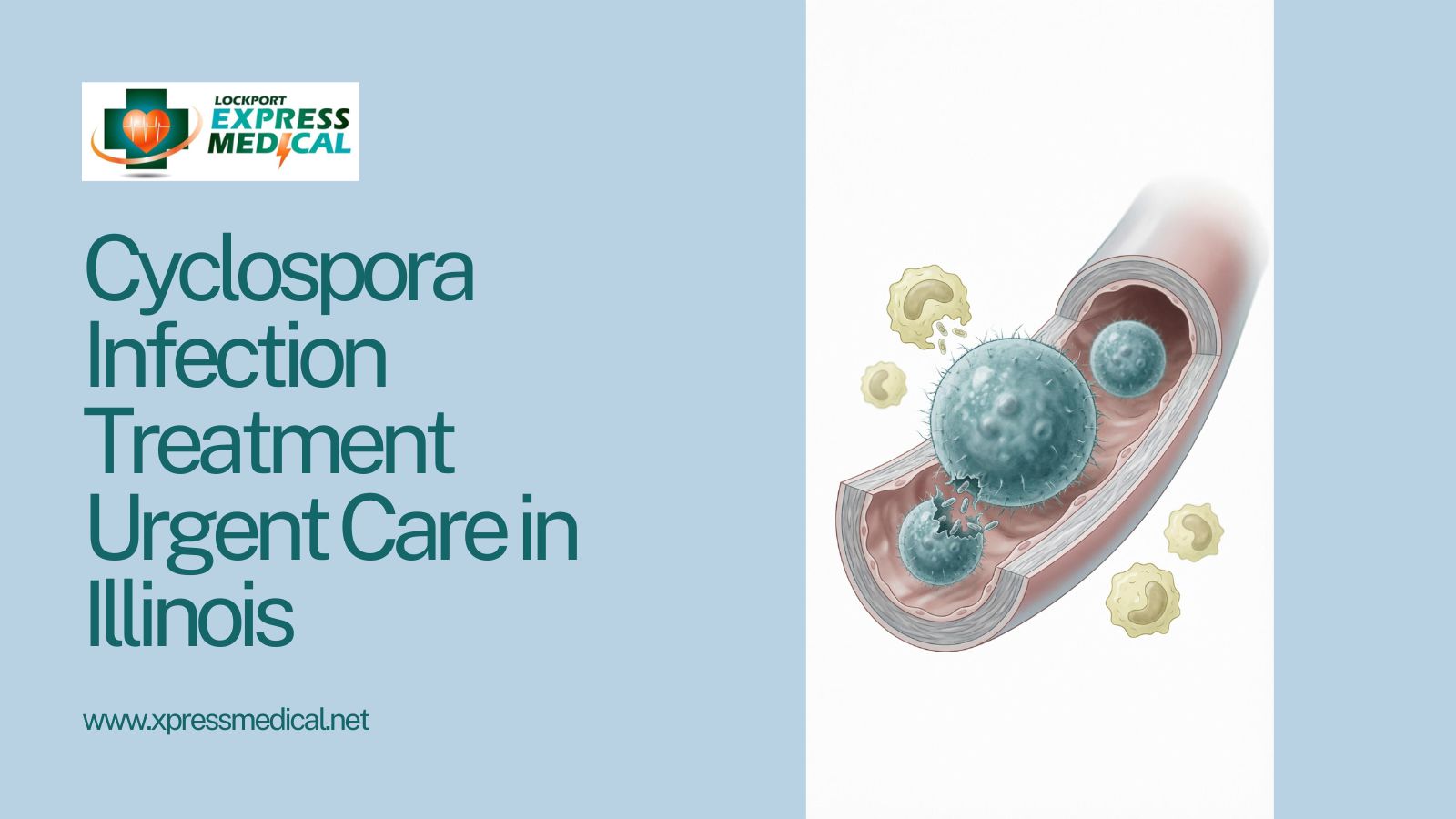
Cyclospora infection treatment requires prompt medical intervention to relieve distressing gastrointestinal symptoms like watery diarrhea, persistent abdominal cramping, and severe fatigue caused by this microscopic parasite. Because standard routine stool tests often miss Cyclospora, visiting a specialized urgent care center ensures accurate diagnostic testing and appropriate targeted antibiotic therapy before severe dehydration sets in. Residents throughout Illinois dealing with sudden, prolonged stomach distress can receive fast, compassionate care. Get professional Cyclospora infection treatment at Lockport Express Medical today.
What is a Cyclospora infection?
Cyclospora infection, or cyclosporiasis, is an intestinal illness caused by the microscopic single-celled parasite Cyclospora cayetanensis. Cyclospora bacteria spreads through contaminated food or water and causes watery diarrhea, bloating, and fatigue.
- Symptoms often begin within a week, most commonly watery diarrhea, and may linger without proper treatment.
- Symptoms may take a long time to go away and may also return after cyclospora infection treatment.
- Tropical/subtropical regions and areas with limited water treatment.
- widespread in Central America, South America, Europe, Asia, and Africa.
Symptoms and causes of Cyclospora:
Cyclosporiasis leads primarily to watery diarrhea, stomach cramps, and extreme fatigue. It spreads through the fecal-oral route via contaminated food or water, rather than person-to-person contact.
Symptoms of Cyclospora infection
Symptoms typically start about one week after ingesting the parasite and can last from a few weeks to months if not treated with cyclospora treatment:
- Watery Diarrhea: Frequent, sometimes explosive bowel movements.
- Abdominal Distress: Severe stomach cramps, bloating, and increased gas.
- Digestive Changes: Loss of appetite and subsequent weight loss.
- General Exhaustion: Prolonged fatigue and low-grade fever.
- Relapsing Nature: Symptoms may temporarily improve and then return.
Causes and Transmission
Cyclospora cayetanensis spreads via specific pathways:
- Contaminated Produce: Eating raw, fresh fruits and vegetables (such as berries, basil, cilantro, and leafy greens) that touched contaminated water or soil.
- Unsafe Water: Drinking or swallowing untreated water, including pool or recreational water carrying the parasite.
- Inadequate Hygiene: Ingesting food handled by an infected person who did not wash their hands properly.
Explore: Urgent Care For Food Poisoning in Illinois
Benefits of early Cyclospora infection treatment:
Early Cyclospora infection treatment with the first-line antibiotic trimethoprim-sulfamethoxazole (TMP-SMX) offers a favorable outcome by rapidly eradicating the Cyclospora parasite.
- Rapid Symptom Relief: Most patients experience significant relief of watery diarrhea, nausea, and abdominal cramps within 2 to 3 days after starting targeted antibiotics.
- Prevention of Chronic Relapses: Untreated infections famously follow a relapsing pattern that can persist for a month or longer. Early Cyclospora infection treatment stops this cycle completely.
- Reduced Risk of Dehydration: Promptly halting severe cyclospora diarrhea treatment protects the body from critical fluid and electrolyte loss.
- Minimizes Gut Damage: Resolving the infection early prevents prolonged inflammation of the small intestine, reducing the risk of temporary nutrient malabsorption and secondary lactose intolerance.
- Protects Vulnerable Populations: Early intervention is vital for the elderly, children, and immunocompromised individuals (such as HIV patients), who are at a much higher risk for extreme fatigue and life-threatening complications.
What are Cyclospora long term effects?
Long-term effects of a Cyclospora infection without treatment of Cyclospora can include chronic malabsorption, reactive arthritis, and relapsing gastrointestinal distress. While most people recover fully with proper antibiotic treatment, untreated or severe cases may lead to lasting health complications.
- Malabsorption: Damage to the small intestine lining can persist, causing an ongoing inability to properly absorb nutrients and water.
- Relapsing Symptoms: A waxing and waning pattern of diarrhea, bloating, and fatigue can return one or more times if the infection is not completely cleared or treated.
- Weight Loss and Fatigue: Protracted cases often result in significant, slow-to-recover weight loss and prolonged exhaustion. 6]
- Reactive Arthritis: Joint inflammation and pain can develop weeks after the initial intestinal infection resolves.
- Cholecystitis: Rare instances of the parasite causing inflammation of the gallbladder have been documented.
- Post-Infectious Irritable Bowel Syndrome (PI-IBS): Lingering bowel sensitivity and irregular habits can persist long after the parasite is gone.
Explore: Trusted IV Hydration Urgent Care in Lockport IL
Managing symptoms and recovery of Cyclospora infection:
Managing and treating cyclospora requires prescription antibiotics like trimethoprim-sulfamethoxazole (TMP-SMX), aggressive fluid replacement, and eating bland foods to prevent dangerous dehydration.
Medical cyclospora infection treatment:
- Antibiotic of choice: Trimethoprim-sulfamethoxazole (TMP-SMX), commonly known as Bactrim or Septra, taken as a double-strength tablet twice daily for 7 to 10 days.
- Alternative options: Ciprofloxacin or nitazoxanide may be prescribed if you have a severe sulfa or sulfonamide allergy, though they are less effective.
- Relapse cyclospora cayetanensis prevention: Symptoms can return if not fully cleared, requiring medical follow-up if watery diarrhea or cramping reappears.
- Antidiarrheal medicines such as diphenoxylate-atropine or loperamide can help reduce diarrhea, which may lower the risk of dehydration and support your body in retaining important nutrients.
- Hydration is also essential; this can include drinking water, electrolyte-rich sports drinks, or, if symptoms are severe, receiving IV fluids.
Symptom Management and Recovery
- Fluid intake: Drink plenty of safe, purified, or bottled water and electrolyte solutions to replace heavy fluid losses from frequent watery diarrhea.
- Dietary adjustments: Eat mild, low-residue, and bland foods (such as bananas, rice, toast, and plain potatoes) to ease stomach cramps and bloating.
- Rest: Take ample physical rest to combat overwhelming fatigue, which can linger even after gastrointestinal symptoms resolve.
Explore: When to Seek Abdominal Pain Urgent Care Medical Attention?
Get professional Cyclospora infection treatment at Express Medical:
Get professional Cyclospora infection treatment at Lockport Express Medical, where fast assessment and targeted care help relieve symptoms, reduce dehydration risk, and guide safe recovery in a supportive urgent care setting.
- Rapid evaluation: Quick clinical review of symptoms to help determine the next best step.
- Accurate testing guidance: Support for appropriate stool testing and diagnostic planning when Cyclospora is suspected.
- Symptom-focused care: Treatment strategies aimed at diarrhea control and hydration support.
- Dehydration prevention: Help monitoring fluid balance, with guidance on oral rehydration and when IV fluids may be needed.
- Personalized treatment plan: Care tailored to illness severity and your health history.
- Risk-aware approach: Extra attention if you’re higher risk (children, older adults, or those with weakened immune systems).
- Convenient urgent care: Easy access to professional guidance without unnecessary delays.
- Patient-centered support: Friendly staff focused on comfort, education, and safe treatment.
FAQs
Do you need to treat Cyclospora?
Healthy people can recover from a Cyclospora infection without treatment, though symptoms can last for weeks. However, doctors recommend treatment with prescription medicine to shorten the illness and stop symptoms from returning.
How do I know if I have Cyclospora?
You know you have it through a lab test of your stool. Common signs include frequent watery diarrhea, severe stomach cramps, bloating, nausea, and extreme tiredness that last for a long time.
What is the best treatment for Cyclospora?
The top treatment is an antibiotic combination called trimethoprim-sulfamethoxazole (known as Bactrim or Septra) taken for seven to ten days. Alternative antibiotics are used if you have a sulfa allergy.
What food to avoid with Cyclospora?
Avoid eating raw, unwashed fresh produce like leafy greens, berries, herbs, and imported fruits linked to outbreaks. The parasite is resistant to standard chlorine washes, so raw vegetables should be cooked thoroughly or avoided.