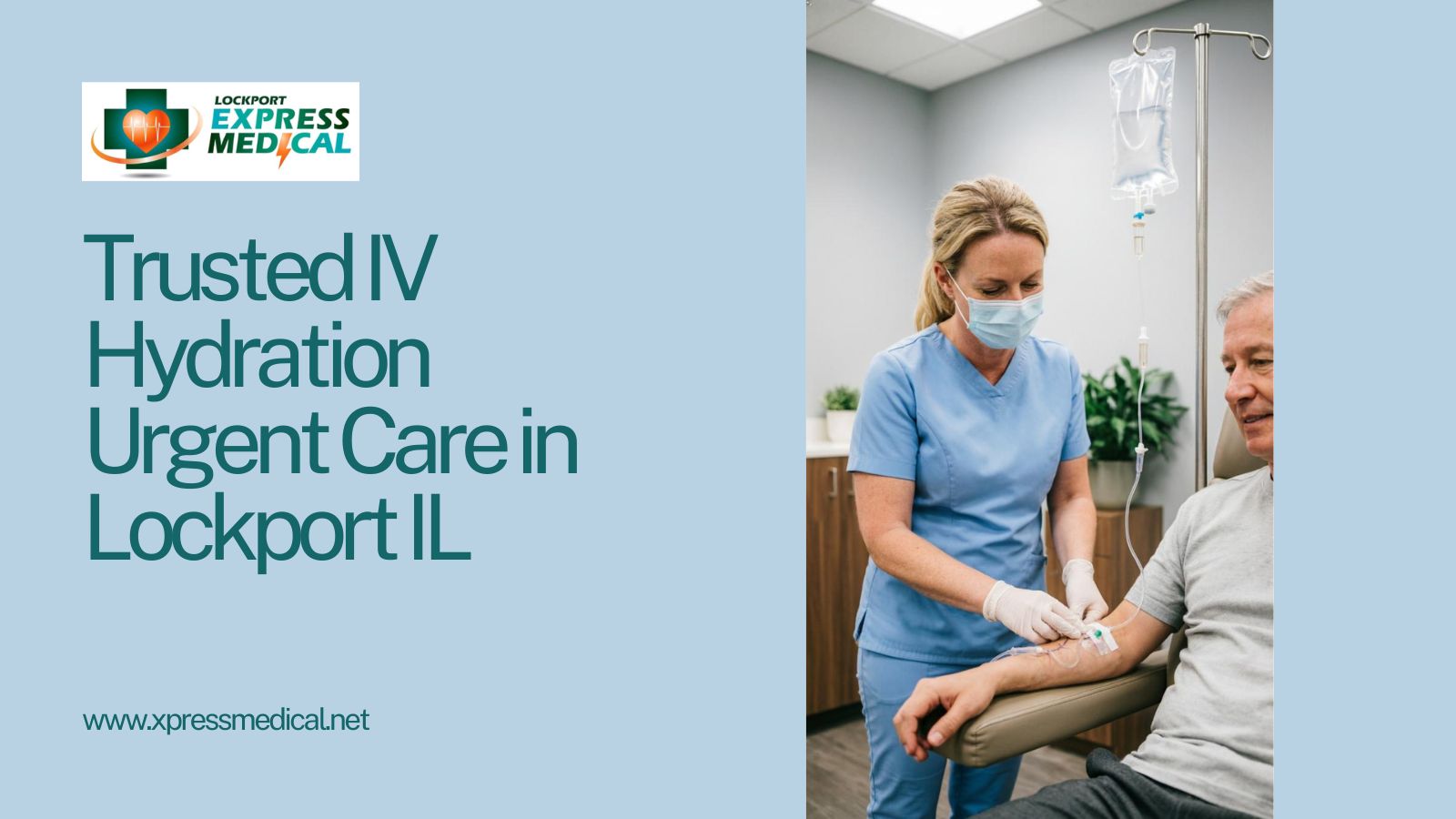
An IV hydration urgent care visit may help when vomiting, diarrhea, fever, or prolonged heat exposure leaves the body short of water and, in some cases, important electrolytes. Drinking fluids is usually the first step, but nausea, weakness, or repeated fluid loss can make oral rehydration difficult. At Lockport Express Medical, the clinician reviews the cause, symptoms, vital signs, medical history, and ability to drink before deciding whether IV fluids are appropriate. The treatment is chosen according to the patient’s actual condition rather than offered as a routine wellness drip.
What is an IV hydration urgent care?
An IV hydration urgent care service treats dehydration that cannot be corrected quickly or reliably by drinking alone. After checking symptoms, blood pressure, pulse, urine output, and recent fluid loss, a clinician places a small peripheral catheter and gives an appropriate crystalloid solution, usually normal saline or lactated Ringer’s solution.
The goal is to restore circulating fluid, improve dizziness or weakness, and support normal organ function while the underlying cause is addressed. Treatment is not a routine wellness drip. Fluid choice, volume, and speed should reflect age, kidney or heart disease, electrolyte concerns, medications, and the patient’s response during monitoring.
What Are the Common Causes of Dehydration?
- Vomiting and diarrhea can dry the body out quickly, especially when fluids will not stay down. Along with water, the body loses sodium and other salts, which can add to weakness, headache, and dizziness.
- Fever adds another drain. Sweating increases, breathing may become faster, and people who feel sick often drink less without noticing how far intake has fallen.
- Long hours outdoors, physical work, or intense exercise can lead to fluid loss. In hot weather, this may happen before strong thirst appears.
- Dehydration can also come from frequent urination. High blood sugar, diuretics, and some kidney problems may cause the body to lose more water than usual.
- Older adults are especially vulnerable because thirst can be weaker with age. Confusion, poor mobility, swallowing difficulty, or relying on others for drinks can make matters worse. During an IV hydration urgent care visit, the clinician looks for the reason first, then decides whether IV fluids in urgent care are appropriate for treatment.
We Offer The Best IV Therapy Treatment in Lockport
Conditions Treated With IV Therapy
- Stomach bugs are one of the clearest reasons for IV treatment. When vomiting keeps returning or diarrhea is heavy, even frequent sips may not replace what has been lost.
- Heat illness is another example. During an urgent care IV drip, the clinician does not look at dizziness alone; temperature, pulse, blood pressure, sweating, mental clarity, and recent heat exposure all matter.
- Fever, flu, and other infections can leave someone dehydrated simply because eating and drinking have dropped for a day or two. IV fluid may help, but the infection still needs its own assessment.
- Severe nausea, a painful throat, or marked weakness may also make drinking unrealistic. In those cases, hydration can support recovery while the cause is being treated.
- During an IV hydration urgent care visit, fluids are not given automatically. Heart disease, kidney problems, pregnancy, medicines, urine output, and possible electrolyte changes affect whether treatment is suitable and how quickly it should be given under medical observation during the visit.
Explore: Good IV Vitamin Therapy Covered by Insurance in Illinois
Special Considerations for IV Hydration in Seniors
- In older adults, dehydration can look ordinary at first. A person may simply seem quieter, eat less, sleep more, or need help getting to the bathroom. Those small changes can matter when they are new.
- Skin and mouth dryness do not settle the question by themselves. Room temperature, medicines, dentures, and normal aging can all change how dryness looks.
- Before providing IV hydration urgent care, the clinician reviews recent drinking, vomiting, diarrhea, fever, urine output, and the medication list. Decisions about IV fluids urgent care also depend on heart and kidney function.
- Some seniors do better with a smaller amount given slowly. A rapid infusion may worsen ankle swelling or shortness of breath in someone who already retains fluid.
- Progress is judged during the visit, not at the end of the bag. The team watches thinking, dizziness, breathing, pulse, blood pressure, and urination to decide whether the person is improving or needs hospital assessment.
Explore: Walk-in IV Treatment for Dehydration in Elderly in Illinois
Helpful prevention tips for dehydration:
- Make fluids part of the day rather than something saved for strong thirst. A glass with breakfast, another with medicines, and a bottle nearby can prevent long gaps without drinking.
- During vomiting or Diarrhoea, take small, frequent sips rather than drinking a large amount at once. Large amounts may trigger more nausea. An oral rehydration solution is often more useful than plain water because it replaces sodium and glucose as well.
- Before exercise, outdoor work, or travel in hot weather, drink early and plan breaks. An urgent care IV drip should be medical treatment for selected cases, not a shortcut after avoidable fluid loss.
- Watch urine pattern as well as thirst. Darker urine, fewer bathroom visits, headache, dry mouth, and dizziness when standing may signal that intake has fallen behind.
- People with heart or kidney problems cannot always follow general hydration advice. Their safe fluid amount may be quite specific, so any change in daily intake or electrolyte drinks should be checked with their clinician first.
Visit Lockport Express Medical for IV hydration urgent care:
- When a stomach bug, fever, or a long day in the heat makes drinking difficult, having a nearby walk-in clinic can save patients from waiting days for an appointment.
- Lockport Express Medical provides local care for people who feel weak, dizzy, or unable to replace lost fluids at home. The visit is handled as a medical service, not a quick wellness add-on.
- During IV hydration urgent care, treatment is considered only when it fits the patient’s symptoms and health history. This matters for older adults, pregnant patients, and anyone taking medicines that affect fluid balance.
- The clinic can also recognize when dehydration is not the only concern. Severe symptoms may point to an infection, blood sugar problem, or another condition that needs a different level of care.
- For Lockport residents, urgent care IV hydration offers practical access to evaluation and treatment in the same local setting, without assuming that every tired or dehydrated patient needs an IV.
Exploring IV infusion Services at Express Medical:
- A visit begins with a question: what stopped the patient from keeping up with fluids? Vomiting, diarrhea, fever, heat, and frequent urination each point to a different problem.
- The clinician checks pulse, blood pressure, temperature, urine pattern, and alertness. These details help separate uncomplicated dehydration from an illness that needs testing or hospital care.
- With IV hydration urgent care, the drip is chosen after that assessment. IV fluids in urgent care may be given more slowly when someone is older, pregnant, or living with heart or kidney disease.
- While the fluid runs, staff watch the IV site, breathing, dizziness, and any change in symptoms. Treatment is not judged by an empty bag alone.
- Before leaving Lockport Express Medical, the patient should know what caused the fluid loss, what to drink at home, and which changes mean it is time to return.
Conclusion
A stomach bug, fever, or too much time in the heat can leave someone feeling completely drained, especially when every drink brings back nausea. At Lockport Express Medical, IV hydration urgent care is considered only after the clinician checks what caused the fluid loss and whether heart, kidney, or medication concerns could affect treatment. Sometimes an IV is appropriate; other times testing or hospital care makes more sense. Ongoing vomiting, very little urine, faintness, or worsening weakness should not be managed at home for too long.
FAQs
Can urgent care give IV fluids for dehydration?
Yes, but an IV is not needed every time someone feels dry or tired. A person who can drink, keep fluids down, and urinate normally may improve without one. Repeated vomiting, worsening dizziness, or very little urine deserves an examination.
Is IV therapy safe?
Yes, still, the answer depends on why the IV is being given and the person’s health. The area around the IV may feel sore, develop a small bruise, or swell if fluid leaks into the surrounding tissue. The bigger concern is giving more fluid than the body can handle, particularly in someone with heart or kidney problems.
Is IV therapy covered by insurance?
There is no single answer because plans handle urgent care differently. One patient may only pay a copay, while another may be charged toward a deductible. The reason for treatment also matters; medically necessary fluids are more likely to be covered than a wellness drip.
Who should avoid IV hydration?
People with heart failure, kidney disease, noticeable swelling, or a fluid restriction should not treat an IV as a casual wellness service. They may still receive IV hydration urgent care, but only after a clinician decides how much fluid is safe.