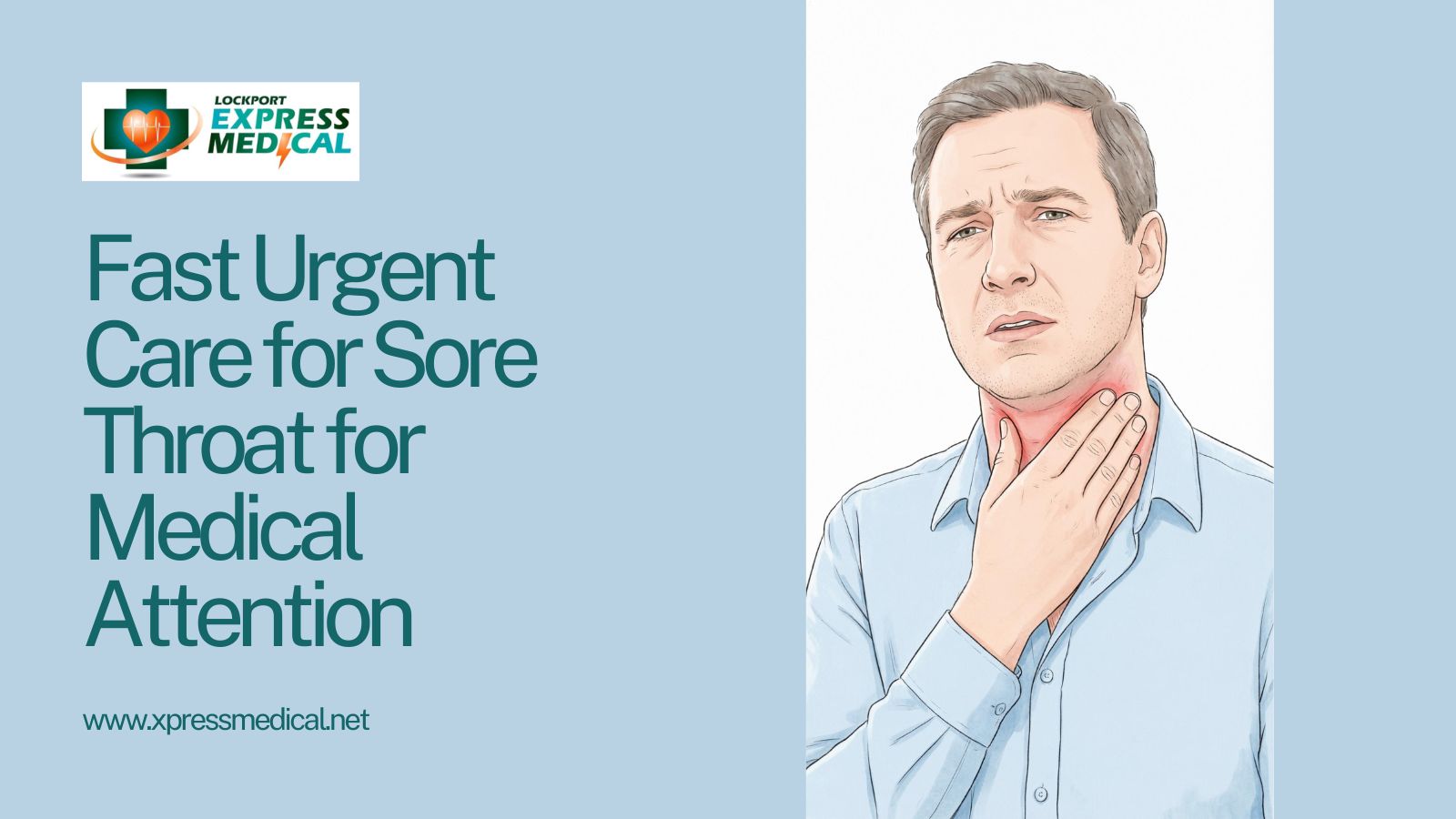
Urgent care for sore throat is not limited to people who feel seriously ill. A throat that has stayed painful for several days, keeps returning, or interrupts sleep and meals also deserves attention. Express Medical checks the tonsils, neck glands, temperature, and any symptoms affecting the nose or chest. A cough and sore throat often occur together during a respiratory infection, though other causes are possible. The examination helps the provider decide whether supportive care, testing, or prescription sore throat medicine is appropriate.
Sore throat and its common causes:
- A sore throat is usually the result of inflammation in the pharynx. In many patients, it starts with a viral infection such as a cold or influenza, especially when nasal congestion, hoarseness, or coughing develops at the same time.
- Bacterial infection is less common, but group A streptococcus is important because confirmed cases may need antibiotics. Tonsillitis can also cause marked pain, fever, and difficulty swallowing when the tonsils become infected or inflamed.
- Some sore throats are not caused by infection at all. Mucus draining from the nose can keep the throat irritated, while acid reflux may cause repeated soreness, throat clearing, or a bitter taste, often after meals or on waking.
- Smoke, vaping, dry air, chemical fumes, and heavy voice use can also damage or dry the throat lining.
- At urgent care for sore throat, the cause is considered before recommending sore throat medicine. The best medicine for sore throat depends on the underlying problem, not pain intensity alone.
Common symptoms associated with a sore throat:
- Throat pain does not feel identical in every case. It may start as dryness and then become painful with swallowing. Redness is common; tonsils may look enlarged, and white coating or pinpoint red spots can appear in some bacterial infections.
- Fever may come with headache, aching muscles, poor appetite and tender nodes in front of the neck. In children, strep can also present with stomach pain, nausea or vomiting, so throat symptoms are not always the main complaint.
- Cough and sore throat together, especially with a runny nose or hoarseness, are more typical of a sore throat virus. Sudden pain, fever and swollen neck nodes without cough make strep more likely, although testing is needed to confirm it.
- Urgent care for sore throat is appropriate when symptoms are getting worse, fever continues, or fluid intake falls. Drooling, trouble breathing, inability to swallow saliva, stridor, or a muffled voice are not routine sore throat symptoms and need emergency assessment without delay.
Explore: Good Family Doctor Walk In Clinic in Illinois
Urgent care for sore throat: Diagnosis and care:
- A visit for urgent care for sore throat usually starts with the details that change the diagnosis: how quickly the pain appeared, whether swallowing is difficult, recent exposure to strep, fever, rash, fatigue, and any recent antibiotic use.
- The examination is broader than simply looking at the tonsils. The clinician checks the mouth, palate, lymph nodes, hydration, voice quality, neck movement, and breathing. One-sided swelling, a muffled voice, or marked tenderness may suggest a deeper infection rather than simple pharyngitis.
- Testing is chosen according to the pattern of illness. A rapid strep test may be appropriate when bacterial infection is suspected, while obvious cold symptoms make a sore throat virus more likely. A throat culture may follow a negative rapid test in selected patients.
- Care then follows the cause. Viral illness is managed with symptom relief and fluids. Confirmed bacterial infection may need antibiotics. Recurrent or persistent sore throat disease can require referral for further evaluation by an ENT specialist.
What will urgent care prescribe for a sore throat?
- A prescription is not automatic at urgent care for sore throat. When the illness is viral, treatment usually focuses on comfort. The clinician may recommend acetaminophen or an anti-inflammatory pain reliever, provided the patient has no liver, kidney, stomach, bleeding, pregnancy, or medication-related reason to avoid it.
- For stronger pain, a short course of topical sore throat medicine may be advised, such as a numbing gargle or medicated lozenge. In selected adults with severe swelling, a single dose of a corticosteroid may be considered, but this is not suitable for every patient.
- Antibiotics are used when strep throat or another bacterial cause is confirmed or strongly supported. Penicillin or amoxicillin is commonly chosen; a different antibiotic is selected for patients with a true allergy.
- The best medicine for sore throat is not always an antibiotic. If reflux, allergies, or dryness is causing the pain, care may involve acid-reducing treatment, an antihistamine or nasal spray, or simply better hydration and local throat relief.
Explore: Urgent Care that Takes Medicare Near Me in Lockport
Relation between STDs and sore throats:
- Some sexually transmitted infections can affect the throat after oral exposure. Gonorrhea is the clearest example. It may cause soreness, redness, or swollen neck glands, but many throat infections produce no symptoms.
- Chlamydia can also be found in the throat, although it is less common there. Syphilis may cause a painless sore inside the mouth or throat, followed later by rash, fever, or enlarged lymph nodes. A new HIV infection can sometimes begin with fever, fatigue, rash, and throat pain.
- Testing depends on the site of exposure. A urine sample may not detect an infection limited to the throat, so a throat swab may be needed. Blood testing is used when syphilis or HIV is a concern.
- At urgent care for sore throat, sexual history is handled privately and helps the clinician choose the right tests. Sore throat treatment then follows the confirmed infection; ordinary strep antibiotics may not be clinically suitable, and partners may also need testing or treatment.
Why choose Express Medical urgent care for sore throat?
- Express Medical is intended for problems that cannot wait for an office visit but do not belong in the ER. Patients seeking urgent care for sore throat can walk in, be assessed promptly, and avoid splitting care between locations.
- The clinic can handle the visit from first check through testing and treatment. On-site diagnostics matter when symptoms overlap with flu, strep, or another infection; the result can change whether medicine is needed and which kind.
- Care is not reduced to handing out an antibiotic. The provider reviews allergies, current drugs, past reactions, pregnancy status, and medical conditions before choosing sore throat treatment. That step is important for children, older adults, and patients with chronic illness.
- The service also includes discharge advice. Patients leave knowing how to use each medicine, what improvement should look like, when to return, and which symptoms should be taken to the emergency room. For illness, that practical follow-through is often what makes the visit more useful.
Get Urgent Care for Flu at Express Medical
Sore Throat Treatment at Express Medical Clinic:
- Treatment at Lockport Express Medical is built around what is actually causing the throat pain. During a visit for urgent care for sore throat, the provider may begin with pain control, temperature management, and fluids if swallowing has reduced the patient’s intake.
- Mild viral cases often improve with scheduled acetaminophen or ibuprofen, warm fluids, salt-water gargles, and a humidifier. A topical numbing product may help before meals, although sore throat medicine must be chosen carefully for young children, pregnant patients, and anyone taking several medicines.
- Antibiotics are not given for throat pain alone. They are used when the examination or test results point to a bacterial infection. The provider then chooses the drug and dose after checking the patient’s age, weight, allergies, kidney health, and any previous side effects.
- Before leaving the clinic, the patient receives simple instructions for home care, including when to take each medicine, how much fluid to drink, and when improvement should begin. Fever that does not settle, stronger pain on one side, very little urine, or any new breathing problem means the patient needs another medical assessment.
Conclusion
Throat pain is easy to dismiss at first, but it becomes a different problem when swallowing hurts, fever hangs on, or symptoms keep returning. At Express Medical, urgent care for sore throat starts with an examination before any treatment is chosen. Through Express Medical , patients can find clinic details and access the right care without relying on guesswork. Some cases need little more than pain relief and fluids. Others may need a strep test, an antibiotic, or a closer check for an infection behind the tonsil. The aim is to ease the pain, avoid unnecessary medicine, and make sure an important problem is not missed.
FAQs
What kills a sore throat fast?
Nothing removes throat pain instantly, but cold drinks, warm fluids, salt-water gargles, and a suitable pain reliever can make swallowing easier. Antibiotics are only useful when the infection is bacterial. Taking them for a viral sore throat will not shorten the illness.
How to get rid of a sore throat?
Most sore throats improve with fluids, rest, and avoiding smoke or dry air. Lozenges may calm irritation for a while. When the pain keeps returning, treatment may need to address another problem, such as allergies, reflux, or an infection that has not been identified.
Should I go to urgent care for sore throat?
Yes, urgent care for sore throat is worth considering when swallowing is becoming painful, fever is not settling, or symptoms are clearly worse than they were a day or two earlier. It is also useful when strep may be involved and a throat test could change the treatment.
What is a red flag for a sore throat?
Breathing trouble is the most serious warning sign. Drooling, inability to swallow saliva, a muffled voice, swelling on one side of the throat, or a rapidly enlarging neck swelling can mean the infection has spread beyond the surface of the throat.
At what point should I see a doctor for a sore throat?
See a doctor when the pain is not easing after a few days, keeps returning, or is making food and fluids difficult. Fever that stays high, a new rash, swollen neck glands, or signs of dehydration are also good reasons to be checked rather than waiting longer.