Treatment for pneumonia in elderly patients should start with early medical assessment, not waiting for the infection to become severe. Pneumonia can affect breathing, energy, appetite, and mental alertness in older adults, and sometimes the first warning sign is not a strong fever but sudden weakness, confusion, or shortness of breath. That is why families need to take symptoms of pneumonia in elderly patients seriously from the beginning. At Express Medical, the focus is on checking the patient’s breathing, oxygen level, chest symptoms, medical history, and overall stability before guiding the next step.
What is Pneumonia?
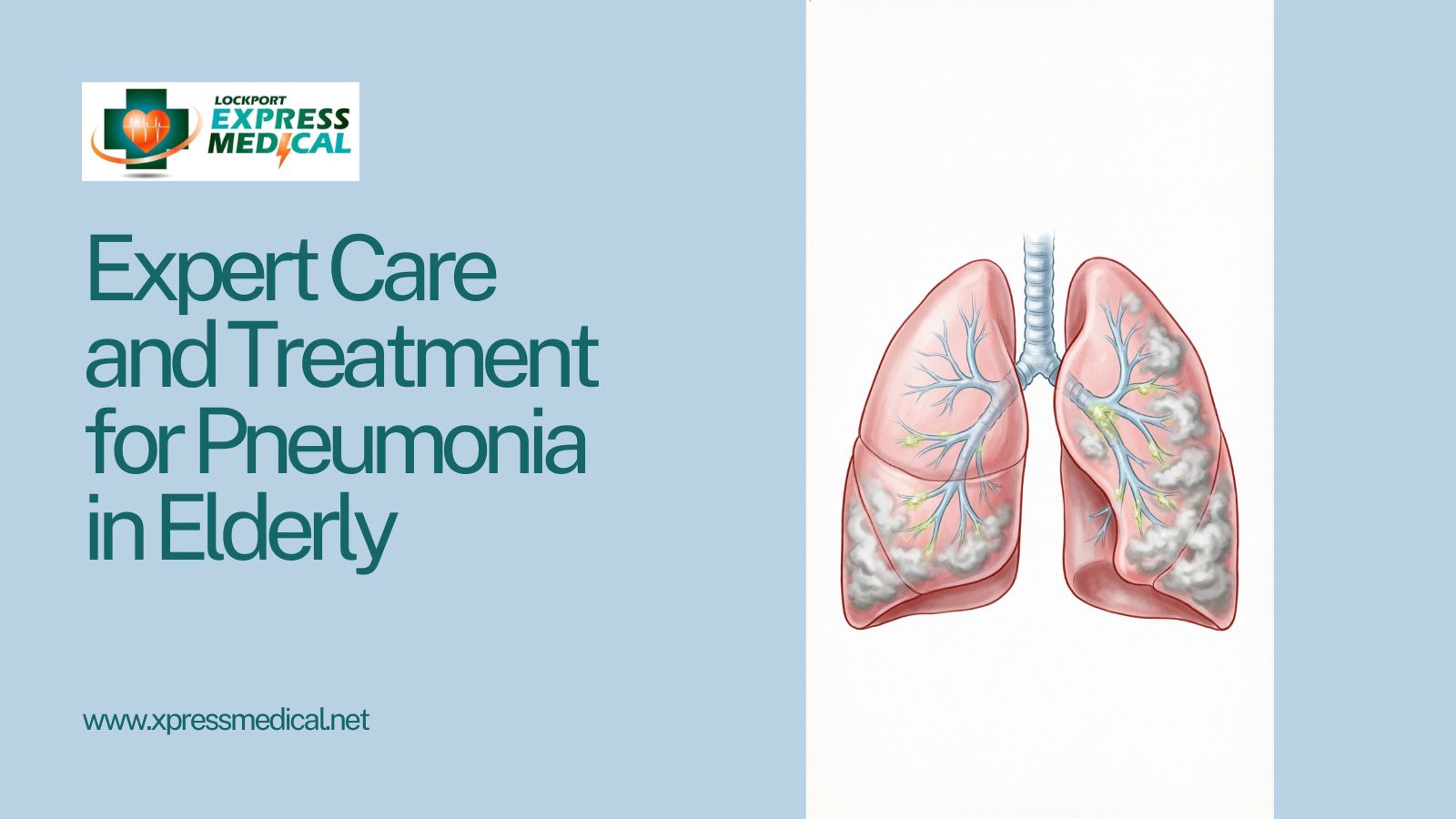
Pneumonia means an infection has settled inside the lung tissue, not just the throat or airways. The smallest breathing spaces become swollen and may collect fluid, making oxygen exchange less efficient. In an older person, this can strain the heart, worsen existing lung disease, and reduce stamina very quickly.
The cause may be bacterial, viral, fungal, or linked to food, saliva, or stomach contents entering the lungs. Symptoms are not always dramatic; a quiet change in appetite, balance, alertness, or breathing rhythm can matter. That is why treatment for pneumonia in elderly patients begins with careful assessment, not guesswork.
Signs and symptoms of Pneumonia in elderly:
- In older people, pneumonia can be surprisingly quiet. A cough may bring up yellow, green, or blood-streaked phlegm, yet some patients cough very little because they are weak, dehydrated, or already short of breath.
- Breathing often gives the clearest clue: faster breaths, new wheeze, chest pain on inhaling, needing extra pillows, or becoming breathless while walking to the bathroom. These changes matter even without a high fever.
- Temperature can mislead families. An elderly patient may have chills, sweating, or a temperature lower than usual, especially with weak immunity. That does not make the infection mild.
- Symptoms of pneumonia in elderly patients may also show through poor appetite, sudden tiredness, falls, dizziness, sleepiness, confusion, or fewer trips to pass urine from dehydration.
- Seek urgent review if lips look blue, oxygen is low, breathing is worsening, or alertness changes; treatment for pneumonia in elderly patients depends on quick assessment of severity, oxygen level, likely cause, and the safest place for care today.
Get The Best Walk in Clinic for Pneumonia in Lockport IL
Why seek urgent treatment for Pneumonia in elderly?
- Urgent care is needed because pneumonia can reduce an older person’s breathing reserve quickly. Even a limited lung infection may lower oxygen enough to stress the heart, kidneys, and brain.
- Waiting for a high fever can be misleading. In elderly patients, the warning may be weakness, poor intake, low alertness, confusion, or a sudden inability to walk normally.
- Early review helps catch complications before they become harder to control. Dehydration, low oxygen, pleural fluid, worsening frailty, sepsis risk, and breathing failure can develop when care is delayed.
- The visit is not only about giving antibiotics. A clinician needs to decide whether the pneumonia looks bacterial, viral, aspiration-related, or mild walking pneumonia, because each situation needs different handling.
- Treatment for pneumonia in elderly should begin promptly because the right first decision can reduce hospital admission, protect strength, and support recovery from pneumonia in elderly patients.
Schedule Routine Vaccinations at Lockport Express Medical
Types of Pneumonia in elderly:
- Bacterial pneumonia: this is the one doctors worry about when an older person suddenly goes downhill after flu, chest congestion, or a few quiet days in bed. It may need antibiotics, but not any antibiotic will do; kidney function, allergies, recent medicines, and local resistance all matter.
- Viral pneumonia: can begin like an ordinary flu, then leave the lungs irritated and the body unusually weak. Some elderly patients need mainly fluids, fever control, oxygen checks, and close follow-up, especially if breathing becomes heavier.
- Aspiration pneumonia: is not always caused by one obvious choking episode. Small amounts of saliva, food, reflux, or vomit may slip into the lungs over time, especially with stroke, dementia, sedatives, poor swallowing, or a weak cough.
- Walking pneumonia: the name sounds mild, but in old age even a “lighter” infection can reduce appetite, sleep, stamina, and daily movement. Treatment for walking pneumonia in elderly patients should be reviewed when cough lasts or activity drops.
- Hospital-acquired, healthcare-associated, and fungal pneumonia: these cases need more caution because the germs may be different. Treatment for pneumonia in elderly should depend on where the infection started, immune status, severity, and test findings. The best treatment for pneumonia in elderly patients is the safest targeted choice, not simply the strongest medicine.
How to avoid pneumonia in elderly?
- Keep the vaccine record truly up to date, not almost up to date. Flu, pneumococcal, COVID, and RSV protection matter more when age, COPD, diabetes, heart disease, or weak immunity leave the lungs with less reserve.
- Treat swallowing changes as a chest risk. Coughing during meals, a wet voice after drinking, reflux at night, sedatives, stroke, or dementia can allow tiny amounts of saliva or food to reach the lungs.
- Reduce the germs around daily care. Clean hands, fresh air, separate cups, clean nebulizer masks, and keeping sick visitors away can lower the infections reaching a frail patient.
- Do not let the chest stay still for days. Sitting upright, short safe walks, changing position in bed, fluids, mouth care, and gentle breathing practices help mucus move instead of settling deep.
- The best treatment for pneumonia in the elderly often starts before infection becomes severe. Good nutrition, smoking avoidance, controlled chronic disease, and early review of cough or breathlessness can make treatment for pneumonia in elderly patients safer.
Risk factors for Pneumonia in the elderly:
- Older age itself: after 65, the lungs usually have less reserve, the cough may be weaker, and infection can take hold before symptoms look serious.
- Chest or heart disease: COPD, asthma, heart failure, old chest infections, and poor circulation can make breathing harder once pneumonia starts.
- Weak immunity: diabetes, kidney disease, cancer treatment, long steroid use, poor nutrition, or major weight loss can slow the body’s response to infection.
- Swallowing trouble: stroke, dementia, reflux, sedatives, choking during meals, poor mouth care, or a weak cough can let saliva or food reach the lungs.
- Low movement: long bed rest, recent surgery, dehydration, smoking, alcohol misuse, missed vaccines, or a recent hospital stay can raise the risk. Treatment for pneumonia in elderly should consider these risks because they affect severity and recovery from pneumonia in elderly patients.
Get a trusted treatment for pneumonia in elderly at Express Medical:
- A proper visit starts with the details that change decisions: breathing effort, oxygen reading, chest sounds, fever pattern, weakness, fluid intake, and any new confusion.
- Lockport Express Medical is useful for non-life-threatening chest symptoms that cannot wait days, especially after flu, poor appetite, worsening cough, or breathlessness in an older adult.
- The clinician may need more than a stethoscope. Chest X-ray, flu or infection testing, medicine review, and hydration assessment can make the plan clearer.
- Treatment is adjusted around the patient’s risks: kidney disease, COPD, diabetes, allergies, recent antibiotics, swallowing trouble, blood thinners, and frailty.
- Treatment for pneumonia in elderly may include prescribed medicine, fluids, fever control, breathing advice, follow-up, or referral when oxygen, confusion, or weakness makes higher care safer.
Skip the wait & get your appointment at Express Medical
Conclusion
Pneumonia can take a lot from an older person before it looks severe from the outside. A mild cough, poor appetite, unusual sleepiness, confusion, or heavier breathing may be enough reason to seek care early. The safer plan is the one based on the patient’s oxygen level, fluid intake, current medicines, kidney function, and existing health problems. For families looking for treatment for pneumonia in elderly patients, Express Medical offers timely urgent-care evaluation, clear medical guidance, and referral when hospital care is the safer next step.
FAQs
How treatable is pneumonia in the elderly?
Pneumonia can be treated in many elderly patients, but the case needs early attention. The main point is not only choosing an antibiotic; the doctor also has to look at breathing, oxygen level, fluid intake, kidney function, allergies, and the patient’s general strength. Treatment for pneumonia in elderly patients works best when the plan matches the cause and the patient’s condition.
Is pneumonia deadly in elderly?
Pneumonia can be life-threatening in elderly patients, especially when it is ignored or the patient already has weak lungs, heart disease, diabetes, kidney disease, or poor immunity. The danger usually comes from low oxygen, dehydration, sepsis, severe weakness, or breathing failure. Still, pneumonia does not mean the patient will not recover.
Can pneumonia cause confusion in elderly?
Yes, confusion, low alertness, or a sudden change in mental awareness can be a real symptom of pneumonia in adults over 65. It may happen even when fever or cough is not obvious. Infection, low oxygen, dehydration, and the body’s stress response can all affect the brain. New confusion with weakness, fast breathing, poor intake, or cough should be checked urgently.