Losing weight can feel overwhelming, especially after repeated attempts that fail to deliver lasting results. Many people struggle with conflicting advice, restrictive diets, and unrealistic expectations. That is why medically supervised weight loss plans have gained increasing attention. These programs offer structured, physician-guided support that focuses on safety, sustainability, and long-term health rather than quick fixes. By addressing medical, nutritional, and behavioral factors together, individuals can achieve meaningful weight loss while reducing health risks. This article explains how these programs work, who they are designed for, and why they are often more effective than traditional approaches.
What are medically supervised weight loss plans?
Medically supervised weight loss plans are structured programs overseen by licensed healthcare professionals. Unlike generic diet plans, these programs begin with a medical assessment that evaluates overall health, metabolic factors, lifestyle habits, and weight-related risks.
Through medically supervised weight loss plans, treatment strategies are tailored to the individual. This may include personalized nutrition guidance, activity recommendations, behavior modification, and medical monitoring. The goal is not only weight reduction but also improvement in overall health markers such as blood sugar, cholesterol, and blood pressure.
Benefits of medically supervised weight loss plans:
One of the main advantages of medically supervised weight loss plans is safety. Weight loss is monitored by medical professionals who can identify risks early and adjust the program as needed.
Additional benefits include accountability, structured follow-up, and evidence-based strategies. Patients are less likely to regain weight because the program addresses root causes rather than symptoms. Many participants also report improved energy levels, better sleep, and enhanced mental well-being as they progress through supervised care.
Get a weight loss management plans with Express Medical
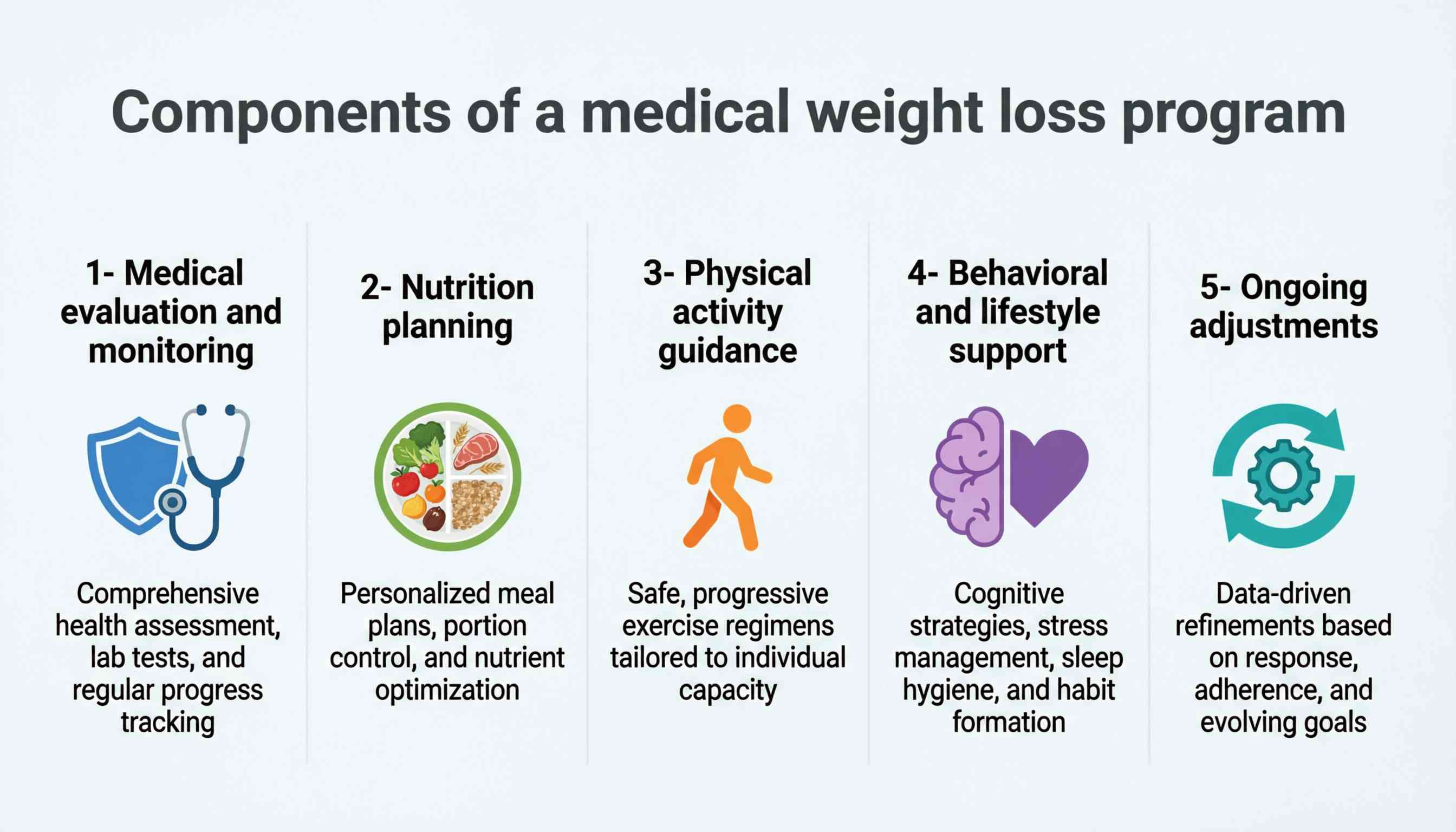
Components of a medical weight loss program:
A comprehensive program includes multiple coordinated components designed to work together.
Medical evaluation and monitoring
Programs begin with a thorough assessment to understand the patient’s medical history, current health status, and weight-related conditions. Regular follow-ups ensure progress is tracked safely.
Nutrition planning
Personalized nutrition plans focus on balanced, realistic eating habits rather than extreme restriction. A qualified provider ensures dietary changes support metabolism and long-term adherence.
Physical activity guidance
Exercise recommendations are adapted to the individual’s fitness level, physical limitations, and goals. This reduces injury risk and improves consistency.
Behavioral and lifestyle support
Addressing habits, stress, sleep, and emotional triggers is essential. Medically supervised weight loss plans integrate behavior-focused strategies that support lasting change.
Ongoing adjustments
As progress is made, the plan evolves. Continuous review allows clinicians to refine strategies and maintain momentum.
Why most weight loss solutions don’t work?
Many commercial weight loss solutions fail because they rely on short-term motivation and rigid rules. Extreme calorie restriction, fad diets, and unregulated supplements may produce temporary results but often lead to rebound weight gain.
Without medical oversight, underlying issues such as hormonal imbalance, insulin resistance, or medication side effects may go unaddressed. Medically supervised weight loss plans succeed because they adapt to the individual rather than forcing a one-size-fits-all approach.
We offer weight loss consultation for you
Are you a candidate for medical weight loss?
Medical weight loss may be appropriate for individuals who have struggled with repeated weight loss attempts, have obesity-related conditions, or need structured guidance.
Candidates often include adults with excess weight impacting health, individuals with metabolic disorders, or those seeking sustainable lifestyle change. A consultation helps determine whether medically supervised weight loss plans are suitable based on personal health goals and medical history.
Where to find the best nutritionist in Lockport?
Finding qualified support is critical. Individuals searching for weight loss programs near me should prioritize clinics that offer integrated medical and nutritional care.
A skilled nutritionist in Lockport works closely with medical providers to ensure dietary guidance aligns with health needs. Access to a coordinated care team increases the effectiveness of medically supervised weight loss plans and supports long-term success.
Work with the best weight loss nutritionist in Lockport
What makes our weight loss program work?
The strength of a successful program lies in structure, personalization, and accountability. Our approach combines medical oversight, nutritional expertise, and behavioral support into one cohesive system.
Unlike isolated diet plans, medically supervised weight loss plans emphasize realistic goals and gradual progress. Patients receive ongoing feedback, education, and encouragement, making it easier to maintain results beyond the active phase of the program.
The program is also designed to transition participants into a sustainable weight management plan, reducing the risk of weight regain and promoting long-term wellness.
Long-term health impact
Sustainable weight loss improves more than appearance. It reduces the risk of chronic conditions such as diabetes, heart disease, and joint problems. Participants in medically supervised weight loss plans often see improvements in blood pressure, glucose control, and overall mobility.
Long-term success depends on continued engagement and support. Medical supervision ensures that progress is maintained safely and adjustments are made as health needs evolve.
Comparing supervised and unsupervised programs
Unsupervised programs may appear simpler, but they often lack accountability and medical insight. In contrast, doctor supervised weight loss programs are grounded in clinical evidence and monitored for safety.
Patients benefit from professional guidance, realistic expectations, and early identification of barriers. This structured approach explains why medically supervised weight loss plans outperform many commercial alternatives.
Setting realistic expectations
Weight loss is a gradual process. Programs emphasize steady progress rather than rapid results. Patients are educated about healthy rates of weight loss and the importance of consistency.
This mindset shift is one reason medically supervised weight loss plans lead to better adherence and long-term outcomes.
Support beyond weight loss
Effective programs extend beyond initial weight reduction. Maintenance strategies, follow-up visits, and lifestyle reinforcement help patients sustain progress.
Access to best medically supervised weight loss programs includes education and ongoing support that empower individuals to manage their health independently over time.
FAQs
Is medically supervised weight loss covered by insurance?
Coverage varies by insurance provider and plan. Some services may be partially covered, particularly when weight loss is medically necessary. It is recommended to verify benefits directly with the clinic or insurer.
Do Xpress Medical offer long-term weight management support?
Yes. Xpress Medical provides continued guidance beyond active weight loss, helping patients transition into sustainable habits and long-term maintenance strategies.
Why does medically supervised weight loss work?
It works because it combines medical oversight, personalized nutrition, and behavioral support. By addressing underlying health factors and providing accountability, medically supervised weight loss plans deliver safer and more sustainable results than unsupervised approaches.